 Guide On Map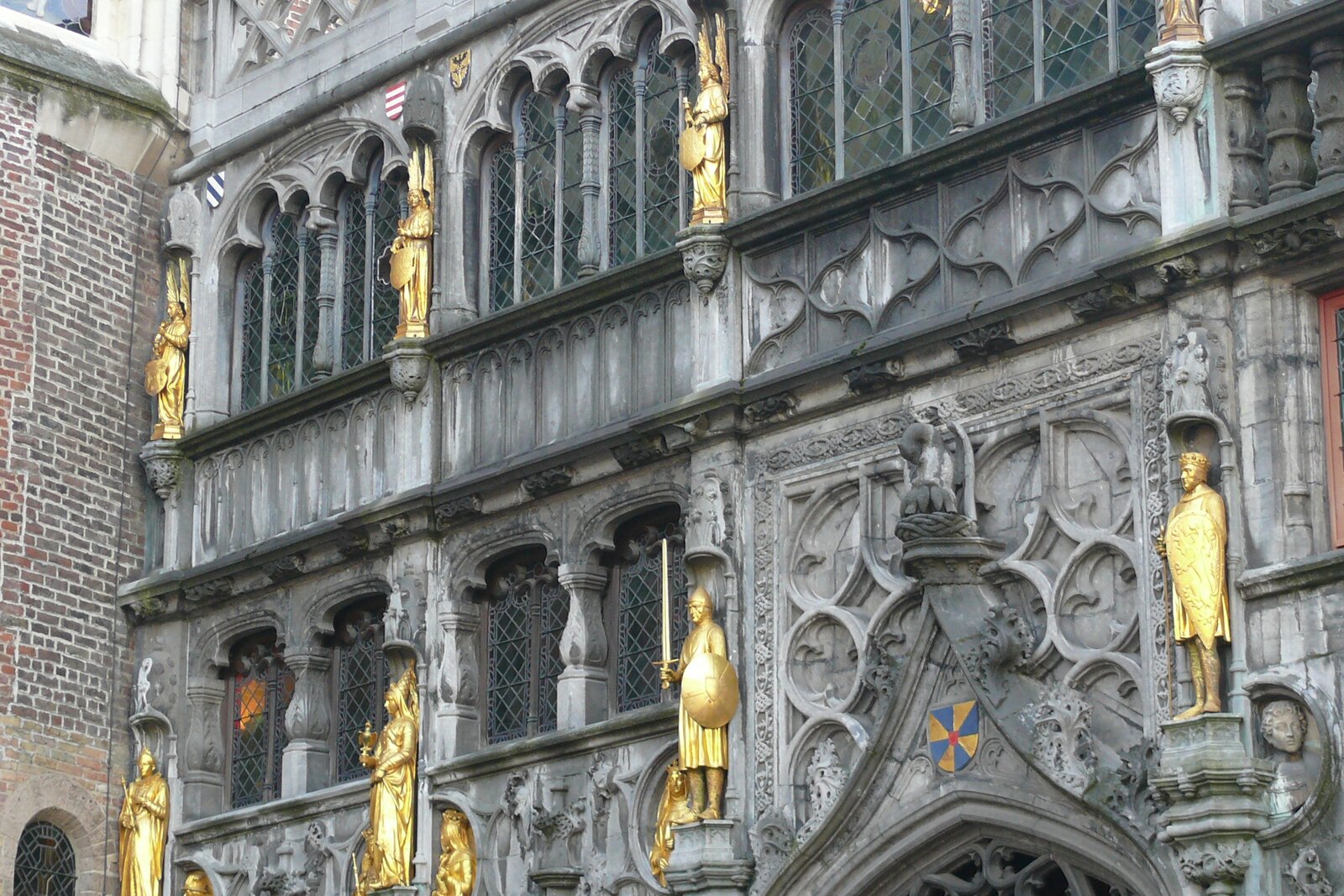

This place does not have an audited photo yet.
Selected place
Basilica of the Holy Blood
Local name: Heilig Bloedbasiliek
This stop separates the city records of the relic's rescue from the later legend of its origin.
Start with 28 highlights or open the complete catalog of 143 curated places.
Highlights include Basilica of the Holy Blood, Belfry of Bruges and Cloth Hall, Bruges City Hall, Burg Square, Church of Our Lady, De Vos Almshouse.
We have connected important places into ready-made walks with a clear order, stories and practical details.
Start with 28 highlights, or reveal all 143 curated places.
Local name: Heilig Bloedbasiliek
This stop separates the city records of the relic's rescue from the later legend of its origin.
This stop separates the city records of the relic's rescue from the later legend of its origin.
The archive fire will explain why keeping accounts became part of the struggle for self-government.
The military tribunal will show how the building of the city court became a court of the occupying power.
The vanished church will restore the square's fortress geography and the scene of a conspiracy.
The fate of one sculpture will show what the requirement to leave a work in one place forever meant.
It will show the cost of housing given as assistance but tied to rules and supervision.
Here, the city's smell and an old privilege will clash in a single decision over a marketplace.
One altarpiece commission will link personal commemoration, a vanished church, and the birth of a city museum.
This stop connects wealth from the beer tax with hosting an exiled king and an English title.
A former private garden reveals how the city’s museum route passed through someone else’s property.
Here, a filled-in harbor and a city program that reshaped Bruges’s familiar appearance come together.
It will connect the old passenger quay with the origin of the present-day love ritual.
Here, an open market square becomes the setting for a bargain between the townspeople and their ruler.
This stop will show how a tournament victory turned into a year of civic duties.
The ending will explain why a vanished product outlived its stalls in the name of the quay.
It will explain the structure where a grand maritime calculation ran up against stubborn water.
The triptych makes it possible to see the patrons, the workings of the hospital, and the source of its income on a single panel.
The finale will explain why a parish church took the place of the vanished city cathedral.
Using one consignment of butter as an example, this stop shows who had the right to city work and its pay.
The crossing will show what the monastery risked for a direct route to townspeople and merchants.
The bridge brings together the documentary name of the place and the legend carved in stone.
The surviving water makes it possible to see an unrealized urban construction project at its true scale.
It will show how a municipal decision preserved traces of a private garden in a public park.
The history of the statue explains why the old trading crossing received the name of a Czech saint.
The final stop connects an inn, the representative offices of foreign merchants, and the European name for trading.
The dispute over the appearance of the new institution will show how provincial power established itself in the old center.
It will tell how one of the women returned the church to the community after an accidental fire.
It will make visible the boundary that protected the beguines' independent way of life.
Nearest audio-route stop: Beguinage Ten Wijngaerde: white houses and a garden — 10 m in a straight line, route Minnewater and the Beguinage: Quiet Bruges South
Nearest audio-route stop: Poortersloge — 40 m in a straight line, route Canals and Merchants of Hanseatic Bruges
Nearest audio-route stop: De Vos Almshouse — 110 m in a straight line, route Minnewater and the Beguinage: Quiet Bruges South
Nearest audio-route stop: Gruuthuse Palace — 70 m in a straight line, route Flemish Primitives in Bruges' Museum Quarter
Nearest audio-route stop: Gruuthuse Palace — 50 m in a straight line, route Flemish Primitives in Bruges' Museum Quarter
Nearest audio-route stop: Augustijnenrei and Augustijnenbrug — 30 m in a straight line, route Canals and Merchants of Hanseatic Bruges
Nearest audio-route stop: Saint Elizabeth's Church — 60 m in a straight line, route Minnewater and the Beguinage: Quiet Bruges South
Nearest audio-route stop: Saint Elizabeth's Church — 60 m in a straight line, route Minnewater and the Beguinage: Quiet Bruges South
Nearest audio-route stop: Belfry of Bruges and Cloth Hall — 60 m in a straight line, route From Market Square to the canals: who ruled Bruges
Nearest audio-route stop: Poortersloge — 30 m in a straight line, route Canals and Merchants of Hanseatic Bruges
Nearest audio-route stop: Bruges City Hall — 30 m in a straight line, route From Market Square to the canals: who ruled Bruges
Nearest audio-route stop: Provincial Court — 40 m in a straight line, route From Market Square to the canals: who ruled Bruges
Nearest audio-route stop: Poortersloge — 110 m in a straight line, route Canals and Merchants of Hanseatic Bruges
Nearest audio-route stop: De Vos Almshouse — 110 m in a straight line, route Minnewater and the Beguinage: Quiet Bruges South
Nearest audio-route stop: Rosary Quay — 80 m in a straight line, route From Market Square to the canals: who ruled Bruges
Nearest audio-route stop: Gouden-Handrei and Gouden-Handreibrug — 80 m in a straight line, route Canals and Merchants of Hanseatic Bruges
Nearest audio-route stop: Gouden-Handrei and Gouden-Handreibrug — 100 m in a straight line, route Canals and Merchants of Hanseatic Bruges
Nearest audio-route stop: Gruuthuse Palace — 50 m in a straight line, route Flemish Primitives in Bruges' Museum Quarter
Nearest audio-route stop: Gruuthuse Palace — 50 m in a straight line, route Flemish Primitives in Bruges' Museum Quarter
Nearest audio-route stop: Oude Beursplein and the Nation Houses — 100 m in a straight line, route Canals and Merchants of Hanseatic Bruges
Nearest audio-route stop: Provincial Court — 40 m in a straight line, route From Market Square to the canals: who ruled Bruges
Nearest audio-route stop: Oude Beursplein and the Nation Houses — 110 m in a straight line, route Canals and Merchants of Hanseatic Bruges
Nearest audio-route stop: Nepomucenus Bridge and Dijver — 30 m in a straight line, route Flemish Primitives in Bruges' Museum Quarter
Nearest audio-route stop: Hof Arents and the Four Horsemen of the Apocalypse — 80 m in a straight line, route Flemish Primitives in Bruges' Museum Quarter
Nearest audio-route stop: Saint Elizabeth's Church — 40 m in a straight line, route Minnewater and the Beguinage: Quiet Bruges South
Nearest audio-route stop: Poortersloge — 100 m in a straight line, route Canals and Merchants of Hanseatic Bruges
Nearest audio-route stop: Poortersloge — 90 m in a straight line, route Canals and Merchants of Hanseatic Bruges
Nearest audio-route stop: St Salvator's Church — 70 m in a straight line, route Flemish Primitives in Bruges' Museum Quarter
Nearest audio-route stop: De Vos Almshouse — 50 m in a straight line, route Minnewater and the Beguinage: Quiet Bruges South
Nearest audio-route stop: De Vos Almshouse — 50 m in a straight line, route Minnewater and the Beguinage: Quiet Bruges South
Nearest audio-route stop: Oude Beursplein and the Nation Houses — 20 m in a straight line, route Canals and Merchants of Hanseatic Bruges
Nearest audio-route stop: St Salvator's Church — 100 m in a straight line, route Flemish Primitives in Bruges' Museum Quarter
Nearest audio-route stop: Market Square — 120 m in a straight line, route From Market Square to the canals: who ruled Bruges
Nearest audio-route stop: Provincial Court — 60 m in a straight line, route From Market Square to the canals: who ruled Bruges
Nearest audio-route stop: Koningsbrug and Spiegelrei — 110 m in a straight line, route Canals and Merchants of Hanseatic Bruges
Nearest audio-route stop: Provincial Court — 90 m in a straight line, route From Market Square to the canals: who ruled Bruges
Nearest audio-route stop: Burg Square — 60 m in a straight line, route From Market Square to the canals: who ruled Bruges
Nearest audio-route stop: Oude Beursplein and the Nation Houses — 90 m in a straight line, route Canals and Merchants of Hanseatic Bruges
Nearest audio-route stop: De Vos Almshouse — 110 m in a straight line, route Minnewater and the Beguinage: Quiet Bruges South
Nearest audio-route stop: Jan van Eyckplein — 70 m in a straight line, route Canals and Merchants of Hanseatic Bruges
Access and construction years come from OpenStreetMap and Wikidata, snapshot of August 25, 2026: database data, not a check on the ground.