 Guide On Map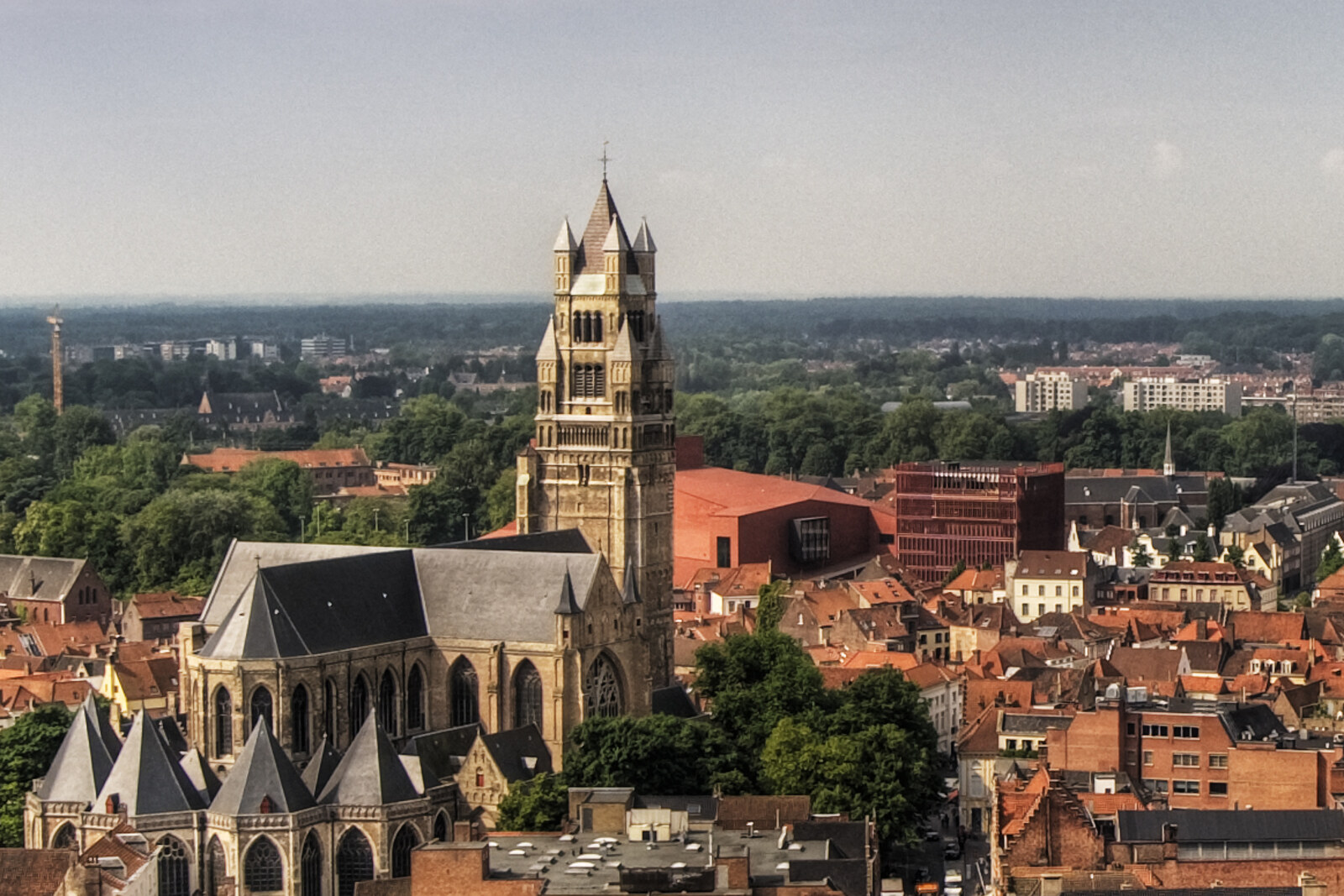
Look around first
What to notice
- Double rows of oak seats
- The bishop's chair
- The Gothic choir
- The massive west tower
The story of the place
The building that became St Salvator's Church survived thanks to a purchase for which the buyers never paid.
At the end of the eighteenth century, Sint-Salvator was an old parish church. Its name translates as “Holy Savior” and refers to Jesus Christ: there is no separate saint named Salvator behind it. Sint-Donaas was the cathedral at the time—St Donatian's Church on Burg Square, where the bishop's chair stood.
The French revolutionary administration abolished the diocese, banned public worship, and declared church buildings national property. Sint-Donaas was not a parish church: it had no parishioners' families behind it who were ready to buy back their own church. The building was sold and dismantled. Sint-Salvator had such people.
On September fifth, seventeen ninety-nine, the church was put up for auction. The churchwardens acted for the parish and managed to get the building back, although the purchase price was never paid. They then handed the church over to the parishioners. Every window had been broken, but the altars, seats, and the rest of the furnishings remained inside. The churchwardens began with the most essential repairs.
On February eighth, eighteen oh one, the doors opened—more than a year before the official return of public worship in Bruges. A full liturgy was not yet celebrated. Instead, they held a so-called dry Mass: an orchestra performed a Mass and the hymn “Te Deum.” Armed republican gendarmes kept order, and a box for donations toward restoration was placed in the center of the church. The parishioners had regained the building, but they had to repair it with their own money.
When Pope Gregory XVI restored the Diocese of Bruges in eighteen thirty-four, the former cathedral no longer existed. For the bishop's chair, they chose the city's oldest surviving parish church—the very one its churchwardens had preserved. Sint-Salvator became the bishop's principal church, and a chapter of canons was assembled there again.
On both sides of the choir, double rows of oak seats made around fourteen thirty still stand. When the bishop's chair appeared here, these seats were already about four centuries old.
Useful on site
Mon–Fri 10:00–13:00 and 14:00–17:30; Sat 10:00–13:00 and 14:00–15:30; Sun 14:00–17:00; treasury on a separate schedule.
Checked: June 28, 2026. Check the official source before visiting.Enter only outside restrictions imposed by worship services, and do not go around barriers for a better angle. The main space may be accessible separately from the treasury or temporary exhibitions.