 Guide On Map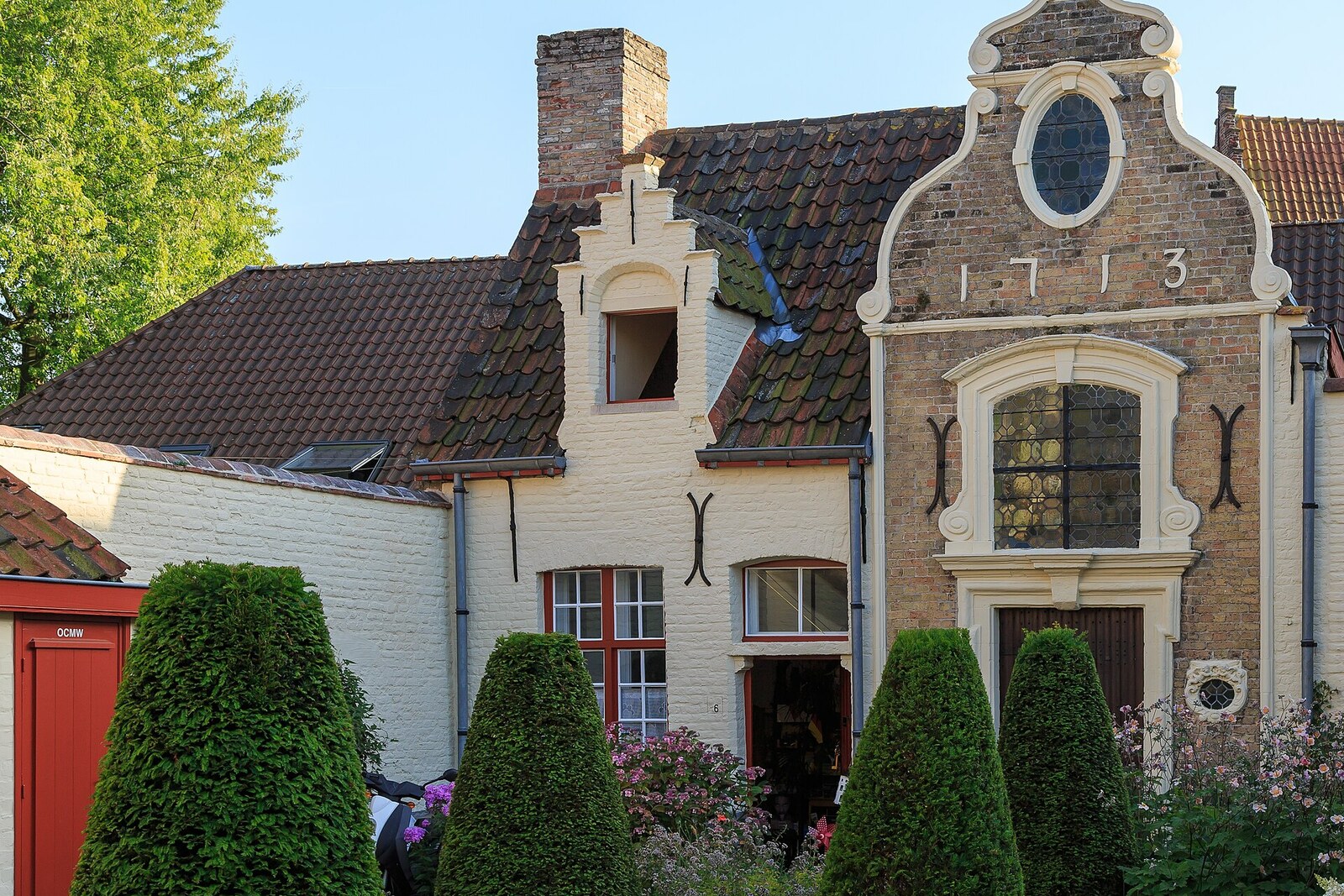
Look around first
What to notice
- The low wall on the street side
- The central chapel
- The date 1713 on the chapel
- Residential houses around the courtyard
The story of the place
De Vos Almshouse occupies a small courtyard, with residential houses arranged around it and the chapel remaining in the center. The low wall on the street side allows you to look inside, although the courtyard was once closed off from passersby. After restoration, the six former small houses became four modern apartments, and elderly residents of Bruges still live in them; the date seventeen thirteen on the chapel marks the start of construction.
In seventeen fourteen, six impoverished widows over fifty years old moved here. The founder preferred Catholic women from Bruges. Each was given a separate small house, received bread on Fridays, and fifteen shillings once a month. For a woman left without a husband or an income of her own, this meant shelter and steady support.
The assistance came with conditions. The gates were opened and closed strictly by the clock. Twice a day, the women gathered in the chapel and prayed for the man who had paid for their housing. If one fell ill, the others were required to nurse her. One of the widows was appointed steward: she kept order and saw that the rules were followed.
That man was Christian de Vos. He owned the neighboring house on Wijngaardplein. In seventeen thirteen, he set aside part of his own garden for the almshouse and ordered six small houses with a chapel to be built around a courtyard. A separate gate led here from his garden, so de Vos could personally check how the widows lived and whether they kept to the rules he had set. Charity, prayers for the founder's soul, and everyday supervision all fit within one courtyard.
In seventeen nineteen, de Vos died. He entrusted management to the priests of the Parish of Our Lady, but his son Jan retained the right to decide who would be housed in the small houses. The women continued to receive housing and support after the founder's death, while the family continued for some time to choose those who would be given a place.
The name on the façade is Christian de Vos's surname. The year seventeen thirteen on the chapel marks the start of construction, while seventeen fifteen in the almshouse's name marks its official establishment. In nineteen sixty-three, the wall on the street side was lowered, and passersby could see into the courtyard. After a later restoration, the six former dwellings were combined into four modern apartments. Elderly residents of Bruges still live here, and the central chapel remains in the very place where the first six widows came to pray for de Vos.
Useful on site
Private residential complex; exterior viewing only from the street.
Checked: June 28, 2026. Check the official source before visiting.The almshouse remains housing for elderly people: view it without entering private spaces, and do not expect free access to the chapel.