 Guide On Map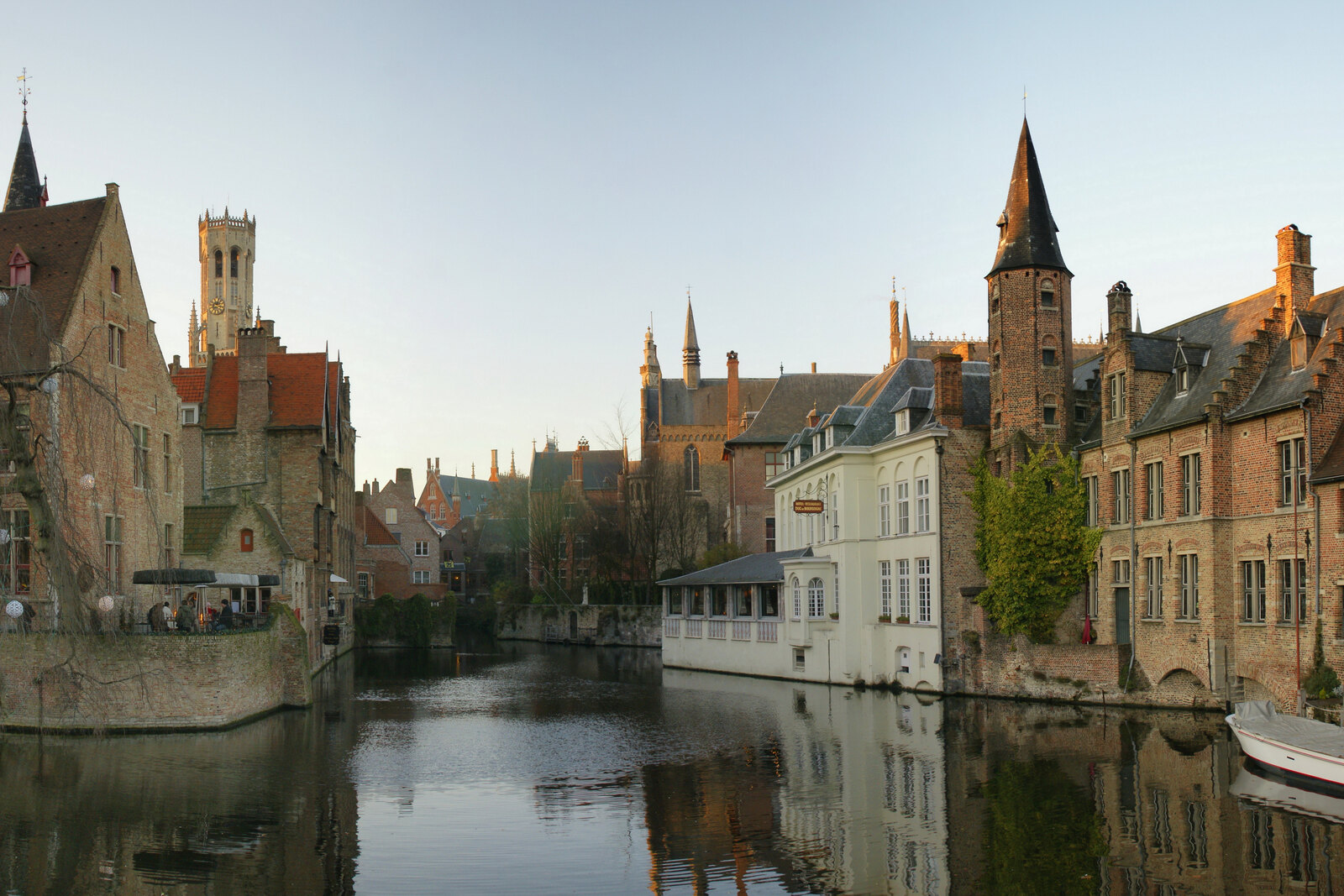
Look around first
What to notice
- Canal
- Houses along the quay
- Lace-shop display windows
- Chocolate-shop display windows
The story of the place
The canal is pressed tightly against the houses, and display windows for lace and chocolate open onto the water from the lower floors. This short stretch of shore served as a trading place long before the present shops: it was called Salt Dyke, and ships carrying salt were probably unloaded here. The Fish Market and Tanners' Square operated nearby, so the water brought goods, traders, and buyers together in one place.
A rosary hood was a short set of prayer beads: instead of going through the three circuits of a full rosary, a worshipper passed through the beads once. In the last quarter of the eighteenth century, merchants selling such beads had stalls here. They gave the quay its present name—Rosary Quay.
Behind the small item on the stall stood an expensive craft. Bruges artisans turned beads from Baltic amber and, later, African ivory. To become a master, an apprentice learned the work for six years, then remained a journeyman for another twelve. In fourteen twenty, the city guild counted seventy masters and more than three hundred apprentices: for hundreds of people, prayer beads were a livelihood.
Amber came from the Baltic coast, and the Teutonic Order controlled its sale. After military expenditures, the Order raised prices. Bruges masters fell into debt for the raw material, and suppliers stopped shipping it west. In fourteen fifty-four, the supply was cut off again. Some masters had to travel east themselves for amber, while others switched to ivory or left the craft. So the prayer beads lying here were the end of a long chain in which the loss of a single supply could wipe out eighteen years of training.
The stalls were set up by the water because trade was already taking place here. The quay was formerly called Salt Dyke. As early as thirteen ninety, a place was mentioned where ships carrying salt were probably unloaded. Nearby were the Fish Market, Tanners' Square, and the Pandreit canal: a seller did not need to look for customers in a quiet alley.
The prayer-bead merchants occupied the old trading shore so firmly that their product displaced salt even from the address. The stalls themselves have long been gone. The lower floors of the houses are now given over mainly to lace and chocolate shops, while the name preserves the vanished row of sellers of prayer beads.
Useful on site
Open quay and viewpoint; best in the morning or during the blue hour.
Checked: June 28, 2026. Check the official source before visiting.Do not stand at the edge of the roadway or block the bridge for a photo; you can look for the best view along the quay.