 Guide On Map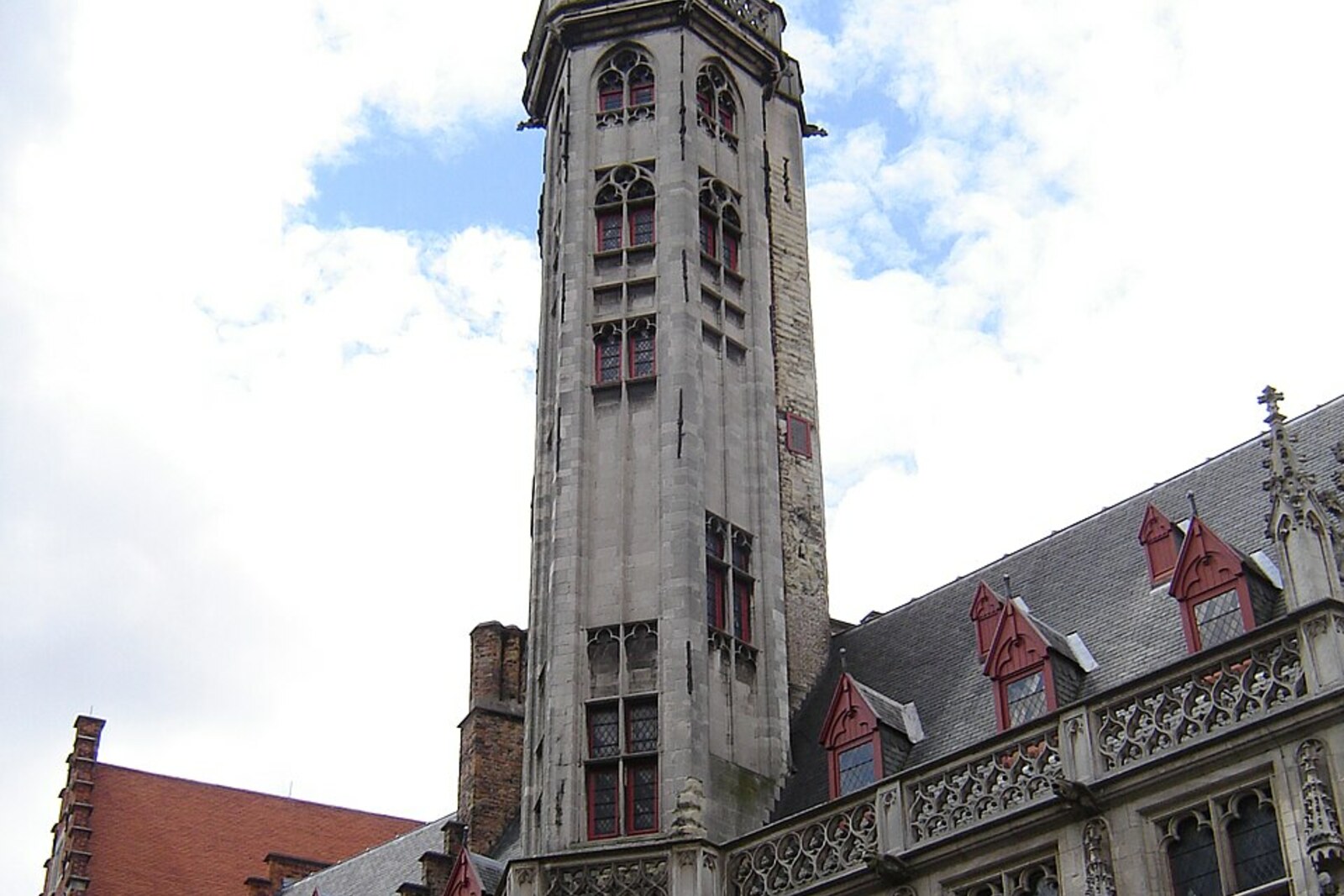
Look around first
What to notice
- The Poortersloge's brick tower
- Bear figure with a shield
The story of the place
A brick tower rises on the facade of the Poortersloge; when ships were unloaded nearby, people watched from it for approaching vessels. Around fourteen hundred, the house was occupied by the elite of Bruges's full citizens: merchants, landowners, and city officials. In its rooms, they met with foreign trading partners, while the large upper hall was intended for city meetings and feasts. The word “poorter” gave the building its name.
On the first of May, the head of the Society of the White Bear went out with a group of Bruges residents to the nearest forest. Each cut a branch, after which the riders returned to the Poortersloge. Here, the new leader's coat of arms took the place of that of his predecessor.
The leader was called the forestier. This office was neither inherited nor bought: for one year, it went to the winner of the annual mounted tournament. Along with the title came the duty to organize the next contests. The winner decorated his own door with an image of a bear. This allowed the citizens to see who had defeated the rivals, and who now had to gather the participants, oversee the ceremonies, and pass on the title a year later.
Few could afford such an honor. The Society of the White Bear usually had from four to eight members; even in the especially crowded year of fourteen twenty-seven, there were twenty. They were Bruges's wealthiest residents, often landowners, merchants, and city officials. They earned money through trade and invested it in horses, weapons, feasts, and their own standing among the Bruges elite. At the tournament, they had to prove this capital on horseback, with a lance in hand.
That is where the building's name comes from. A poorter was a full citizen, a holder of city rights. Around fourteen hundred, the Poortersloge was occupied by precisely the elite of such Bruges citizens. Ships were unloaded nearby, representatives of foreign trading associations lived in the neighboring houses, and merchants watched for approaching ships from the tower. In its rooms, they received foreign trading partners; the upper hall was reserved for city leaders' meetings and feasts. Members of the Society of the White Bear belonged to the same circle. The contests took place elsewhere, but the winner was confirmed here—by changing the coat of arms on a building where trading ties and city offices were part of everyday business.
Presumably, the first image of a bear was placed on the facade in fourteen seventeen. The bear represented the forest and also referred to the title of forestier. The last annual tournament was held in fourteen eighty-seven, after which the winners' coats of arms stopped replacing one another.
Contemporary art exhibitions are now held inside. The present bear figure was probably made in the nineteenth century and restored later. The medieval animal has been lost; its successor still holds a shield above the Poortersloge.
Useful on site
Exterior viewing is unrestricted; exhibitions inside depend on the Visit Bruges calendar and may be free.
Checked: June 28, 2026. Check the official source before visiting.The main details can be seen from outside, but the bear is high up—it is easier to view it from the opposite side of the street. Check the interior and exhibitions separately.