 Guide On Map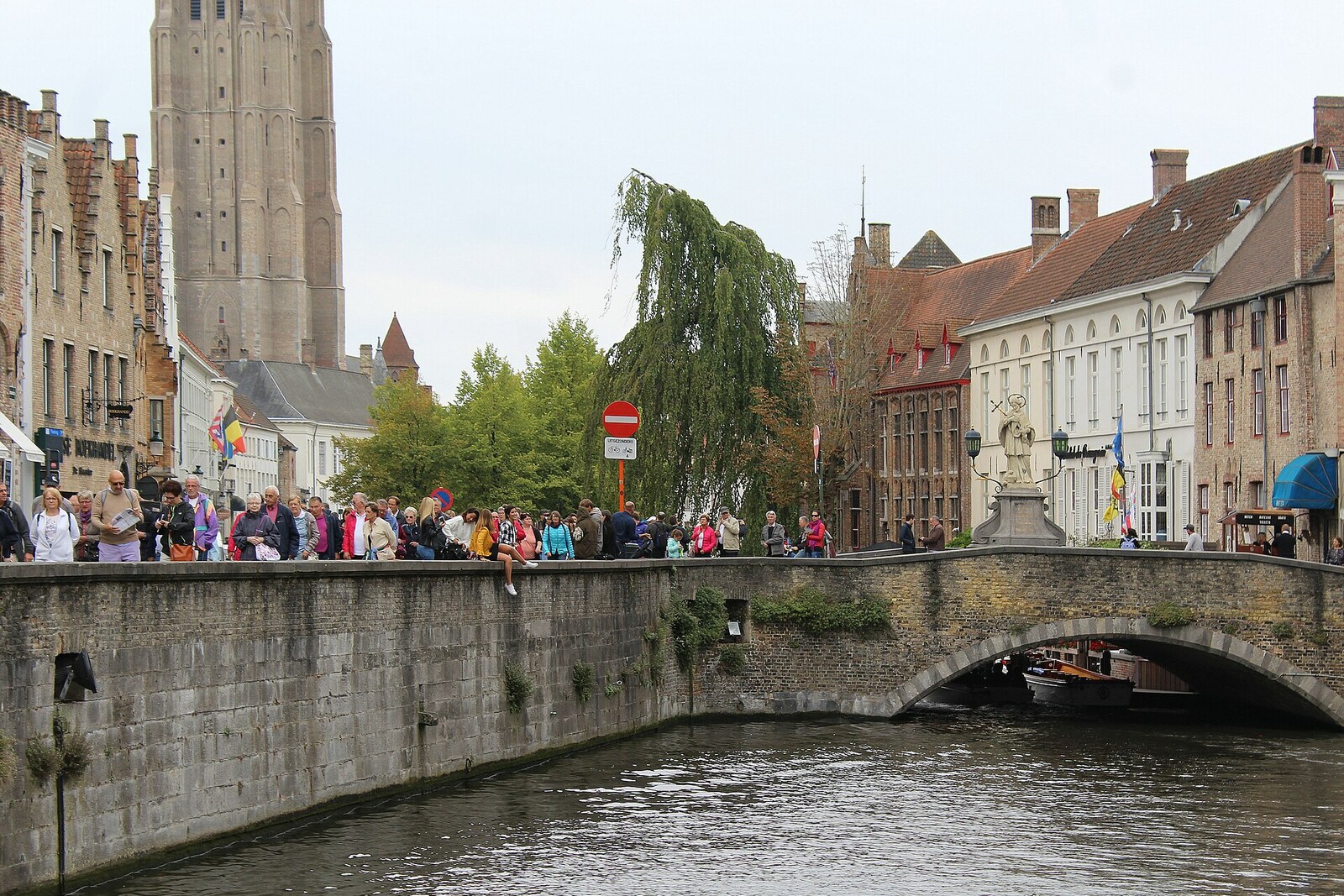
Look around first
What to notice
- Stone statue of St John of Nepomuk
- Five stars around the head
- Open book at the feet
- Blue pedestal with a Latin inscription
The story of the place
The crossing over the Dijver led the trading street from the center of Bruges to the suburbs. Here the water comes right up to the parapet; in the fifteenth century, porters probably worked by the boats, carrying goods to warehouses with their own hands. Later, a chapel was placed at the site of their daily work, and it stood for almost three and a half centuries.
Dijver is a short stretch of the Reie River, probably retaining its natural course. In the twelfth century, the water here formed part of the city's first line of fortifications. The name itself is far older than Bruges: linguists derive it from an ancient word meaning “sacred water.” The bridge received its current name only in the eighteenth century, from the stone figure on its parapet.
Before seventeen sixty-seven, this was the Great Eekhout Bridge. It continued the trading street of Wollestraat and linked the city center with the suburbs. In the fifteenth century, city porters probably offered their services here. They made their living carrying goods from boats to warehouses: all their earnings depended on their own backs and hands.
In fourteen twenty-one, their guild obtained permission to build a chapel on the bridge. The porters chose the place of their daily work, by the water and the road. The chapel stood for almost three and a half centuries. It was then replaced by a statue of a saint whose story was connected with a bridge, water, and the danger of drowning.
John of the Czech town of Nepomuk was the vicar general of the Archbishop of Prague, a lawyer who defended church decisions in a dispute with King Wenceslaus IV. In thirteen ninety-three, the king ordered him seized and tortured. After the torture, John's body was thrown from Prague Bridge into the Vltava.
Later, a legend arose that John had been Queen Sophia's confessor and died because he refused to reveal her secret to her husband. This version is not supported by documents: historians link the killing to the conflict between the king and the archbishop. But it was the legend of silence that determined how the saint came to be depicted. The five stars around his head stand for the five letters of the Latin word “I was silent.” His death in the Vltava made John the patron saint of bridges, boatmen, and drowning people.
The Bruges sculptor Pieter Pepers depicted him in canonical vestments, with a crucifix pressed to his chest. An open book lies at his feet, and five stars can be seen behind his head. The statue was placed here in seventeen sixty-seven, and that same year the Great Eekhout Bridge was called Nepomucenus Bridge for the first time.
On the night of October sixth to seventh, seventeen ninety-five, unknown people threw the figure into the Dijver. They are usually called Jacobins: during the French revolutionary occupation, they removed religious images from public places. John was thrown from a bridge into a river for the second time, now in the form of a Bruges statue.
For almost sixteen years, the figure did not stand in its place. On May first, eighteen eleven, it was returned to the parapet. For the restored monument, the Bruges priest and chronicler Jan-Baptist Dienberghe composed an inscription. From the letters of the Latin form of the saint's name, he formed the phrase: “Here is the piously silent one; here are lips that do not accuse.” The date of its return was given below.
The porters' chapel is no longer here. What remains of their decision is the very tradition of placing a shrine on a bridge. Dienberghe's words and the date when the figure raised from the water again took its place above the Dijver are preserved on the blue stone pedestal. The bridge's current name rests on a man who was thrown into one river and on his statue, thrown into another.
Useful on site
Open public space by the canal; check only the weather and the condition of the paving.
Checked: June 28, 2026. Check the official source before visiting.Stand where you do not block the narrow passage or access to the water. You can listen to the story from the quay: no entry into a building is needed at this point.