 Guide On Map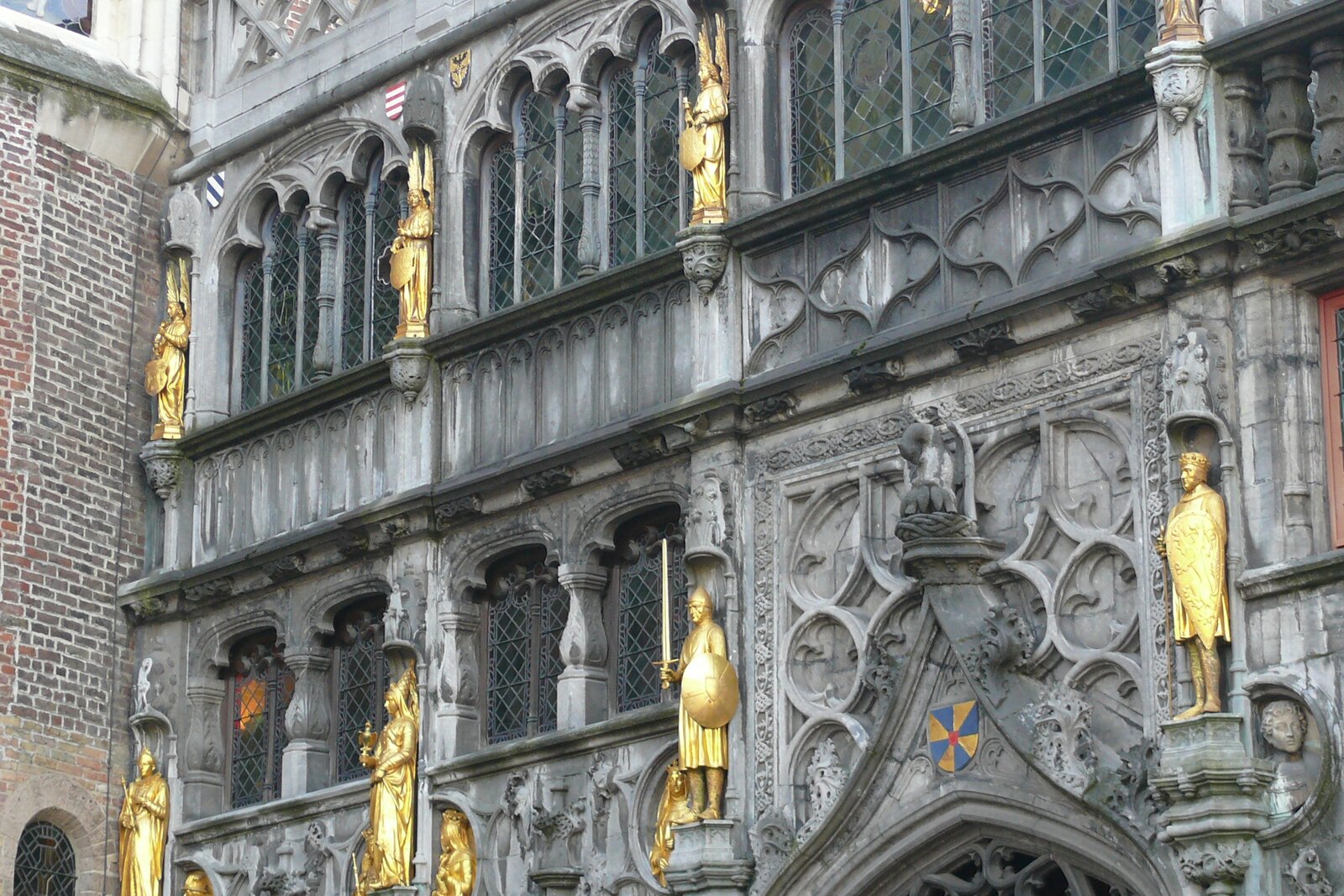
Look around first
What to notice
- The Romanesque interior of St. Basil's Chapel
- The rock crystal tube
- The silver reliquary
The story of the place
On September twenty-sixth, fifteen seventy-eight, Juan Pérez de Malvenda entered this chapel and carried out a small rock crystal tube. Pérez, a former mayor and city treasurer, served here as churchwarden and belonged to the Brotherhood of the Holy Blood. The Brotherhood entrusted him with preserving the relic that gave the chapel its present name.
The day before, the mayor and aldermen of Bruges—city judges and administrators—had ordered church treasures to be gathered in the city halls. A Calvinist council governed the city, and Catholic relics were losing their former veneration. The Brotherhood had to surrender the silver reliquary. The council permitted the crystal tube itself to be hidden.
Inside it is a substance that Catholics venerate as the blood of Christ. Church tradition links it with Joseph of Arimathea, who prepared the body of Jesus Christ for burial. Another, later legend says that Thierry of Alsace, Count of Flanders and a participant in the Second Crusade, received the relic in Jerusalem and brought it to Bruges in eleven fifty.
Documents do not confirm this. The first reliable mention of the relic in Bruges dates only to twelve fifty-six. The tube itself was made around twelve hundred, probably in Constantinople. After crusaders sacked the city in twelve oh four, many relics kept there were taken west. Who brought this one to Bruges, and when, is unknown.
The chapels already existed by then. The counts of Flanders built them one above the other beside their residence, which no longer exists. They dedicated the lower one to St. Basil; its Romanesque interior has survived. The upper one was set aside for the veneration of the Holy Blood. By the end of the thirteenth century, the relic belonged to the city, and craft guilds were required to accompany it in the annual procession. That is why, in fifteen seventy-eight, the council took the silver but allowed the contents to be saved.
Pérez placed the crystal tube in a lead casket, the lead casket in a wooden one, and buried the wooden one in the garden of his house. He was about sixty-seven years old. He came from the family of a Spanish consul and had repeatedly held the offices of alderman, treasurer, and mayor; a man like that could not go into hiding in the city himself. Over six years, Pérez changed residences several times, carrying the relic with him each time.
On November twenty-ninth, fifteen eighty-four, when the Calvinist council had already ceased to exist, Pérez handed the tube to Remi Drieux, Bishop of Bruges, who received it for the resumption of veneration. The compilers of a detailed protocol recorded Pérez's testimony and the names of the last two houses where the hiding place had been. This part of the story, unlike the account of the count's return from Jerusalem, is confirmed by city records. Pérez lived another twenty-one years after handing over the relic.
The crystal tube is now displayed daily in the Upper Chapel of the Holy Blood. On Ascension Day, it is carried through Bruges in a large silver reliquary made by Jan Crabbe in sixteen seventeen. This is no longer the same silver casing that they were required to surrender in fifteen seventy-eight. The relic that Pérez once carried out of here without that casing goes out in the annual procession.
Useful on site
The basilica is usually open daily 10:00-17:15; the treasury charges admission, and services affect access.
Checked: June 28, 2026. Check the official source before visiting.Keep quiet inside and do not play audio during a service; viewing the relic is not guaranteed.