 Guide On Map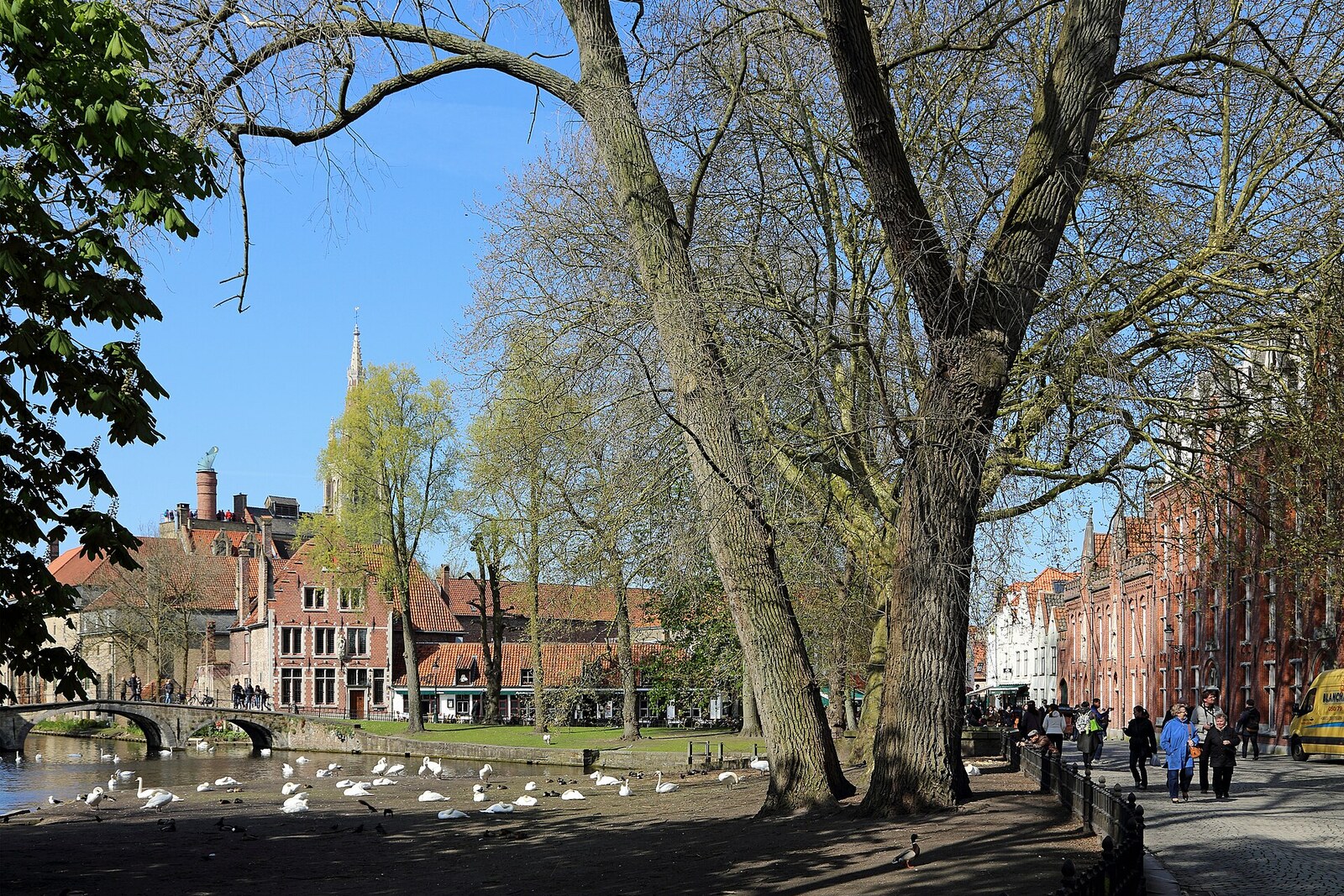
Look around first
What to notice
- The inscription above the gate
- The diamond-shaped keystone
- The stone boundary marker
- Vine leaves and grape clusters on the railings
The story of the place
Two Old French words are carved above the main gate: “Sow Gard”—“under protection.” A diamond-shaped keystone divides the inscription in two. In the Middle Ages, it had a literal legal meaning: the jurisdiction of the Bruges magistrate ended beyond the bridge.
In the thirteenth century, beguines—devout unmarried women who wanted to live in community, pray, and work without becoming nuns—settled in the low meadow beyond the first city wall. They took neither perpetual vows nor a vow of poverty, retained their property, and could leave. Each supported herself through her own work; the women governed the community themselves and elected their leader. This way of life left them more independence, but did not give them the protection that a recognized church order provided to a convent.
In twelve forty-two, Jeanne of Constantinople, Countess of Flanders, declared herself the patron of the Bruges beguines. Nearly six decades later, Philip the Fair, the French king seeking direct control over Flanders, went further. In twelve ninety-nine, he removed the beguinage from the city's jurisdiction and placed it under his own court.
Bruges officials could no longer themselves detain a person who had taken refuge within the enclosure. The king did not promise impunity: the case passed to his representatives. The city magistrate lost its right of jurisdiction here, while the beguines gained a protected boundary around the way of life they had chosen. The full name, Princely Beguinage Ten Wijngaerde, comes from this decision.
The gate also marked an everyday boundary. During the day, the beguines went into the city on business and returned across the bridge; after sunset, the gate leaves were locked. Men could not live inside, so even the priest appointed to the community settled outside, on Wijngaardplein.
The square itself took its name from Ten Wijngaerde. There is no reliable evidence of a vineyard here: researchers dispute whether the old word meant a vineyard or an enclosed wet meadow. In the eighteenth century, it was already understood literally, and the bridge railings were decorated with vine leaves and grape clusters.
The present main arch was built in seventeen seventy-six, but the medieval words “Sow Gard” were repeated above the new opening. Above them stands Elizabeth of Hungary—a thirteenth-century princess and patron of the beguines, who spent her fortune helping the poor and sick.
In nineteen twenty-seven, the last four Bruges beguines joined a community living by the rule of Saint Benedict. Now, beyond the gate are the homes of nuns and single women. The royal court has been gone from here for a long time; a stone boundary marker remains before the bridge, the inscription about protection remains above the arch, and at dusk the gate leaves still close.
Useful on site
Free public square; check the beguinage gate hours in the Visit Bruges calendar.
Checked: June 28, 2026. Check the official source before visiting.Do not approach horses and swans too closely, do not stand in the path of carriages, and lower your voice before entering.