 Guide On Map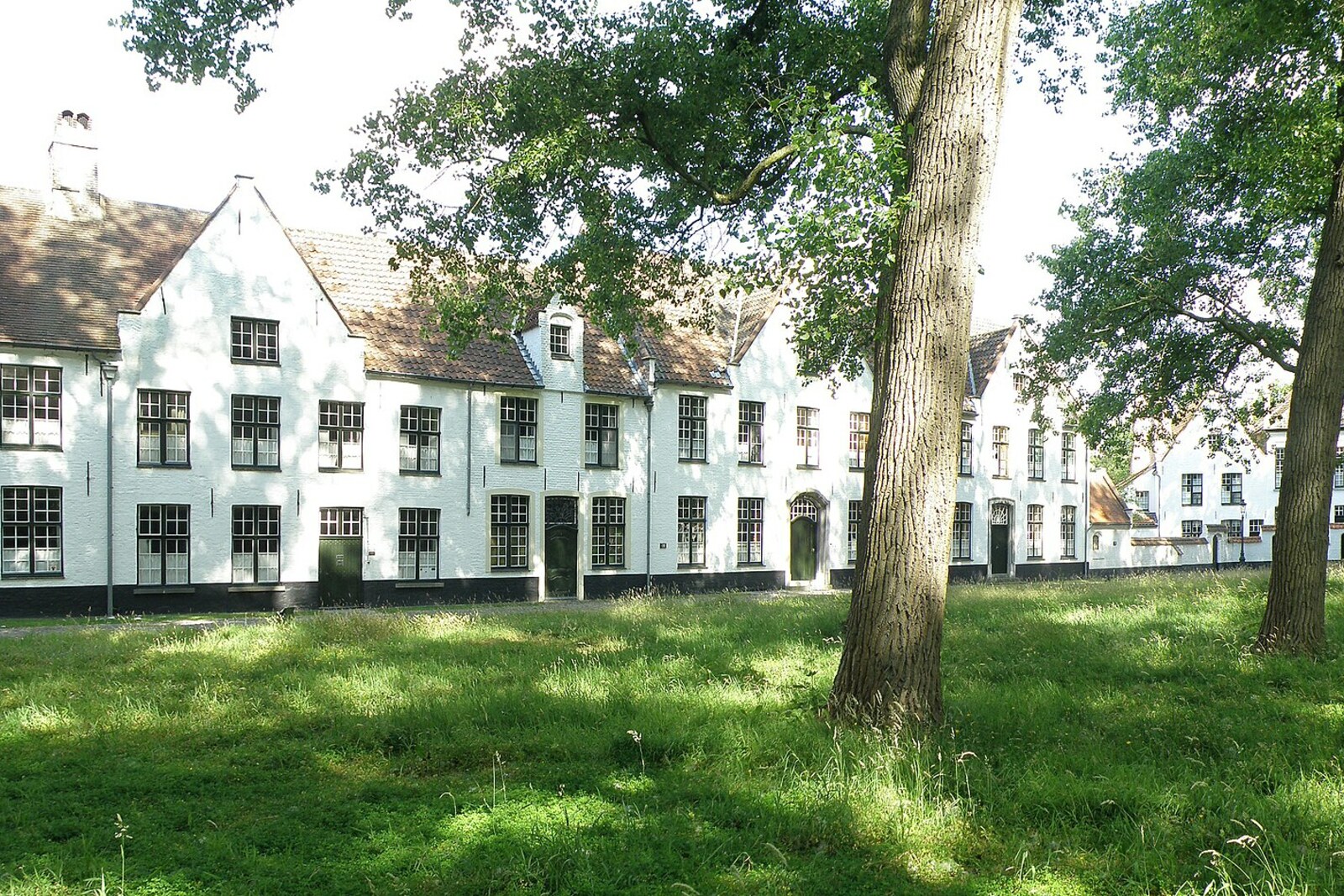
Look around first
What to notice
- The large shared lawn
- White façades
- Separate entrances to the houses
The story of the place
Behind the white façades, a neighborhood of women has survived: they lived around one shared courtyard, but in separate houses. They belonged to a Catholic community, yet did not take lifelong vows, could own property, and could leave. The houses are grouped around a garden, with private plots extending behind them; that is why the separate entrances here matter more than a monastic enclosure. The lawn still serves as the shared courtyard, but the convent begins behind the western row of façades, while single women live in the former houses of the beguines.
In eighteen ninety-six, Geneviève de Limon Triest was not accepted by two convents. The young woman from an aristocratic family was looking for a religious community and eventually entered the Bruges beguinage. Here she would live for seventy-five years and become the last grand mistress—the elected head of the beguines.
Beguines were unmarried Catholic women, but they did not become nuns. They did not take lifelong monastic vows, kept their property, and could leave the community. Some owned a house; others lived together. Many supported themselves through sewing, lace-making, and caring for the sick. This is the layout of Princely Beguinage Ten Wijngaerde: separate houses surround a shared courtyard, with private gardens behind the houses.
After the First World War, Geneviève led a handful of elderly beguines. The community's income was falling, the houses were deteriorating, and without young women, the beguinage would have become empty along with them. Geneviève tried to recruit new members. Rodolphe Hoornaert, appointed rector here, had the same aim: this priest was responsible for the local church and worked to ensure that a religious community of women would continue to live in the houses.
Hoornaert wrote about the beguines, sought donations, and in nineteen twenty-five organized a three-day celebration for the beguinage's seven-hundredth anniversary. The campaign drew attention to the deteriorating buildings, but too few women came. Two years later, Geneviève and Hoornaert agreed on another solution: they invited Benedictine nuns from Nîmes, France, and united them with the remaining beguines.
On August fourth, nineteen twenty-seven, sixteen members of the new community adopted the rule of Saint Benedict and the name “Filles de l'Église.” Among them were the last four Bruges beguines. Geneviève was elected the first prioress. Thus the religious community continued, but the former way of life came to an end: from then on, there were no more beguines in Bruges.
For Geneviève herself, the transition was incomplete. She continued to be called “Madame,” as the heads of the beguinage had been called for centuries. She did not move in with the new sisters, but kept a separate house and lived there with a maid. The beguinage had once accepted her after two convents turned her down; now she led a monastic community while retaining the domestic arrangement of a beguine.
The house of the grand mistress and several neighboring buildings were rebuilt for the sisters. By nineteen thirty-seven, behind the row of white façades there were a covered gallery around an inner courtyard, a meeting hall, a refectory, and monastic cells. The other houses kept their separate entrances and private gardens.
The large lawn remains the shared courtyard today, open during the day. Single women live in the former houses of the beguines, while behind the west façades stands the convent that arose from the decision of nineteen twenty-seven. The white walls conceal a precise boundary: where the row of independent houses ends and a single monastic building begins.
Useful on site
Free entry; Visit Bruges maintains a calendar and warns that hours may change and the gates close at dusk.
Checked: June 28, 2026. Check the official source before visiting.This is an active religious and residential space: stay on the permitted paths, do not approach the windows, and keep quiet.