 Guide On Map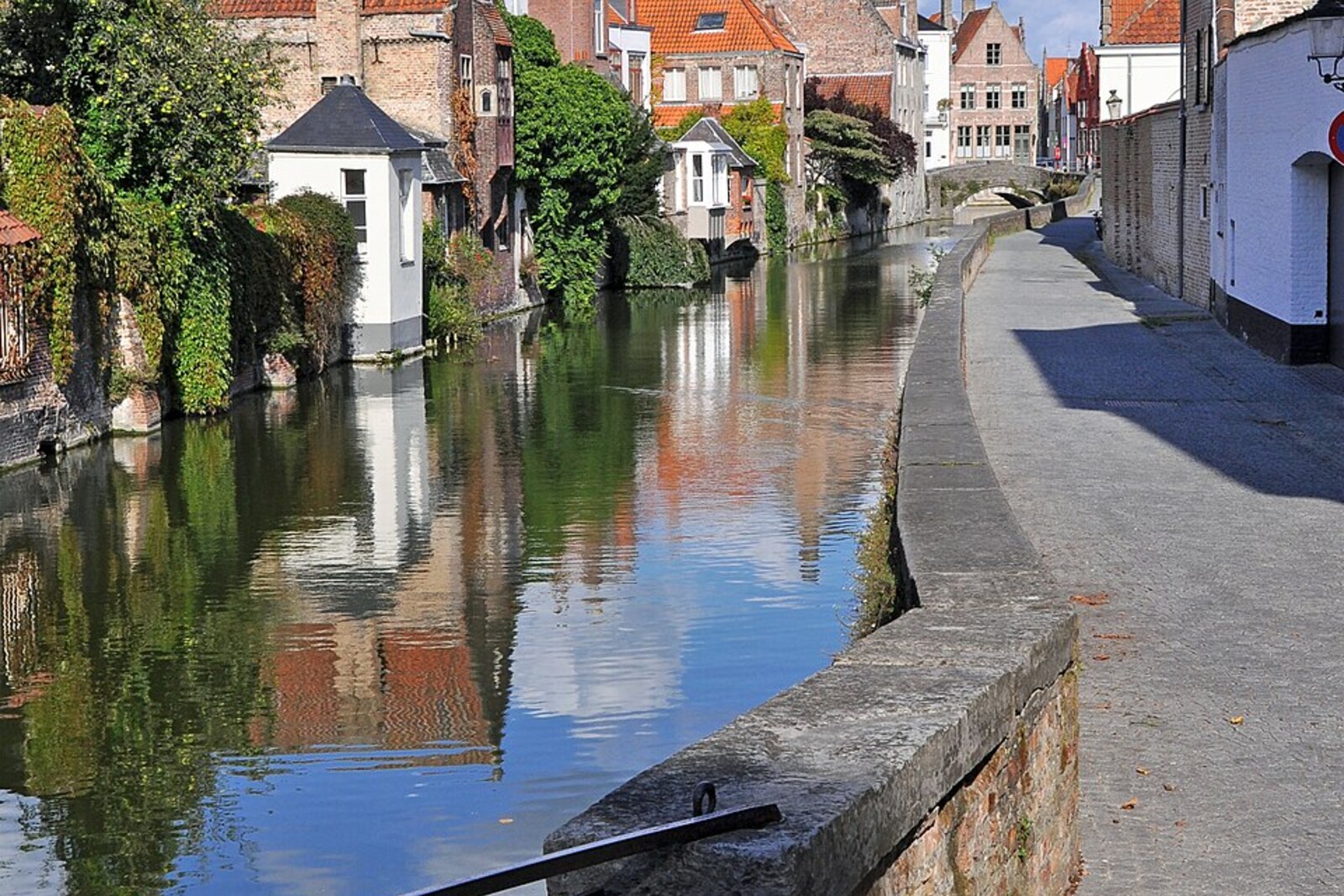
Look around first
What to notice
- Keystone with a hand and an eel
- Stone arch of the bridge
- Red stepped façade of the house De Gouden Hand
- Inscription on the façade
The story of the place
The stone arch of the bridge spans a narrow canal between closely packed townhouses. The present crossing was built in nineteen twelve; it connects short streets on both banks. On the neighboring street, a red house with a stepped façade and an old inscription has survived, while a carved stone was left in the bridge masonry.
Gouden-Handrei means “Golden Hand Canal.” In eleven twenty-seven and eleven twenty-eight, the people of Bruges turned the natural lowland running through here into the northern part of the first city moat. In twelve seventy, it was deepened so that vessels could travel along it.
A hand lifting an eel out of the water is carved on the bridge's keystone. The relief retells a local legend. When the canal was still called Sint-Gillisrei, residents supposedly tried not to catch eels: they associated the nocturnal fish, with its snake-like body, with the devil.
A hungry fisherman from Lissewege decided to find food for his household and left a fish trap here. By morning, it was full of eels. Among the ordinary fish, a golden-hued eel thrashed. The fisherman pulled the trap upward, and then a golden hand rose from the water, seized him by the ankle, and dragged him to the bottom. The man was never found. The legend adds that after this, the eels themselves disappeared from the canals of Bruges.
The name, however, arose differently. In the eighteenth century, the canal and the neighboring street gradually came to be named after the house De Gouden Hand. This house survives on Gouden Handstraat: its red stepped façade bears the inscription “House called the Golden Hand” and gives the year one thousand six hundred thirty-two.
The present stone bridge was built in nineteen twelve. A version of the legend remains on its arch—a hand with an eel; the documentary source of the name still stands on the neighboring street.
Useful on site
Open public canal and bridges; after rain, the stone may be slippery.
Checked: June 28, 2026. Check the official source before visiting.The detail with the hand is small, so take your time looking at the bridge and do not lean over the parapet. The Van Eyck House is known from documents, not from a surviving museum interior.