 Guide On Map
Flemish Primitives in Bruges' Museum Quarter
From Nepomucenus Bridge through the Groeninge Museum to St Salvator's Church
Guide On Map on your phone
Open the walk like a regular app
It takes about 10 seconds to install. No app store needed.
The whole path
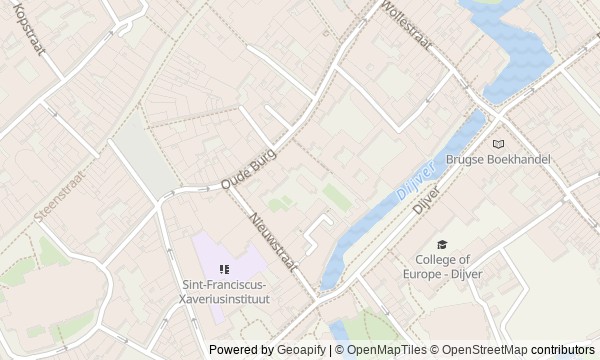
Route map
About the walk
You will walk through Bruges' museum quarter, from the waters of Dijver to St Salvator's Church. The route will dip into gardens, cross a bridge, and connect a palace, 2 churches, a former hospital, and galleries of early painting.
This is not a walk through postcard facades, but through the places for which art was commissioned, lost, and brought back. Why does a garden still bear the name of an owner who did not want to give it up? How does a painting end up without its altarpiece, and why does a city crane appear in a sacred scene? The answers are hidden in frames, coats of arms, inscriptions, and the faces of patrons.
The story separates documents from later legends and shows the larger history through a paid commission, a broken condition, and an unfinished work. By the end, you will see the patrons, their money, and the institutions the artists worked for behind the paintings of Jan van Eyck and Hans Memling.
Why this order
The bridge over Dijver sets the theme of returned objects and leads along the same quay to the Groeninge Museum, where a private church commission became a museum work. From the museum garden, the route immediately crosses Groeninge and enters Hof Arents. This transition matters because the garden itself was turned into a public link between the museums. Boniface Bridge then leads from a former private estate to Gruuthuse Palace. The move from the palace chapel to the church choir makes the next stop inevitable: private wealth and church life are joined here by a shared wall. On Mariastraat stands the hospital—after a family gift comes a commission from an entire hospital community. The final stretch along Mariastraat and Heilige-Geeststraat leads to St Salvator's Church, where the story of preservation concerns not one object but an entire church.
Those who want to understand Flemish painting through the fates of commissions and owners Lovers of museums, old churches, and city palaces Those who care about documents, inscriptions, and visible details
Those looking for an overview walk through Bruges' main squares Those not planning to enter museums and church interiors Those who find it difficult to spend a long time looking at paintings and decoration
Before you go
The walking line covers about 1.6 km, but museum visits can easily turn it into a route for most of the day. Decide in advance which interiors are essential for you: the Groeninge Museum, Gruuthuse Museum, St John's Hospital, and the museum section of the Church of Our Lady each require separate access checks and, where applicable, tickets. The church and St Salvator's Church remain active places of worship, so a service or private ceremony may temporarily limit visits. Before setting out, check each venue's current opening arrangements on its official website. Speak quietly inside, do not expect photography to be unrestricted, and allow time for cloakrooms, queues, and an unhurried look at the key works.
When to go
10:00-16:30
Backup plan
If one of the museums is unavailable, do not rebuild the whole walk: keep the sequence and follow the outdoor line from Dijver past Hof Arents, the facades of Gruuthuse Palace, the church, the hospital buildings, and St Salvator's Church. Outside, you will still have the canal, the bridge statue, old columns, bronze horsemen, tower silhouettes, and the connections between the buildings. In bad weather, shorten pauses by the water and in the garden, choosing 1 large museum and 1 accessible church. If a church interior is closed for a service, see the building from outside and return later rather than trying to enter with worshippers for sightseeing.
Route conditions
Surface. Paved — 1.4 km; unpaved — 5 m (data covers 88% of the route)
Stairs. Flights: 1, 12 m in total
Access. Wheelchair — no; stroller — limited (stairs)
Facilities. Toilets — 7; drinking water — 4
Elevation. Ascent — 10 m; descent — 7 m
OpenStreetMap extract of June 18, 2026: database data, not a check on the ground. Data © OpenStreetMap contributors, ODbL licence
Walk plan
Open in maps ↗- 1
Nepomucenus Bridge and Dijver
The history of the statue explains why the old trading crossing received the name of a Czech saint. - 2
Groeninge Museum
One altarpiece commission will link personal commemoration, a vanished church, and the birth of a city museum. - 3
Hof Arents and the Four Horsemen of the Apocalypse
A former private garden reveals how the city’s museum route passed through someone else’s property. - 4
Gruuthuse Palace
This stop connects wealth from the beer tax with hosting an exiled king and an English title. - 5
Church of Our Lady
The fate of one sculpture will show what the requirement to leave a work in one place forever meant. - 6
St John's Hospital
The triptych makes it possible to see the patrons, the workings of the hospital, and the source of its income on a single panel. - 7
St Salvator's Church
The finale will explain why a parish church took the place of the vanished city cathedral.
Route features
Everything you need stays in the browser
Progress, saves and your trip plan are stored on this device.
Add Guide On Map to your home screen so the walk opens outside the browser.
How we handle sources, maps and corrections: our editorial standards