 Guide On Map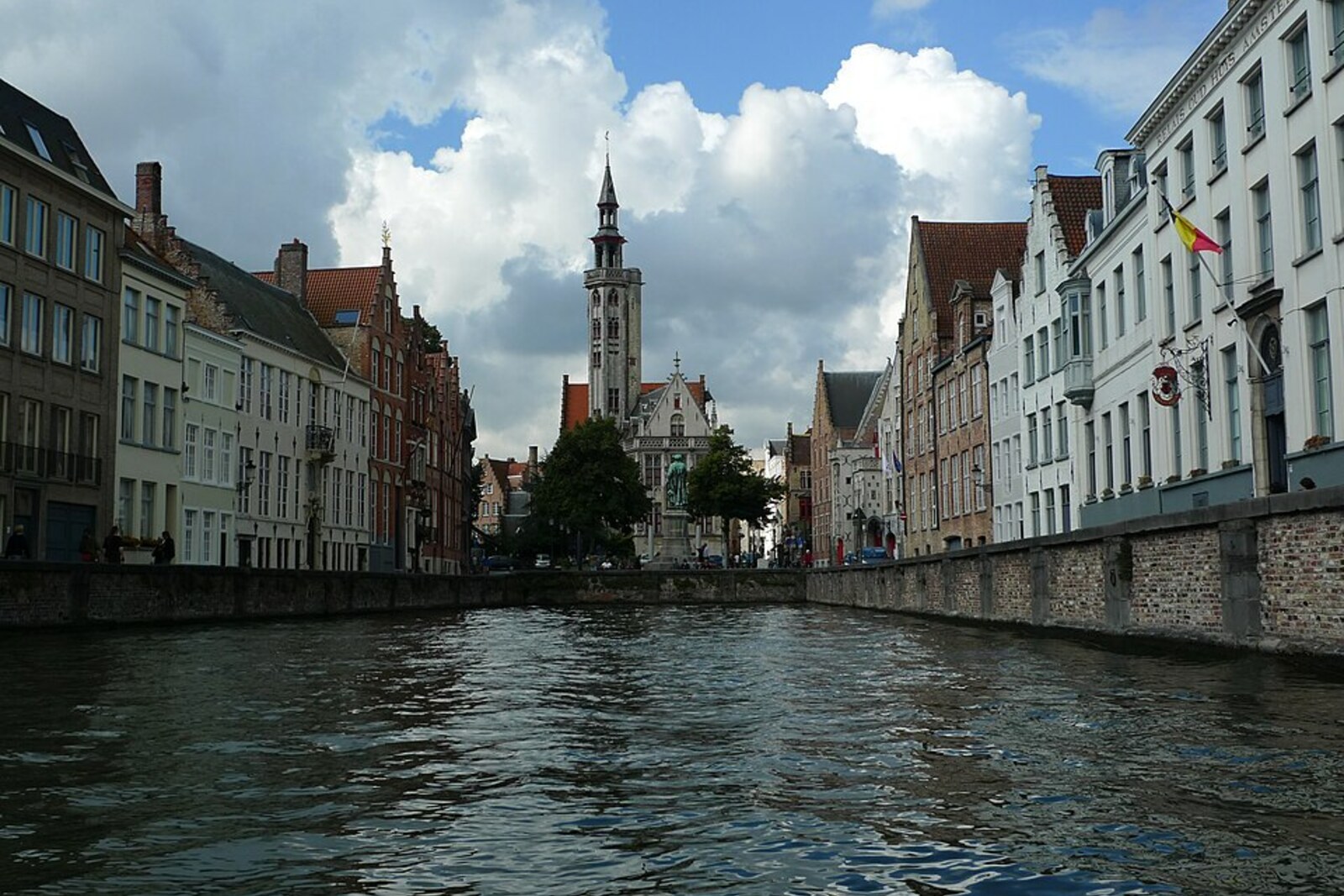
Look around first
What to notice
- Copper statue of Jan van Eyck
- Tall pedestal of blue stone
- Brick stepped facades
- Wide warehouse gates
The story of the place
Jan van Eyck never saw Jan van Eyckplein. In the fifteenth century, the Kraanrei canal ran where the present-day cobblestones lie. Sint-Jansbrug, also known as the New Year’s Bridge, crossed it. At the beginning of Spiegelrei, boats stopped to unload: goods were carried into warehouses, weighed, taxed, and handed over to merchants. That is why there are so many houses around here with wide gates and hoisting hatches.
Van Eyck himself lived nearby. He served as court painter and valet to Philip the Good, Duke of Burgundy—this title gave him a salary and personal access to his patron. In fourteen thirty-two, the artist settled in Bruges permanently, paid off the debt on his own house, and kept a workshop. The duke and his retinue, as well as members of the city government, came there; they left monetary gifts for van Eyck’s assistants. The artist worked here until his death in fourteen forty-one.
The square still did not exist at that time. The bridge was dismantled, and part of the Kraanrei was filled in only after seventeen eighty-seven. The resulting space was first called Academy Square: the academy of drawing and painting occupied the neighboring Burghers’ Lodge. City officials gave the square its present name in eighteen forty-four, twelve years before the first monument to van Eyck was installed.
The marble monument seemed too small to the townspeople. In eighteen seventy-one, it was removed, and the sculptor Hendrik Pickery received a commission for a figure three meters seventy-five centimeters high. The copper van Eyck was made by electroforming: metal was gradually built up over a mold. The city architect Louis Delacenserie designed a tall pedestal of blue stone. In eighteen seventy-eight, the present statue took its place at the center of the square.
The surrounding houses were also being prepared for its unveiling. Alfred Ronse, a member of the city government responsible for public works, advocated restoring the brick facades that owners, following the fashion of the time, covered with plaster and capped with straight cornices. The city government could not forbid owners from making alterations. Ronse proposed paying them a municipal subsidy, but releasing the money only for projects approved by an architect.
The first application came from the owner of the De Rode Steen house standing here. Under Delacenserie’s supervision, the plastered facades were replaced with brick facades with stepped and pointed gables, and Gothic ornament was added. Some houses did indeed preserve medieval masonry; others acquired a substantially reworked appearance. The program that began here later changed one hundred seventy-seven facades throughout Bruges.
At the center remains Pickery’s copper figure on Delacenserie’s pedestal, surrounded by several facades reworked in preparation for its appearance. And beneath the paving stones of the square that van Eyck never knew lies the filled-in bed of the Kraanrei.
Useful on site
Open public space; for the VR binoculars and outdoor navigation, check only the weather and access to the square.
Checked: June 28, 2026. Check the official source before visiting.View the square from the edge of the pedestrian zone: to understand its former scale, compare the open paving with the remaining canal water.