 Guide On Map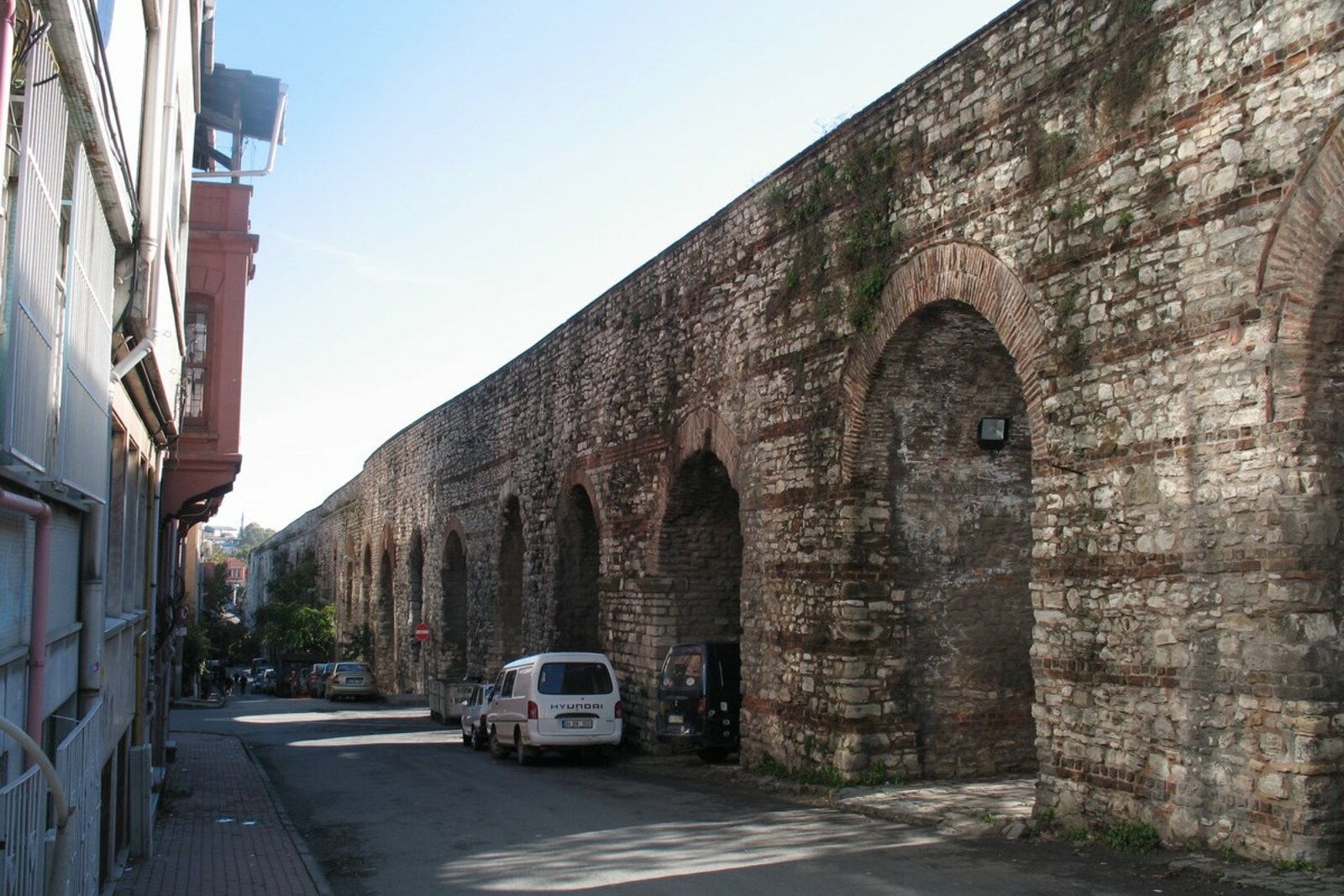

This place does not have an audited photo yet.
Selected place
Aqueduct of Valens
Local name: Bozdoğan Kemeri
You will examine the tradition about the stones of Chalcedon and understand why the water channel needed a bridge across the valley.
Start with 30 highlights or open the complete catalog of 168 curated places.
Highlights include Aqueduct of Valens, Atmeydanı: an arena without stands, Basilica Cistern, Bulgarian St. Stephen Church, Camondo Stairs, Church of St. George.
We have connected important places into ready-made walks with a clear order, stories and practical details.
Start with 30 highlights, or reveal all 168 curated places.
Local name: Bozdoğan Kemeri
You will examine the tradition about the stones of Chalcedon and understand why the water channel needed a bridge across the valley.
You will examine the tradition about the stones of Chalcedon and understand why the water channel needed a bridge across the valley.
Three ancient monuments help reconstruct the vanished arena where the city tried to replace its emperor.
The underground hall will show how a functioning urban structure can lose awareness of its own origin.
You will learn how a pause in the liturgy turned a wooden church into the site of an open church dispute.
Here, a family legend gives way to the history of a public passage between the banking district and the upper street.
You will understand why people have entered the patriarchal complex through another opening for two centuries.
Here, the origin of a familiar name turns out to be connected with how Russian refugee women earned a living.
Here you will see why the short crossing over the Golden Horn was at once a transport corridor and a political stage.
You will learn how its head secured the lodge’s repair with the help of a great poem of praise.
This stop will explain why control of the hilltop cost the colony a war and a formal surrender of its fortifications.
In the market's protected core, an investigation will unfold that temporarily halted trade and deprived merchants of access to their own valuables.
The empire's principal cathedral will become the place where a reclusive nun was forcibly turned into a ruler.
You will hear how the street's commercial layout helped rioters quickly find hundreds of the addresses they needed.
You will connect the preserved factory workshops with the people who set out from here to demand their withheld pay.
This is where the story begins of an urban construction project that sped up ship unloading and deprived port workers of their customary earnings.
This stop explains how rent from hundreds of shops covered the ongoing expenses of a large charitable complex.
This stop links an unfinished sultanic construction project with the commercial rows intended to support it.
The final stop will show how, after the founder’s death, the complex received a new name while traces of the original gift remained inside the library.
You will learn how a small community preserved its school by temporarily leaving its most conspicuous building.
This stop will show how a will became a building where income from below was meant to pay for the prayer hall above.
This row of houses helps distinguish preserving an old street from its modern reconstruction.
Here, the range of goods sold is a trace of an old division between pharmacists and sellers of medicinal raw materials.
You will learn who supported the schools, hospital, kitchen, and inn attached to the sultan's mosque, and how they did so.
Here, construction became public proof of the sultan's right to make an imperial gesture.
The finale will link the square’s name to the old water system, and the new center to projects by a father and son.
At the end, you will see how street vendors' donations became lasting community support.
The final stop brings state reform out of the palace offices and onto the square before witnesses.
The history of this short line will show the price the engineer paid for the capital he attracted.
Here it will become clear why a new beverage turned from the commodity of two shops into a distinct urban trade.
You will see the surviving framework of a memorial in which caring for the sick paid for the commemoration of the imperial family.
Nearest audio-route stop: Flower Passage — 120 m in a straight line, route Galata and Beyoğlu: From the Harbour to Taksim Square
Nearest audio-route stop: Flower Passage — 100 m in a straight line, route Galata and Beyoğlu: From the Harbour to Taksim Square
Nearest audio-route stop: İstiklal Avenue — 70 m in a straight line, route Galata and Beyoğlu: From the Harbour to Taksim Square
Nearest audio-route stop: Atmeydanı: an arena without stands — 40 m in a straight line, route Imperial Sultanahmet: from the Hippodrome to Gülhane
Nearest audio-route stop: Flower Passage — 20 m in a straight line, route Galata and Beyoğlu: From the Harbour to Taksim Square
Nearest audio-route stop: Basilica Cistern — 80 m in a straight line, route Imperial Sultanahmet: from the Hippodrome to Gülhane
Nearest audio-route stop: Nuruosmaniye Mosque — 30 m in a straight line, route Commercial Istanbul: Port, Markets, and Sultan's Endowments
Nearest audio-route stop: Hagia Sophia — 90 m in a straight line, route Imperial Sultanahmet: from the Hippodrome to Gülhane
Nearest audio-route stop: Karaköy Waterfront — 80 m in a straight line, route Galata and Beyoğlu: From the Harbour to Taksim Square
Nearest audio-route stop: Flower Passage — 60 m in a straight line, route Galata and Beyoğlu: From the Harbour to Taksim Square
Nearest audio-route stop: Nuruosmaniye Mosque — 40 m in a straight line, route Commercial Istanbul: Port, Markets, and Sultan's Endowments
Nearest audio-route stop: Uzunçarşı and Tahtakale — 130 m in a straight line, route Commercial Istanbul: Port, Markets, and Sultan's Endowments
Nearest audio-route stop: Atmeydanı: an arena without stands — 110 m in a straight line, route Imperial Sultanahmet: from the Hippodrome to Gülhane
Nearest audio-route stop: Soğukçeşme: a past reassembled — 30 m in a straight line, route Imperial Sultanahmet: from the Hippodrome to Gülhane
Nearest audio-route stop: Hagia Sophia — 30 m in a straight line, route Imperial Sultanahmet: from the Hippodrome to Gülhane
Nearest audio-route stop: Hagia Sophia — 80 m in a straight line, route Imperial Sultanahmet: from the Hippodrome to Gülhane
Nearest audio-route stop: Süleymaniye Mosque — 110 m in a straight line, route From Süleymaniye Mosque to Balat: Hills of the Golden Horn
Nearest audio-route stop: Nuruosmaniye Mosque — 40 m in a straight line, route Commercial Istanbul: Port, Markets, and Sultan's Endowments
Nearest audio-route stop: Taksim Square and the Atatürk Cultural Center — 110 m in a straight line, route Galata and Beyoğlu: From the Harbour to Taksim Square
Nearest audio-route stop: Kadir Has University and Rezan Has Museum — 130 m in a straight line, route From Süleymaniye Mosque to Balat: Hills of the Golden Horn
Nearest audio-route stop: Sultan Ahmed Mosque — 140 m in a straight line, route Imperial Sultanahmet: from the Hippodrome to Gülhane
Nearest audio-route stop: İstiklal Avenue — 40 m in a straight line, route Galata and Beyoğlu: From the Harbour to Taksim Square
Nearest audio-route stop: Nuruosmaniye Mosque — 100 m in a straight line, route Commercial Istanbul: Port, Markets, and Sultan's Endowments
Nearest audio-route stop: Basilica Cistern — 40 m in a straight line, route Imperial Sultanahmet: from the Hippodrome to Gülhane
Nearest audio-route stop: İstiklal Avenue — 120 m in a straight line, route Galata and Beyoğlu: From the Harbour to Taksim Square
Nearest audio-route stop: Topkapı Palace and Gülhane: the state at the door — 140 m in a straight line, route Imperial Sultanahmet: from the Hippodrome to Gülhane
Nearest audio-route stop: Bulgarian St. Stephen Church — 70 m in a straight line, route From Süleymaniye Mosque to Balat: Hills of the Golden Horn
Nearest audio-route stop: Mahmutpaşa — 130 m in a straight line, route Commercial Istanbul: Port, Markets, and Sultan's Endowments
Access and construction years come from OpenStreetMap and Wikidata, snapshot of August 25, 2026: database data, not a check on the ground.