 Guide On Map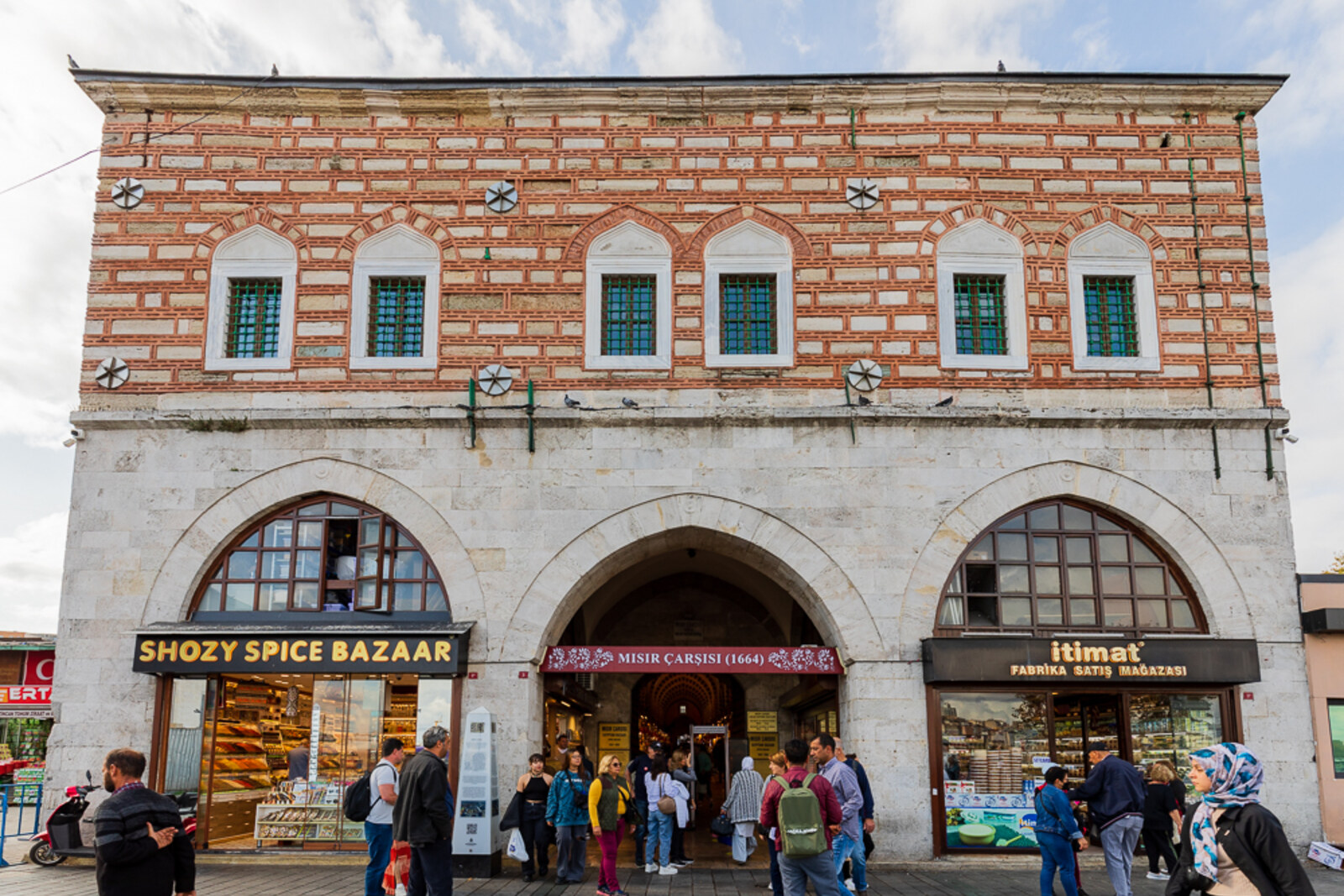
Look around first
What to notice
- Vaulted main gallery
- Stone gate arches
- Stalls with roots and bark
- Sacks of seeds and spices
The story of the place
It was traders who called this bazaar Egyptian. The earliest chroniclers knew it as the New Bazaar or the Valide Sultan Bazaar. But by the middle of the eighteenth century, goods from Cairo were arriving here in such quantities that the former names gave way to the new one. Egypt was a transshipment point: coffee came through the Red Sea from Yemen, while spices and medicinal raw materials came from Arabia and India; merchants then carried them across the Mediterranean Sea to Istanbul. What had grown far beyond Egypt reached the counter as Cairo goods.
About half of the hundred shops here were occupied by attars—traders in substances used to make medicines. Three bazaar entrances were assigned to them, and another three to sellers of cotton and quilted blankets. The attars supplied small shops throughout the city, but they also dealt directly with customers: mixing ointments and syrups, making pills, and preparing compounds from doctors’ prescriptions. Their stocks held roots, leaves, minerals, dyes, poisons, and animal raw materials side by side. Their income depended on being able to distinguish and store hundreds of substances; an error in a sack or on a label could end up in a medicine.
In the nineteenth century, Istanbul saw more certified pharmacists and ready-made preparations. Pharmacists sought the exclusive right to prepare and sell medicines because regular customers still went to the attars. Traders complied poorly with the first restrictions, introduced in the early eighteen sixties.
The Imperial Medical Council, responsible for the safety of the medicinal trade, then drew up a special instruction of ten articles. Its title explicitly named both the traders in medicinal raw materials and the Spice Bazaar: this was where the main wholesale hub was located. In eighteen eighty-four, attars were forbidden to open pharmacies, and a new shop could be established only with a municipal license and registration with medical officials.
Two cord-bound books were introduced for trading in medicinal substances. One recorded goods dispensed to pharmacists, the other to masters whose crafts required chemicals. When selling a poisonous substance, the attar had to state its name and quantity, the purchaser’s occupation and address, and the date, then obtain the purchaser’s signature. An attar could no longer sell such goods directly to a patient. A year later, ready-made preparations, mixtures with undisclosed compositions, and medicines prepared from a doctor’s prescription were also banned.
Pharmacists received the medicines; attars were left with raw materials, spices, and dyes. As pharmacies and perfume shops spread, the old trade began to disappear. After the fire of nineteen forty, city authorities assigned the attars six restored shops, but only three found takers. For several years, a wartime shortage of clothing kept the trade afloat: Istanbul residents redyed old fabrics and bought aniline dyes and soap from attars. By nineteen forty-five, there were again eleven of their shops here. In the nineteen fifties, a researcher of old Istanbul found only one genuine attar among three spice shops.
Six entrances and the names of the gates remain from the former arrangement. Inside, it is no longer possible to separate the forty-nine shops of medicinal traders from the rows of cotton sellers. Roots, bark, seeds, herbs, and spices remain; pills, ointments, and prescription compounds have disappeared. Cairo supplies gave the bazaar its name, while pharmacists determined exactly what may be sold under that name.
Useful on site
The bazaar’s commercial website, on the date checked, listed 08:00–19:30 daily; holidays, repairs, and the schedules of individual shops should be checked again before publication.
Checked: July 1, 2026. Check the official source before visiting.Keep to the edge of the flow, and ask permission before photographing goods or a seller.