 Guide On Map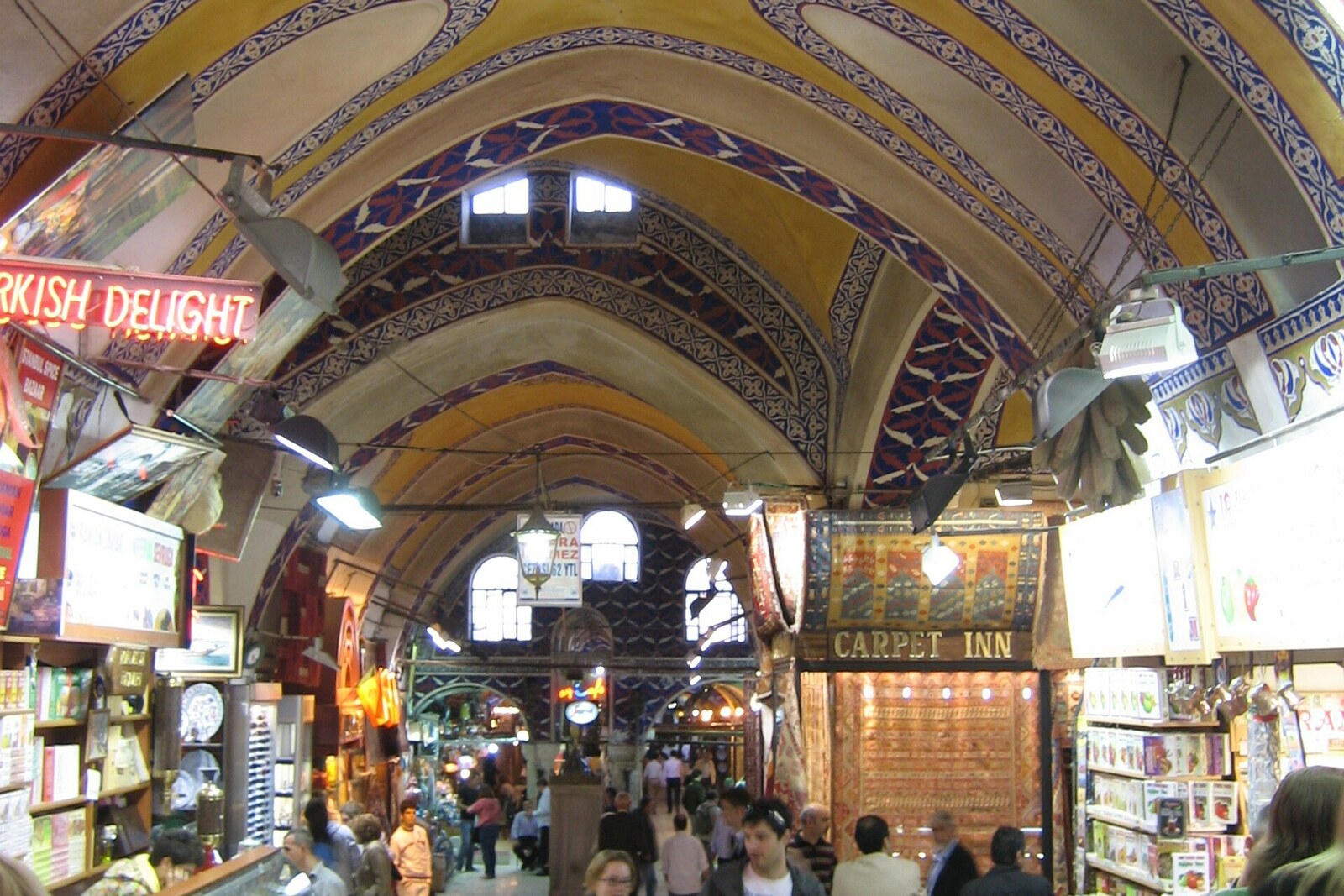
Look around first
What to notice
- The domed vaults of the Old Bedesten
- Storage niches in the walls
- Heavy gates
- Jewelry shops
The story of the place
At the center of the Grand Bazaar stands the Old Bedesten, a stone hall beneath fifteen domes. Blind storage chambers are built into its walls, and its four exits are closed by heavy gates. Jewelry and costly fabrics were sold here, trade was conducted, and other people's money and valuables were accepted for safekeeping for a fee. Merchants kept their working capital, wills, and debt papers in the bedesten. That is why traders surrounded it with shops, workshops, and inns: today's bazaar was assembled around a protected vault.
On the morning of March second, fifteen ninety-one, the owners found broken seals on several chests. About thirty thousand gold coins were missing—a load that would have been hard to carry out unnoticed even with the doors open. At first, they decided that the day before, some outsider had waited until the traders left for Friday prayers, hidden in one of the cellars, and set to work on the chests after closing time.
The Istanbul qadi, the city's chief judge, wanted to recover the money and find the culprit. The commander of the Janissaries and the subashi, the head of the city guard, joined him in the investigation. They concluded that the stolen property was still inside. The Old Bedesten was closed for fifteen days. Traders lost access to their shops and goods; officials counted their property, checked the records, and searched the chests and cellars. Several suspects were tortured, but the gold was not found.
Then the guard began making surprise returns to rooms that had already been searched. Near the jewelers' gate stood the shop of a Persian merchant of musk and ambergris—costly perfume ingredients. A young man, whose name and trade the chronicler did not record, rented part of his cellar. The subashi noticed his nervousness and ordered the cellar searched again.
First, they found empty money bags. Then they lifted the mats lying on the floor. Beneath them, the young man had laid out the coins in a single layer: he had counted on the flat flooring not revealing the hidden volume. The gold and silver had never left the bedesten.
The young man confessed and asked that the others no longer be pursued. He specifically said that the Persian merchant from whom he rented the cellar knew nothing. Ottoman law prescribed hanging for breaking in to steal, and Sultan Murad III considered such a large theft a betrayal of the trust placed in him as well. At first, the young man was sentenced to a painful execution. The sultan wanted to see the man who had robbed the city's main vault. At the audience, the condemned man asked for an easier death. Murad softened the method of execution, but not the sentence itself: the young man was hanged. The money was returned to its owners, the doors were opened, and the traders returned to their shops.
The crime scene survives inside the Grand Bazaar: the same Old Bedesten beneath fifteen domes, with storage chambers in the thickness of its walls. Money is no longer deposited there for safekeeping, but gold and currency are still traded around it, and some Istanbul quotations are still published under the name Grand Bazaar—the Closed Market.
Useful on site
Common current visitor hours: Monday–Saturday 08:30–19:00, closed Sunday; holiday closures and administrative decisions should be checked again immediately before publication.
Checked: July 1, 2026. Check the official source before visiting.Remember the name of the gate through which you entered. Any conversation about an item may turn into bargaining, but you do not have to buy anything.