 Guide On Map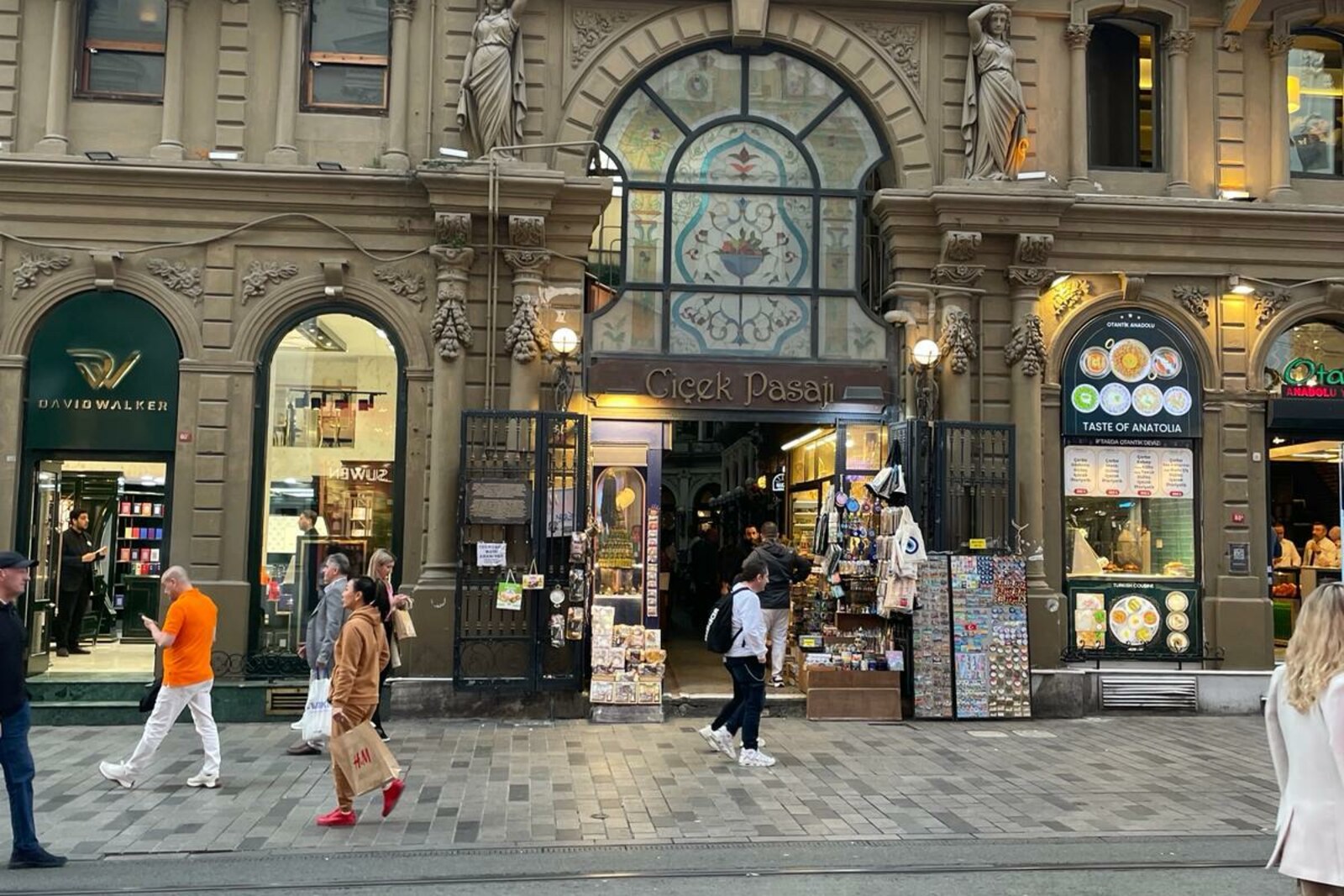
Look around first
What to notice
- The “Cité de Péra” inscription
- The “Flower Passage” inscription
- The glass roof
- Shops along the passage
The story of the place
A glass vault covers a narrow inner gallery, with small commercial spaces running along both sides; restaurant tables now occupy them. In the nineteen thirties, flower-shop owners from all over Beyoğlu gathered here and held auctions, gradually filling the entire passage. Later, the flower sellers and residents of the upper floors left, and the shops passed to taverns and restaurants.
Two names stand above the entrance. The French one, “Cité de Péra,” refers to the entire apartment building that the banker Hristaki Zografos had built in eighteen seventy-six. Six years earlier, a major fire had destroyed the Naum Theatre that stood here. Zografos bought the burned-out plot and laid out twenty-four shops along the covered passage, with eighteen apartments above them. The second name, “Flower Passage,” appeared later and owes its existence to people for whom selling flowers became a way to survive.
After the defeat of the White armies in the Russian Civil War, tens of thousands of Russian refugees found themselves in Istanbul, which they called Constantinople. Women who had only recently lived on family money or the labor of servants had to become waitresses, laundresses, and street vendors. Some sold flowers on Grande Rue de Péra.
Later accounts like to turn all these sellers into baronesses and princesses. There really were women from aristocratic families among the refugees, but no one recorded the names or titles of most of the flower sellers. Something else is known more reliably: they earned money for food by selling bouquets, and passersby saw women who only recently could not have imagined such work.
At the time, the building belonged to Sait Pasha, a former head of the Ottoman government, and was called Sait Pasha Passage. The researcher Jacques Déleon recorded a later testimony: when British and French soldiers harassed Russian women selling flowers in the street, the women ran with their flowers into the covered passage and continued trading there. This is testimony preserved in memoirs, not a police report.
One or two flower shops had existed in the passage earlier as well. The Russian refugee women did not bring the first bouquets in history here. What changed was the scale. In the nineteen thirties, flower sellers began holding auctions inside, and then flower-shop owners from all over Beyoğlu occupied the small shops along the passage. City residents began calling it first the flower sellers’ passage, and then Flower Passage.
Most Russian refugees eventually left Turkey. Their livelihood outlasted them: by the nineteen forties, the name had already taken hold. At the same time, beerhouse and meyhane owners—local taverns serving drinks and snacks—began occupying the same premises. Visitor numbers grew, the residents of the upper floors and the flower sellers gradually moved elsewhere, and new restaurants took over the vacated shops.
Today, restaurant tables stand beneath the glass roof. Of the Russian women sellers, neither counters nor recorded names remain; of the flower trade, there remain the name above the entrance and the former shops, where food and drinks are now served.
Useful on site
The passage, as a shopping and restaurant gallery, is usually accessible for most of the day; individual restaurants keep their own hours. Nighttime seating, music, and private events may affect passage through it.
Checked: June 29, 2026. Check the official source before visiting.You do not have to order food: walk inside, without lingering in the way of waiters and visitors.