 Guide On Map
Imperial Sultanahmet: from the Hippodrome to Gülhane
From Atmeydanı through Hagia Sophia to the walls of Topkapı Palace and Gülhane
Guide On Map on your phone
Open the walk like a regular app
It takes about 10 seconds to install. No app store needed.
The whole path
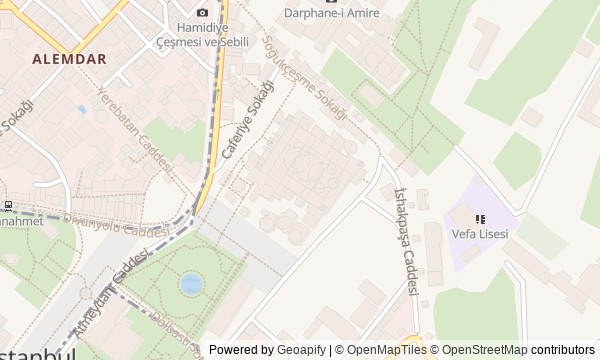
Route map
About the walk
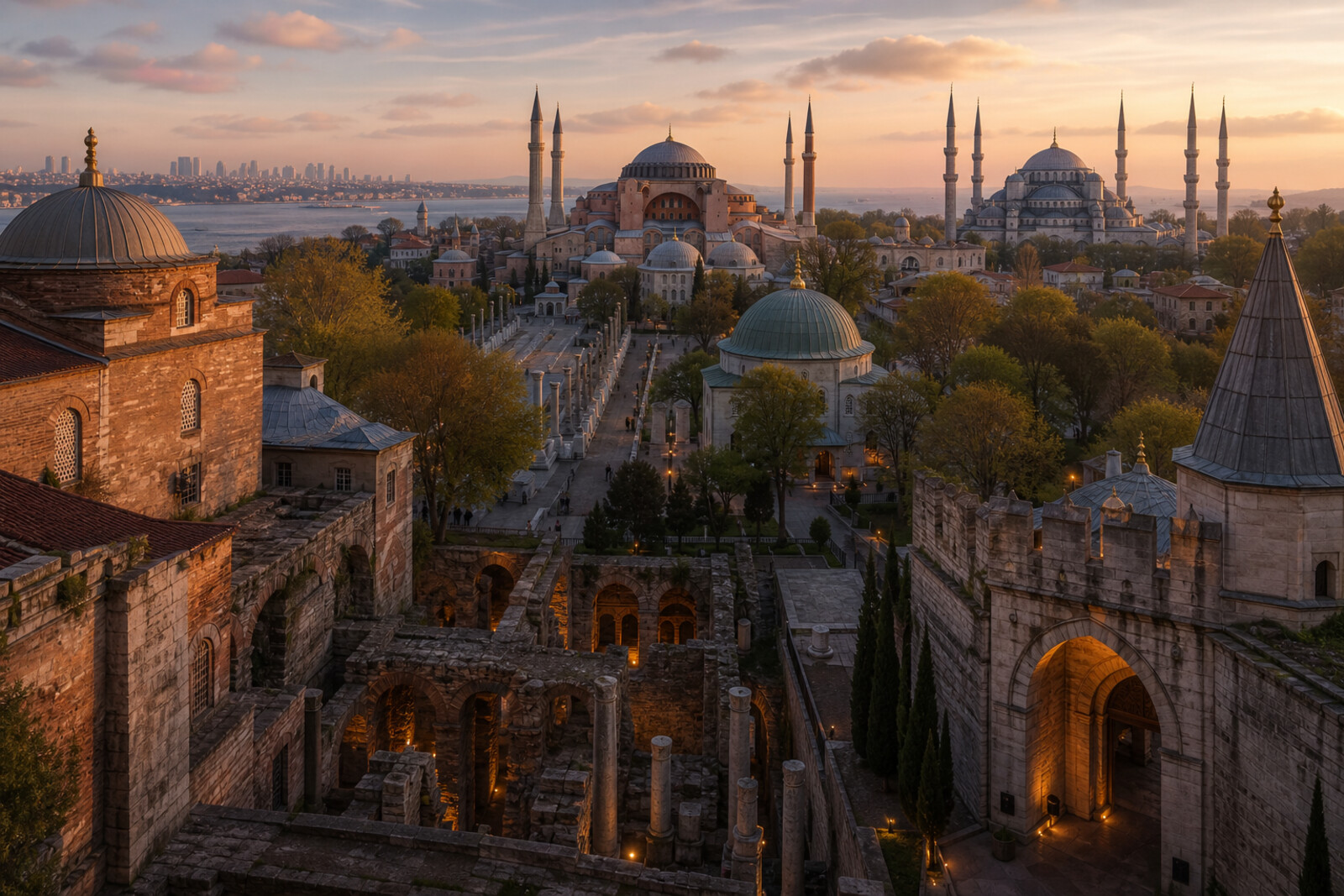
You will begin in Sultanahmet Square, where 3 ancient monuments mark the center of the vanished Hippodrome of Constantinople. Then you will walk to Sultan Ahmed Mosque, descend into the Basilica Cistern, step beneath the vaults of Hagia Sophia, and emerge onto narrow Soğukçeşme. The route ends by the palace wall and in Gülhane.
Familiar silhouettes will become the setting for decisions with high stakes. You will find out why a wife could not keep her husband at home, why a sultan took up a golden pickaxe himself, and how fish in a basement well helped return a forgotten antiquity to the city. At the end, a minister will enter a garden with little hope of returning.
The story is calm and grounded in detail. It separates what is documented from what is legend, and shows where the old was preserved and where it was assembled anew. By the end of the walk, you will be able to distinguish the Eastern Roman Hippodrome, the Ottoman imperial center, and a twentieth-century reconstruction in Sultanahmet—even where all occupy the same street.
Why this order
The 3 monuments on Atmeydanı first reconstruct in the imagination the vanished arena and its connection to the Great Palace. Across from it, Sultan Ahmed Mosque shows how an Ottoman ruler used the same square for public ceremony. After the domes, the route goes underground to the water supply of the Eastern Roman center, then rises into Hagia Sophia, where palace struggles took on a legal form. Soğukçeşme continues the theme through a dispute over which past to preserve beside the palace. The descent along its wall leads to Gülhane: here state ceremony steps beyond the palace doors and completes the route from the imperial seat to a public promise of new rules.
Those who want to connect Sultanahmet's main monuments through a single story Those who care about human decisions rather than a list of dates Those who enjoy distinguishing what survived from what was restored
Those looking only for a postcard overview walk Those uninterested in palace crises and disputes over power Those who prefer a free route without a set order
Before you go
The main story can be followed from outside; paid museum visits and touring the palace interior are not built into the route. Treat entry to the Basilica Cistern as a separate addition, and check it in advance on the official resource. Sultan Ahmed Mosque and Hagia Sophia function as religious spaces: choose clothing that covers your shoulders and knees, speak quietly, and follow staff instructions. Prayer, restoration work, or organizational measures may change access regardless of the walking plan. Bring headphones: Atmeydanı can be noisy, and recordings are hard to hear near popular entrances.
When to go
Start in the morning if you want to take your time with the square and the facades. The later afternoon also works for the entirely outdoor version; do not leave any possible interiors until the end.
Backup plan
If you cannot enter Sultan Ahmed Mosque or Hagia Sophia, stay outside: their role in the story can be read through their silhouettes, additions, and the way the buildings relate to each other. If the line for the Basilica Cistern is long, listen to the stop by the entrance and continue—the underground hall can be visited separately. A closed section of facade does not break the story: shift to the accessible details and to the transition itself from the open square to the palace wall. Entry to Topkapı Palace is not needed for the ending. If your energy runs out, finish the walk at the outer gates or on an accessible approach to Gülhane, without adding the palace exhibitions.
Route conditions
Surface. Paved — 899 m (data covers 61% of the route)
Stairs. Flights: 1, 5 m in total
Access. Wheelchair — no; stroller — limited (stairs)
Facilities. Toilets — 9; drinking water — 2
Elevation. Ascent — 17 m; descent — 4 m
OpenStreetMap extract of June 18, 2026: database data, not a check on the ground. Data © OpenStreetMap contributors, ODbL licence
Walk plan
Open in maps ↗- 1
Atmeydanı: an arena without stands
Three ancient monuments help reconstruct the vanished arena where the city tried to replace its emperor. - 2
Sultan Ahmed Mosque
Here, construction became public proof of the sultan's right to make an imperial gesture. - 3
Basilica Cistern
The underground hall will show how a functioning urban structure can lose awareness of its own origin. - 4
Hagia Sophia
The empire's principal cathedral will become the place where a reclusive nun was forcibly turned into a ruler. - 5
Soğukçeşme: a past reassembled
This row of houses helps distinguish preserving an old street from its modern reconstruction. - 6
Topkapı Palace and Gülhane: the state at the door
The final stop brings state reform out of the palace offices and onto the square before witnesses.
Route features
Everything you need stays in the browser
Progress, saves and your trip plan are stored on this device.
Add Guide On Map to your home screen so the walk opens outside the browser.
How we handle sources, maps and corrections: our editorial standards