 Guide On Map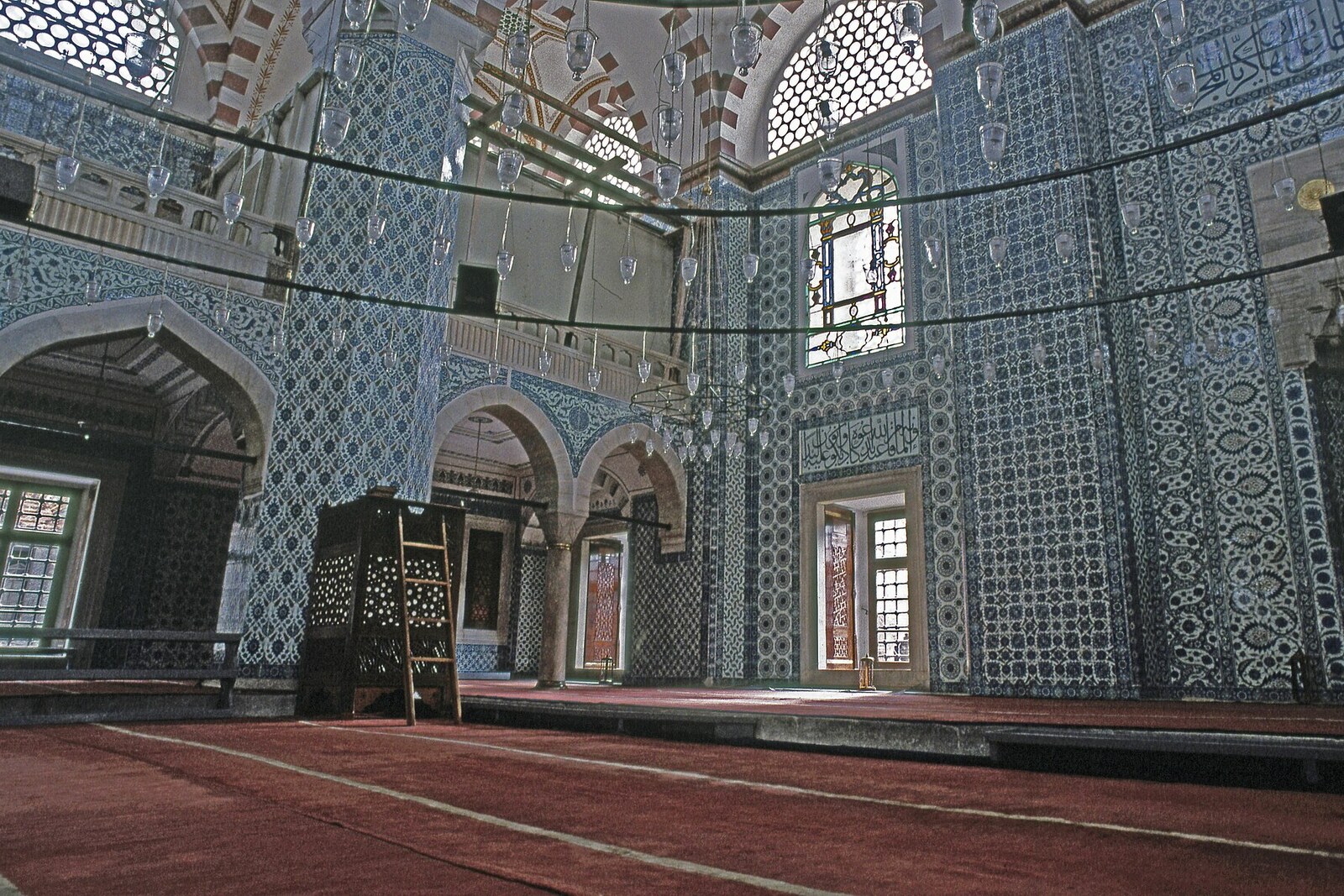
Look around first
What to notice
- Covered stairs
- Vaulted shops beneath the platform
- Iznik tiles
- One minaret
The story of the place
Covered stairs from the trading streets lead to the prayer hall of Rüstem Pasha Mosque. Beneath it are vaulted storehouses and shops. This arrangement came from the final instruction of the man whose name remained on the mosque.
Rüstem Pasha was the chief minister of Sultan Suleiman and his son-in-law. Toward the end of his life, he bequeathed the construction of a large Friday mosque in Istanbul and left money for it. Friday status made it possible to gather the residents of the entire neighborhood here for communal prayer and a sermon; this required a written decree from the reigning Sultan. Among Rüstem's sources of major income were textile and ceramic production. He intended to turn part of this wealth into a charitable endowment that would continue to maintain the mosque after his death.
In fifteen sixty-one, Rüstem died before construction began. Mihrimah Sultan, his widow and Suleiman's daughter, undertook to carry out the will. She pressed for her husband's instruction to be fulfilled. With authorization from the Sultan and the chief religious judge, the estate administrators formalized the purchase of neighboring plots. A small mosque of Hacı Halil Ağa already stood on this site; it and the surrounding buildings were demolished.
Mihrimah commissioned Sinan, the chief court architect, to fit the new prayer hall into a densely built trading neighborhood. Sinan raised it on a platform and placed storehouses and shops below. Their rent was intended for the mosque's maintenance. The result was a building in which trade and prayer are separated by height but connected by money: shoppers remain at street level, worshippers rise above the rows of shops, and income from below pays the expenses above. Under Mihrimah, the walls were covered with Iznik ceramic tiles. The commission was so large that researchers distinguish the work of several workshops: the shades of raised red and the drawing style change from panel to panel. Tulips, carnations, flowering branches, and pomegranates filled the walls, supports, and entrance portico. Sinan never used so many tiles in any other mosque of his. There are no documents showing that Rüstem himself chose the patterns. When the craftsmen fired and installed these panels, the patron was already lying in his tomb by Şehzade Mosque.
Rüstem Pasha never did enter it. His widow carried the will through to a functioning mosque, and the covered stairs still pass through the income-producing section she provided for: rent from below was meant to maintain the prayer hall bearing her late husband's name.
Useful on site
Active mosque; non-worshippers may enter outside prayer times, but fixed hours and temporary closures should be checked on site.
Checked: July 1, 2026. Check the official source before visiting.The entrance is easy to miss among the trade; go up calmly and do not enter the prayer area wearing shoes.