 Guide On Map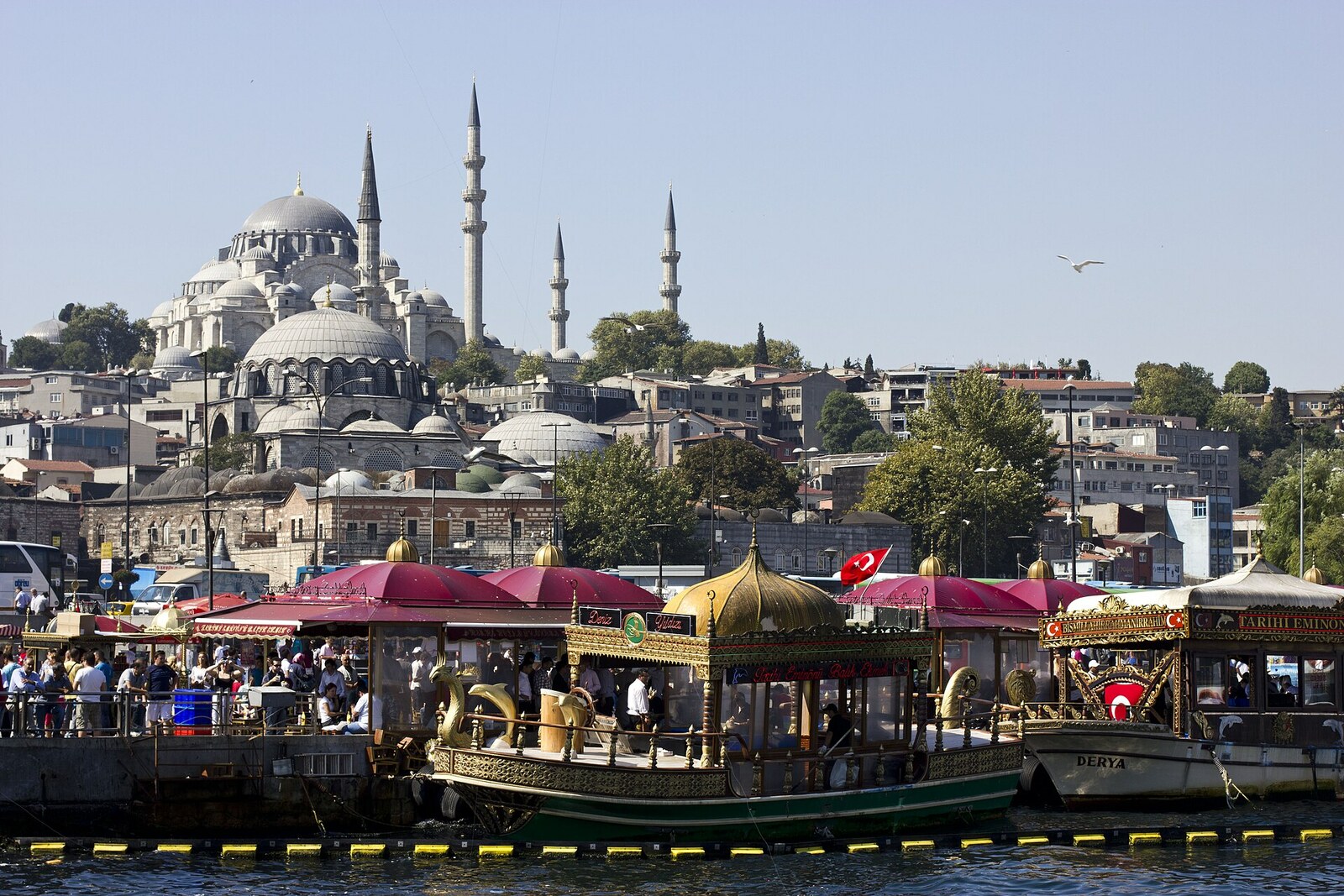
Look around first
What to notice
- Upper pedestrian level
- Rows of fishermen
- New Mosque on the shore
- The line between Karaköy and Eminönü
The story of the place
Between Karaköy and Eminönü, the Golden Horn is crossed by the fifth Galata Bridge. Trams, cars, and pedestrians use the upper deck; fishermen stand by the railings, and restaurants occupy the lower level. Before the present structure, a pontoon crossing stood here, later dismantled and towed farther up the inlet. The line itself remains, linking the port district of Galata, the markets of Eminönü, and the old administrative quarters.
On the night of April sixth to seventh, nineteen oh nine, two men paid a toll collector at the bridge entrance twenty para to cross. Hasan Fehmi Bey, editor-in-chief of the opposition newspaper Serbesti—“Freedom” in Russian—was returning from Beyoğlu. Beside him walked his schoolmate Ertuğrul Şakir Bey, a former district governor. Şakir was seeking a new government appointment, and Fehmi had promised to introduce him to people who could help.
To do this, they had already crossed the same narrow corridor of the city twice. The newspaper office was on the old Istanbul side; the hotels and offices Şakir needed were in Beyoğlu. The direct overland route between them ran across Galata Bridge. People from the port district of Galata, the banking and diplomatic district of Beyoğlu, the markets of Eminönü, and the administrative quarters of the old capital converged here. A fee was charged for every pedestrian, and toll collectors and police posts stood at the ends.
Fehmi lived for the newspaper, and it was through the newspaper that he took his risks. Less than a year earlier, the constitution and parliament had been restored in the Ottoman Empire, censorship restrictions had eased, and newspaper offices began arguing over who would have the decisive voice in the new order. Fehmi spoke out sharply against the Committee of Union and Progress, the most influential political organization of the time. Opposition journalists reported threats, but he continued publishing.
The meeting in Beyoğlu did not take place that night. On the way back, Fehmi spoke to Şakir about a new printing press for Serbesti. When they reached the middle of the bridge, a man behind them opened fire. Three bullets struck Fehmi and one struck Şakir.
Wounded, Şakir ran to the post on the Eminönü side and began calling for the police. He himself was seized as a suspect. While he explained that someone else had fired, the killer disappeared. Fehmi was taken away in a cart, but he did not live to reach a doctor. Şakir survived. The shooter was never found.
It was the bridge's very layout that made the unsolved murder especially dangerous for the government. A man had been shot in the middle of a paid passage bounded by water, toll collectors, and police posts. Opponents of the Committee of Union and Progress claimed that the committee was behind the crime; its leaders denied it. The murder's commissioned nature could not be proven.
The next day, students of the Darülfünun, the predecessor of Istanbul University, demanded that the grand vizier find the killer. According to contemporary accounts, between thirty and forty thousand people attended Fehmi's funeral. The procession became a demonstration against the committee. A few days later, a military mutiny began in the capital; after it was suppressed, Sultan Abdul Hamid II was removed from the throne. Fehmi's murder was not the only cause of this crisis, but it became one of the events after which opponents stopped believing that the dispute would remain confined to newspapers.
The deck on which Fehmi fell has not survived here. At the time, the crossing ran over a pontoon bridge from eighteen seventy-five. Three years after the murder, it was removed and towed farther up the Golden Horn. The present bridge, already the fifth crossing at this site, inherited its name from Galata on the northern shore. Trams, cars, and pedestrians use the upper level; from here, fishermen have direct access to the mouth of the Golden Horn, while the lower level is occupied by restaurants. Of the old paid corridor, only the line itself between Karaköy and Eminönü remains.
Useful on site
The bridge and pedestrian sidewalks are accessible at all times; the lower restaurant level and individual establishments follow their own schedules.
Checked: July 1, 2026. Check the official source before visiting.Do not disturb the fishing gear or linger in the path of traffic; for a better view, stand by an open section of the railing.