 Guide On Map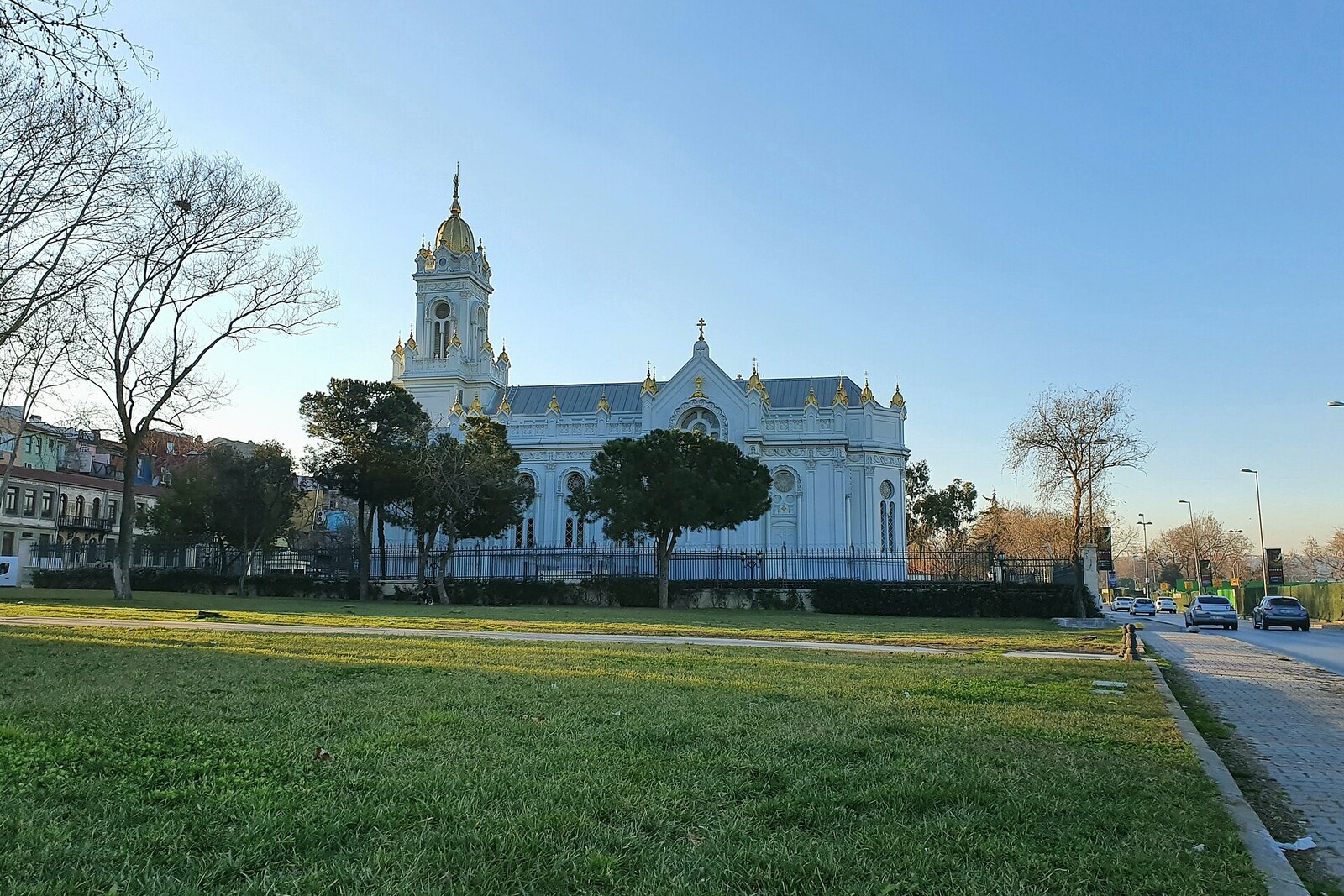
Look around first
What to notice
- Iron walls
- Tall spire
- Altar stone
- Ilarion's grave in the courtyard
The story of the place
On April third, eighteen sixty, the Bulgarian bishop Ilarion Makariopolski celebrated the Easter liturgy here. The present iron building did not yet exist: a small wooden church stood on this plot. At the appointed moment, Ilarion deliberately did not say the name of the Patriarch of Constantinople and commemorated all Orthodox bishops.
In the liturgy, such commemoration signifies subordination: the priest names the person whom he recognizes as his church head. Ilarion was seeking an independent Bulgarian hierarchy, so the omission of the name was clear to the parishioners without explanation. They openly supported the bishop, and the next day the community submitted a petition for an independent church to the Ottoman government, with about one thousand signatures.
Before this, the Orthodox Bulgarians of the Ottoman Empire belonged to one religious community with Greeks and other Orthodox peoples. It was headed by the Ecumenical Patriarchate of Constantinople. Bulgarian parishes demanded bishops chosen by their flock, services in a language the flock could understand, and predetermined support for the clergy. The negotiations ended in refusal. Ilarion then brought the dispute into the service, where one unspoken name replaced yet another petition.
He understood the consequences well. For earlier appeals to the sultan's government, Ilarion had already spent about five years in monastic confinement on Mount Athos. He received his episcopal rank and the right to lead the local community with the consent of that very Patriarchate of Constantinople against which he spoke out. The Patriarch demanded civil punishment for him, but Ottoman officials did not carry out that demand. In eighteen sixty-one, Ilarion was nevertheless stripped of his rank and sent to Mount Athos again. He remained in exile until eighteen sixty-four.
Bulgarian communities in other cities repeated his act. Ten years later, a sultan's firman established the Bulgarian Exarchate—an independent church administration with its center in Constantinople. The firman was first read here. After returning, Ilarion joined the first synod of the exarchate, and in eighteen seventy-two he became Metropolitan of Tarnovo.
The wooden church appeared thanks to Stefan Bogoridi, an Ottoman official of Bulgarian origin. In eighteen forty-nine, he gave the community his own plot and house on the shore of the Golden Horn. The house was turned into a church and dedicated to the first Christian martyr, Archdeacon Saint Stephen—the heavenly patron of the donor. Thus, the name preserved both the saint's name and the memory of the man who provided Bulgarians with their first church premises of their own in the Ottoman capital.
The modern church was assembled from iron parts manufactured in Vienna and consecrated in eighteen ninety-eight. The altar stone from the wooden church was preserved. Ilarion died in Constantinople and was buried in the courtyard: his grave is beside the church that rose on the site of that Easter service.
Useful on site
Usually open daily 9:00–17:00; free entry, schedule depends on services.
Checked: June 17, 2026. Check the official source before visiting.Do not mistake the metal surfaces and railings for decoration that you can lean on or climb. If a service is underway, look around the interior quietly or stay in the courtyard.