 Guide On Map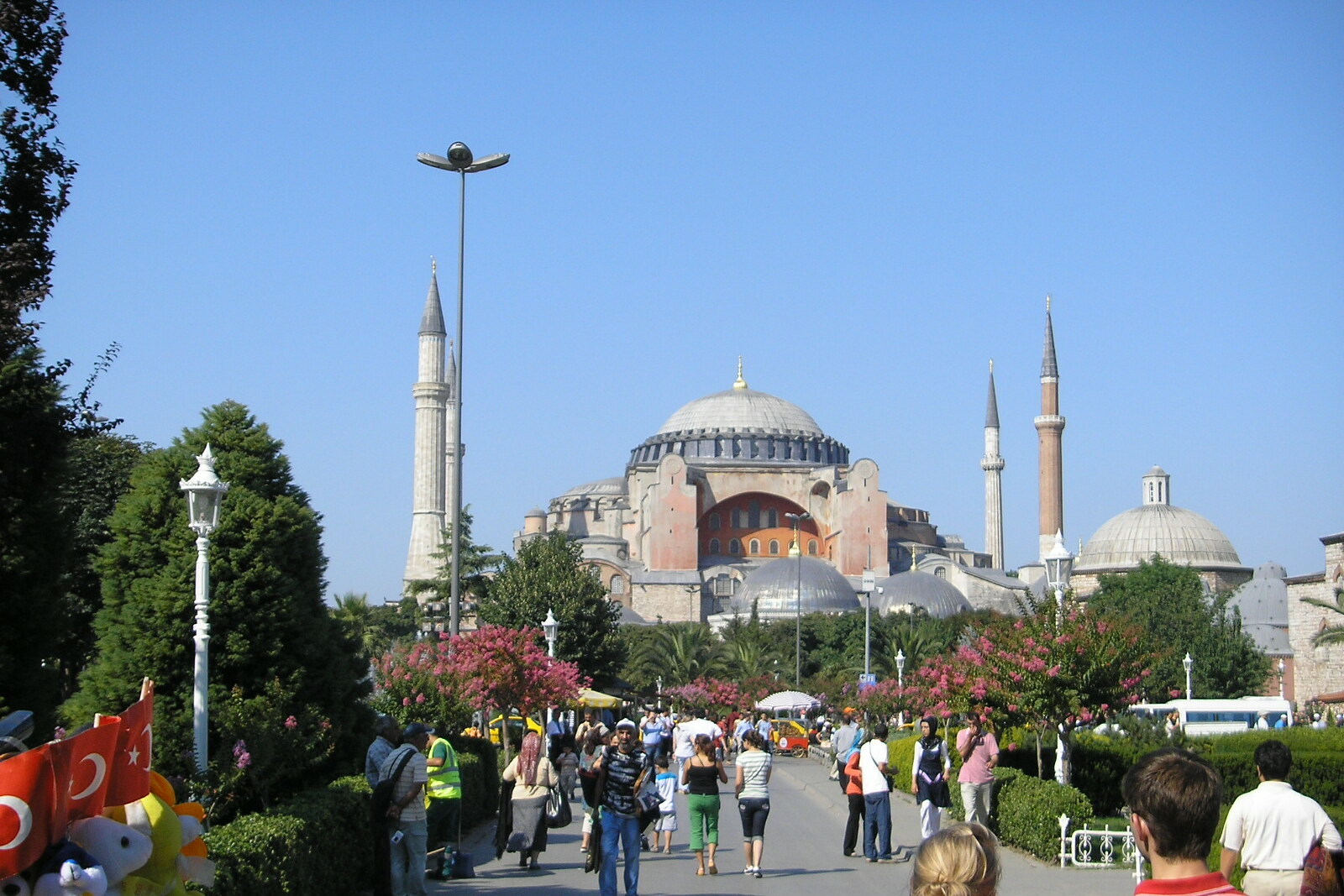
Look around first
What to notice
- Marble fountain
- Pastel façades
- Wooden cladding
- Bay windows above the paving stones
The story of the place
Nine colorful houses with bay windows above the narrow paving stones are now occupied by a hotel. In the nineteenth century, people who served at the palace and Hagia Sophia settled here; after fires, the wooden dwellings were rebuilt, expanded, and replaced. By the middle of the following century, many residents had left, and concrete buildings had risen between the weathered houses.
Near the lower end of this cobbled street, a marble fountain survives, installed around eighteen hundred, under Sultan Selim III. Soğukçeşme literally means “cold fountain.” Its water gave its name to the passage between Hagia Sophia and the outer wall of Topkapı Palace long before the present row of pastel façades appeared.
People who served at the palace and at Hagia Sophia lived here. The wooden houses were rebuilt after fires, expanded, and replaced; by the nineteenth century, they formed a narrow street with bay windows and windows directly above the paving stones. By the middle of the twentieth century, residents were leaving, the wood was rotting, some houses had collapsed, and concrete buildings appeared between them.
Çelik Gülersoy, the general director of the Turkish Touring and Automobile Association, took on this row, seeking to preserve Istanbul’s old residential buildings. He had served in the association since the age of seventeen: he began as a clerk, became legal counsel, and then its director. The organization received money for urban projects, among other things, by processing motorists’ customs documents at the border. In Soğukçeşme, Gülersoy invested the association’s funds and his own professional reputation. To make the houses pay for their own future upkeep, he planned to establish guesthouses in them and give the largest building over to a library about Istanbul.
Bedrettin Dalan, the mayor of Istanbul, sought a different outcome. He called the houses late slums, unworthy of the wall of a sultan’s palace, and wanted to demolish them for a park. In the autumn of nineteen eighty-five, municipal crews stopped the work and took away the builders’ tools. Gülersoy responded with decisions to protect the buildings. He also had visible evidence: the same row can be seen in an engraving from eighteen thirty and in photographs from the eighteen sixties. The dispute was already about what should count as historic Istanbul: an open palace wall, or the houses of people who had settled beside it for generations.
In March nineteen eighty-six, Dalan brought Turkish President Kenan Evren here, whose decision determined whether construction would continue, and complained about the project. In Gülersoy’s later account, the president summoned him that same day to explain himself. After their conversation, Evren ordered that the work not be obstructed. The park plan was not pursued further, and Gülersoy’s team finished the street that same year.
The old houses were preserved mainly in their measured drawings, silhouettes, and layout. The builders dismantled most of the earlier structures, erected reinforced-concrete frames with brick infill, clad them in wood, and added buildings where there had been gaps in the row. That is why specialists call what happened a reconstruction, although the project’s creators spoke of restoration.
In nineteen eighty-six, the Hagia Sophia Pensions opened here. Nine colorful houses are still occupied by a hotel: behind the wooden cladding that depicts an old Istanbul street stand concrete frames erected after the dispute between Gülersoy and Dalan.
Useful on site
An open street by the palace wall; view it from outside. Do not block the narrow passage, and take account of service restrictions around the palace perimeter.
Checked: June 27, 2026. Check the official source before visiting.This is a through street, and some of the buildings are in use: view the façades from outside and do not enter closed or private spaces.