 Guide On Map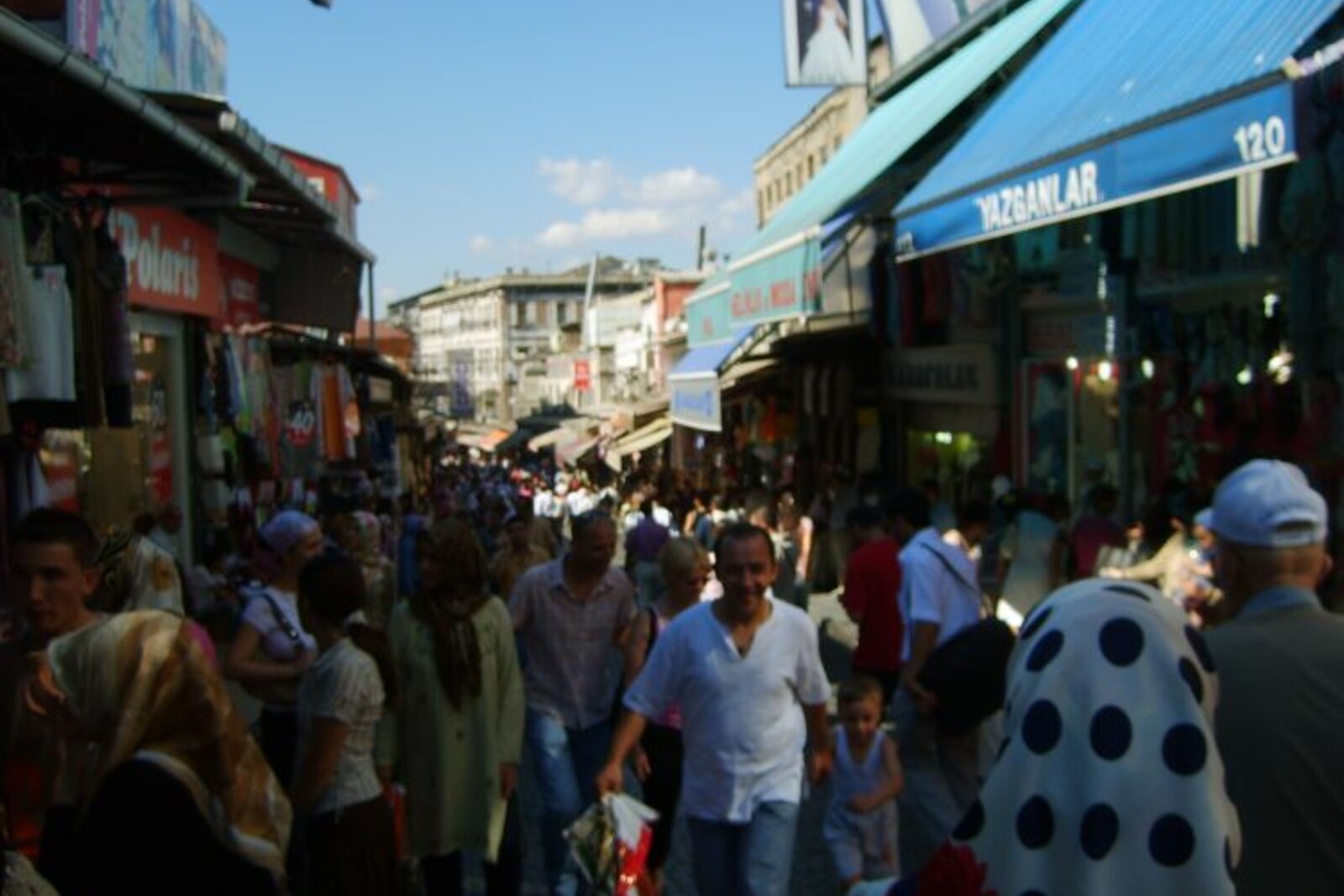
Look around first
What to notice
- Rows of clothing shops
- Entrances to commercial hans
- Mahmud Pasha Mosque
- The tomb behind the mosque
The story of the place
Mahmutpaşa is a commercial slope between Eminönü and the Grand Bazaar. Today, Istanbul residents shop here for clothes, trousseaus, and supplies for weddings and circumcision ceremonies. Merchants selling the same goods cluster together: fabrics, towels, shoes, or ready-made clothing are concentrated in neighboring shops and hans. This arrangement appeared here long before the current assortment.
A few years after the conquest of Constantinople, Sultan Mehmed II required wealthy officials to take part in developing the new capital: at their own expense, they were to build houses, baths, markets, and shops. Mahmud Pasha, the grand vizier and the sultan's chief assistant in governing the state, chose this slope.
In the early fourteen sixties, he began building an entire complex here: a mosque, a school, a madrasa, a free soup kitchen, a bathhouse, and an inn. All these institutions required ongoing expenses. Mahmud Pasha therefore built a market of two hundred sixty-five shops nearby. Merchants paid rent, and the proceeds went toward the salaries of attendants, aid for the poor, and repairs to the buildings. As long as trade continued in the shops, the mosque and soup kitchen did not depend on occasional donations.
The site was chosen precisely. At the top stood the bedesten, a protected trading hall around which the Grand Bazaar later grew. Below lay the harbor of the Golden Horn and the port warehouses. Merchants bringing goods by sea climbed from here to the city market; caravan trade moved in the opposite direction, toward the docks. Mahmud Pasha placed his shops directly along this route. The commercial slope quickly became one of Istanbul's main markets, and the name of its founder passed to the street and the whole neighborhood.
Mahmud Pasha Mosque survives in the middle of the commercial district. His tomb stands behind it: after the vizier's death, he was buried inside the complex he had created. Eminönü still lies below, the Grand Bazaar above, and between them the rows of shops continue, which is why this slope has been called Mahmutpaşa for almost six centuries.
Useful on site
The street is accessible at all times; shops most often operate from Monday to Saturday during daytime hours. The complex's historic buildings have variable access, so exact hours cannot be incorporated without checking again.
Checked: July 1, 2026. Check the official source before visiting.The uphill stretch is crowded and noisy; for the stop, choose a wider section of the street rather than shop entrances.