 Guide On Map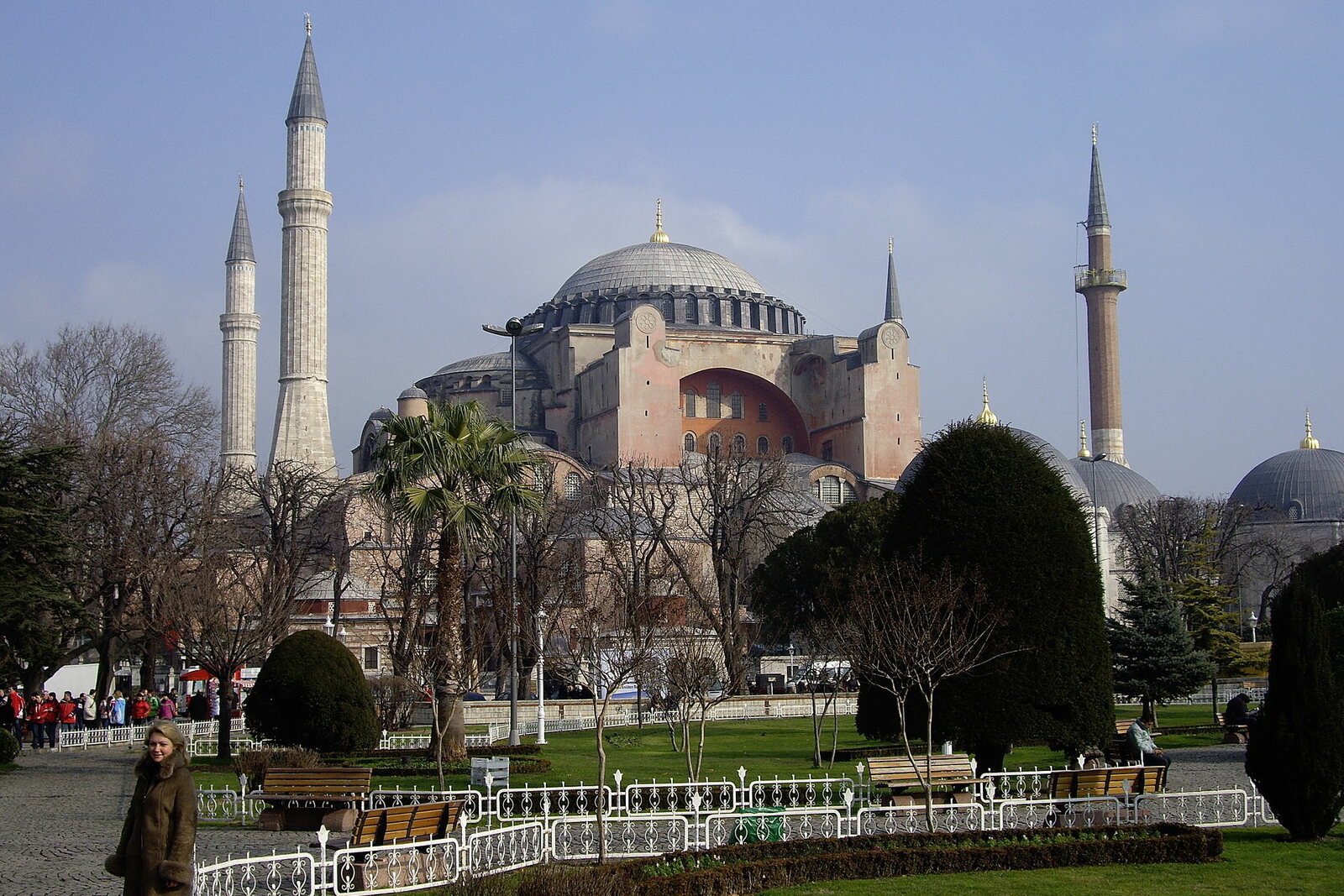
Look around first
What to notice
- The dome of Hagia Sophia
- The southern gallery
- The mosaic with Christ, Zoe, and Constantine
- The mosaic's gold background
The story of the place
Today, Hagia Sophia is an active mosque, with mosaics from the former Christian cathedral preserved inside. Its name means “Holy Wisdom”: the church was dedicated to divine wisdom, not to a woman named Sophia. Under the emperors, it was the principal cathedral beside the palace. Emperors were crowned here, rulers were received, and their images in gold were displayed.
In April one thousand forty-two, Emperor Michael V tried to get rid of the person to whom he owed the crown. His father caulked ship hulls, and Michael was accordingly nicknamed Kalaphates, the Caulker. His kinship with the previous emperor opened the way to court, but it was the childless Empress Zoe, daughter of the former ruler, who made him the legitimate heir. She adopted Michael; he swore to be her servant and junior co-emperor.
A few months later, Michael was already troubled even by the fact that, in official acclamations, his adoptive mother's name was spoken before his own. He stopped allowing Zoe access to the council and the treasury, then accused her of attempting poisoning. Witnesses had been selected in advance. Zoe was taken to the island of Prinkipo in the Sea of Marmara and tonsured: monastic tonsure deprived her of the possibility of returning to her former life.
The calculation was clear. Michael wanted to retain from the adoption only the crown he had received, while declaring the very person who connected him to the imperial family a nun. But the townspeople considered Zoe the heir. An uprising began. Michael hurriedly brought her back from the island and showed her to the people in monastic clothing, hoping that her appearance alone would be enough. The crowd decided that, once the city had calmed down, he would hide her away again.
Then the participants in the uprising went for Theodora, Zoe's younger sister. Theodora had not sought the crown. For many years, she had lived in monastic confinement, to which jealous Zoe herself had once sent her. When Theodora saw armed people, she took refuge in a church and refused to come out. She was dragged out by force, changed from monastic dress into imperial clothing, put on a horse, and brought here, to Hagia Sophia.
The choice of cathedral decided the outcome of the struggle. The palace stood nearby, the imperial court gathered in the southern gallery, and a church acclamation with the participation of the nobility turned Theodora from a recluse into an acknowledged ruler. Under these vaults, she was proclaimed Zoe's co-empress.
Michael fled to the Monastery of Stoudios and clung to the altar, counting on the inviolability of sanctuary. By order of Theodora's supporters, he was taken out of the church, blinded, and sent to live out his life as a monk. Zoe and Theodora reconciled and ruled together for about three months. Then Zoe, fearing another coup, chose a third husband—Constantine IX—and transferred the imperial title to him.
A mosaic continuing this story has been preserved in the southern gallery of Hagia Sophia. Christ sits at the center, Constantine holds a purse of money, and Zoe holds a document granting a donation to the church. Originally, her first husband, Romanos III, was depicted beside her. After the new marriage, the masters replaced his face and name with Constantine's; traces of alterations have also been found on the faces of Zoe and Christ, although the reasons for these replacements remain disputed.
Against the gold background remain Zoe and the man she chose after the uprising. Theodora, proclaimed empress under the same vaults, is not on this wall.
Useful on site
Accessible outside as a city square. For entry inside, tourist, museum, and prayer arrangements are separate and depend on prayers, tickets, and current restoration; check the status on the day of your visit.
Checked: June 27, 2026. Check the official source before visiting.Viewing from outside is sufficient for this stop. If entry is open to visitors, take the current religious rules and possible visibility restrictions into account.