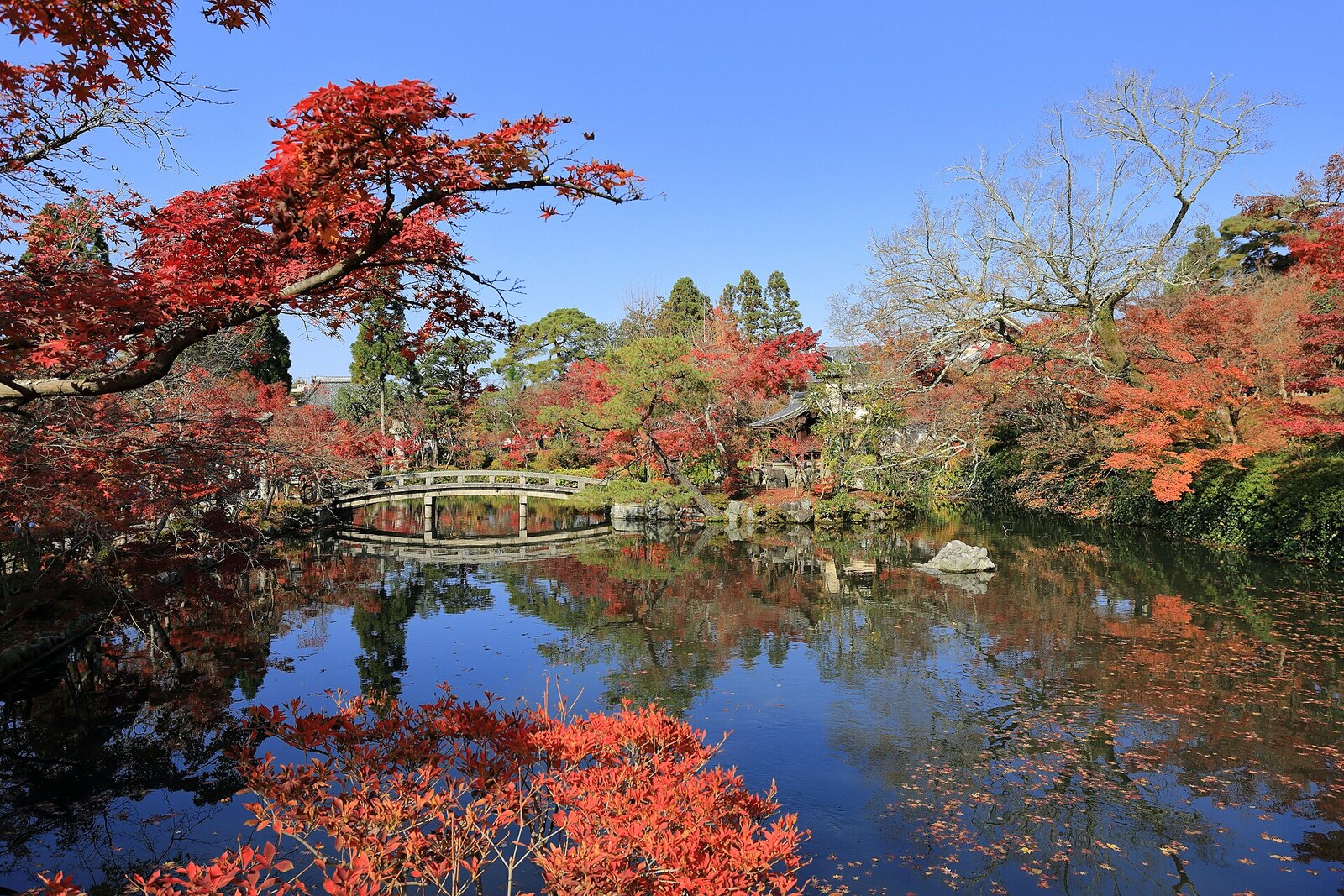
- Eikan-do Zenrin-ji: story on the “Eastern Kyoto: from Ginkaku-ji to Nanzen-ji” route
The unusual turn of the wooden figure leads to a legend about an abbot who once stopped during prayer.
- Ginkaku-ji: story on the “Eastern Kyoto: from Ginkaku-ji to Nanzen-ji” route
A family dispute over the heir explains why the palace appeared on the site of a burned monastery.
- Gion Shirakawa: story on the “The Temple Slopes of Higashiyama and Gion” route
It connects the stone by the water with an ochaya room, a poetic line, and a house that is no longer there.
- Hanamikoji-dori: story on the “The Temple Slopes of Higashiyama and Gion” route
It explains how an annual dance, a school, and a theater turned former temple land into Gion's main street.
- Honen-in: story on the “Eastern Kyoto: from Ginkaku-ji to Nanzen-ji” route
This stop will link a court scandal to the construction of a monastery that began several centuries later.
- Inari Station: story on the “Fushimi Inari and the Sacred Mountain” route
Here begins the route from Japan's first main railway to the old shrine at the foot of the mountain.
- Kiyomizu-dera Temple: story on the “The Temple Slopes of Higashiyama and Gion” route
This stop will show how the pilgrims' dangerous vow came to be connected with Kannon, temple oversight, and an expression that still lives on.
- Main Hall (Honden): story on the “Fushimi Inari and the Sacred Mountain” route
The layout of the present shrine will result from military defeat, fire, and a long collection of donations.
- Mount Kameyama and the view of the Hozu River: story on the “Arashiyama: River, Gardens, and Bamboo” route
The final height links the view of the Hozu River with a family decision that split the imperial dynasty.
- Nanzen-ji: story on the “Eastern Kyoto: from Ginkaku-ji to Nanzen-ji” route
A temple legend will explain how a country palace became one of Kyoto's leading Zen monasteries.
- Nene-no-Michi and Kodaiji Temple: story on the “The Temple Slopes of Higashiyama and Gion” route
It will show how Hideyoshi's widow established a home, a memorial temple, and her own mausoleum nearby under the new government.
- Ninenzaka: story on the “The Temple Slopes of Higashiyama and Gion” route
It will return to the residential street the two rooms rented by an artist for a shared life that never began here.
- Nonomiya Shrine: story on the “Arashiyama: River, Gardens, and Bamboo” route
A temporary residence will show how a courtly selection changed one princess's life.
- Okochi Sanso: story on the “Arashiyama: River, Gardens, and Bamboo” route
This private estate shows where an actor put his earnings between shoots.
- Okusha Hohaisho: story on the “Fushimi Inari and the Sacred Mountain” route
This point takes the route from the buildings at the foot of the mountain to the legendary origins of worship of the mountain itself.
- Otoyo Shrine: story on the “Eastern Kyoto: from Ginkaku-ji to Nanzen-ji” route
Two relatively recent figures show how an ancient shrine acquired its present-day symbol.
- Philosopher's Path: story on the “Eastern Kyoto: from Ginkaku-ji to Nanzen-ji” route
The canal and cherry trees bear witness to how residents made the city change its road project.
- Romon: story on the “Fushimi Inari and the Sacred Mountain” route
A ruler’s gift of thanks leads into a world of requests, promises, and physical evidence.
- Sagano Bamboo Path: story on the “Arashiyama: River, Gardens, and Bamboo” route
This stop will change the familiar image of an ancient grove: a new generation of bamboo has risen above the path.
- Sannenzaka: story on the “The Temple Slopes of Higashiyama and Gion” route
It explains why merchants and homeowners first improved the route for customers, then agreed to preserve its facades.
- Senbon Torii: story on the “Fushimi Inari and the Sacred Mountain” route
Here, one personal request will turn into an object that has taken its place among hundreds of other offerings.
- Suirokaku: story on the “Eastern Kyoto: from Ginkaku-ji to Nanzen-ji” route
The arches show the engineering solution that had to be found after the dispute over the canal route.
- Tenryu-ji and Sogenchi Pond: story on the “Arashiyama: River, Gardens, and Bamboo” route
The garden links the war of two courts, maritime trade, and the memory of a defeated emperor.
- The Climb to Ginkaku-ji: story on the “Eastern Kyoto: from Ginkaku-ji to Nanzen-ji” route
Here you will learn how local families acquired, along with a mountainside, the duty to maintain an old rite.
- The Inari Summit Trail: story on the “Fushimi Inari and the Sacred Mountain” route
The final stretch connects former mountain shrine sites with thousands of private altars.
- Togetsukyo Bridge: story on the “Arashiyama: River, Gardens, and Bamboo” route
The crossing connects today’s strolling Arashiyama with the reworking of a river freight route.
- Yasaka Pagoda: story on the “The Temple Slopes of Higashiyama and Gion” route
This will connect the five-tiered tower with a dispute between two religious communities and the people who erected it again on its original site.
- Yasaka Shrine: story on the “The Temple Slopes of Higashiyama and Gion” route
It will explain which names, images, and structures had to be removed for a mixed complex to become a Shinto shrine.
- Yotsutsuji Junction: story on the “Fushimi Inari and the Sacred Mountain” route
Before the mountain circuit, you will come to a house where the pilgrimage road was both a family business and the setting of childhood life.
Nearest audio-route stop: The Climb to Ginkaku-ji — 50 m in a straight line, route Eastern Kyoto: from Ginkaku-ji to Nanzen-ji
Nearest audio-route stop: Yasaka Pagoda — 90 m in a straight line, route The Temple Slopes of Higashiyama and Gion
Nearest audio-route stop: Hanamikoji-dori — 80 m in a straight line, route The Temple Slopes of Higashiyama and Gion
Nearest audio-route stop: Sannenzaka — 40 m in a straight line, route The Temple Slopes of Higashiyama and Gion
Nearest audio-route stop: Kiyomizu-dera Temple — 10 m in a straight line, route The Temple Slopes of Higashiyama and Gion
Nearest audio-route stop: Nene-no-Michi and Kodaiji Temple — 60 m in a straight line, route The Temple Slopes of Higashiyama and Gion
Nearest audio-route stop: Yasaka Pagoda — 50 m in a straight line, route The Temple Slopes of Higashiyama and Gion
Nearest audio-route stop: Okochi Sanso — 50 m in a straight line, route Arashiyama: River, Gardens, and Bamboo
Nearest audio-route stop: Ninenzaka — 120 m in a straight line, route The Temple Slopes of Higashiyama and Gion
Nearest audio-route stop: Ninenzaka — 130 m in a straight line, route The Temple Slopes of Higashiyama and Gion
Nearest audio-route stop: Hanamikoji-dori — 30 m in a straight line, route The Temple Slopes of Higashiyama and Gion
Nearest audio-route stop: Tenryu-ji and Sogenchi Pond — 40 m in a straight line, route Arashiyama: River, Gardens, and Bamboo
Nearest audio-route stop: Sannenzaka — 70 m in a straight line, route The Temple Slopes of Higashiyama and Gion
Nearest audio-route stop: Togetsukyo Bridge — 40 m in a straight line, route Arashiyama: River, Gardens, and Bamboo
 Guide On Map