 Guide On Map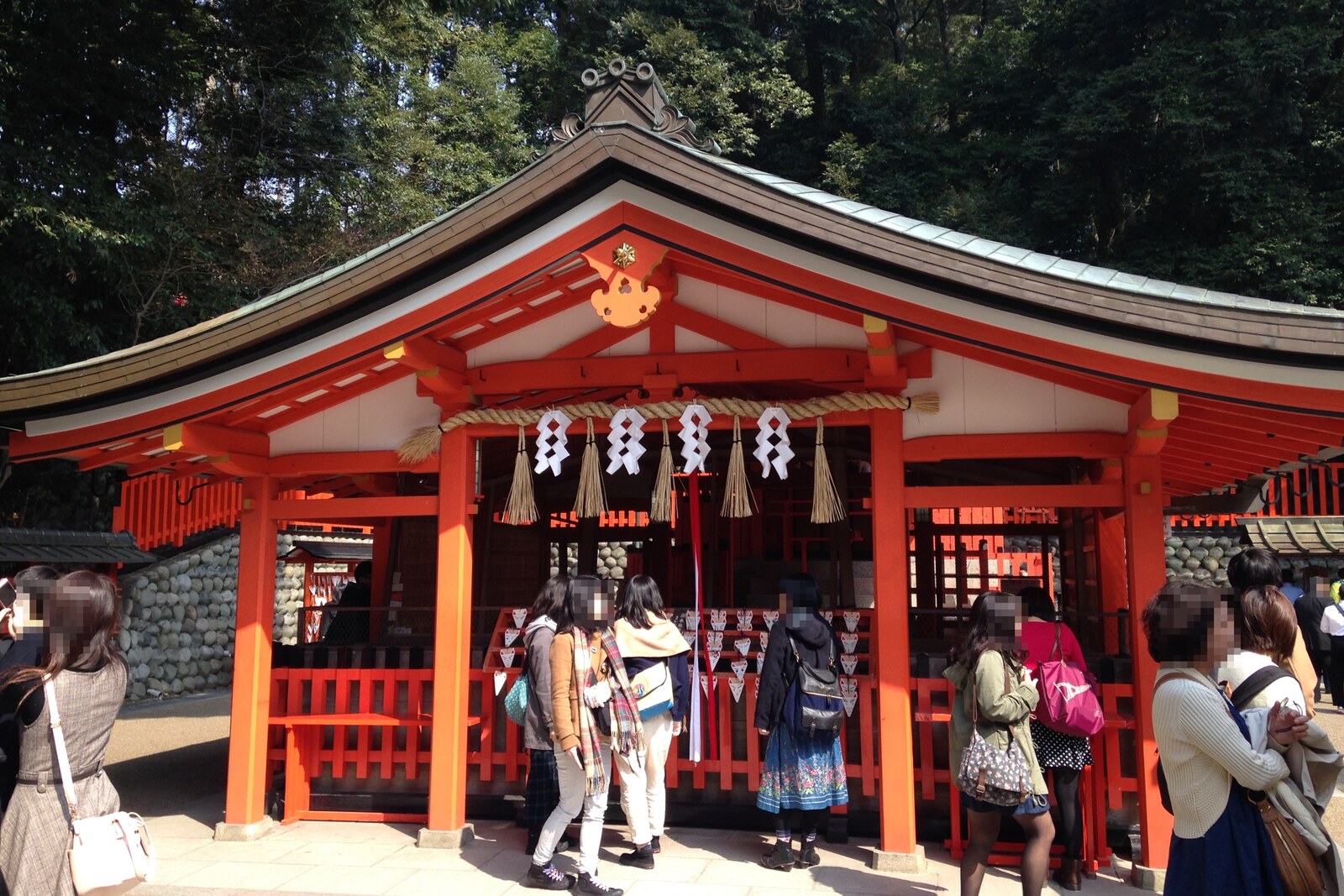
Look around first
What to notice
- The Okusha Hohaisho pavilion
- The altar
- The three peaks behind the pavilion
The story of the place
The Okusha Hohaisho pavilion is linked to a legend about Hata no Irogu, the wealthy head of the local Hata clan. He accumulated so much rice that he once allowed himself to shoot mochi—a cake made from pounded rice—with a bow. His prosperity depended on the harvest, yet he turned food into a target.
That is how an ancient legend preserved in a fragment of the Yamashirokoku Fudoki tells it—a description of the lands that included present-day Kyoto. The struck cake turned into a white bird and flew to one of the mountain peaks. Rice grew where it landed. Irogu took this as an omen and established a shrine on the mountain. The legend also derives the name Inari from the words “rice grew.”
For the Hata clan, the story did not end there. Irogu's descendants regarded his amusement as a transgression: a man who had grown rich thanks to grain treated it as an unnecessary thing. They moved sacred trees from the shrine to their homes and prayed before them. If a tree took root, the family expected prosperity; if it withered, misfortune. Attendants from the Hata clan began conducting spring and autumn rites on the mountain. According to shrine tradition, worship of the deities on the three peaks began in the year seven hundred eleven.
Hata no Irogu did not shoot where the present pavilion stands. The legend is connected with the peaks directly behind it. That is why Okusha Hohaisho was established here: the word “hohaisho” means a place from which a distant sanctuary is worshipped. People bow before the altar, but direct their worship to the mountain itself. Okusha Hohaisho is an old everyday name for this spot; a record from the year fourteen ninety-nine already mentions a “distant shrine” here.
After the disaster of seventeen ninety-four, attendants rebuilt the pavilion slightly roomier than before. In nineteen seventy-five, it was moved back, clearing an area in front of it for worshippers. Behind the altar still lie the three peaks where the Hata clan established the first shrines to Inari and to which, according to the legend, the white bird with the rice target flew.
Useful on site
The shrine grounds and mountain trail are accessible without a ticket; shops, tea houses, and amulet counters keep their own daytime hours. Checked 2026-06-29.
Checked: June 29, 2026. Check the official source before visiting.If you try lifting the wish stone, wait for your turn and handle it carefully; participation in the rite is optional.