 Guide On Map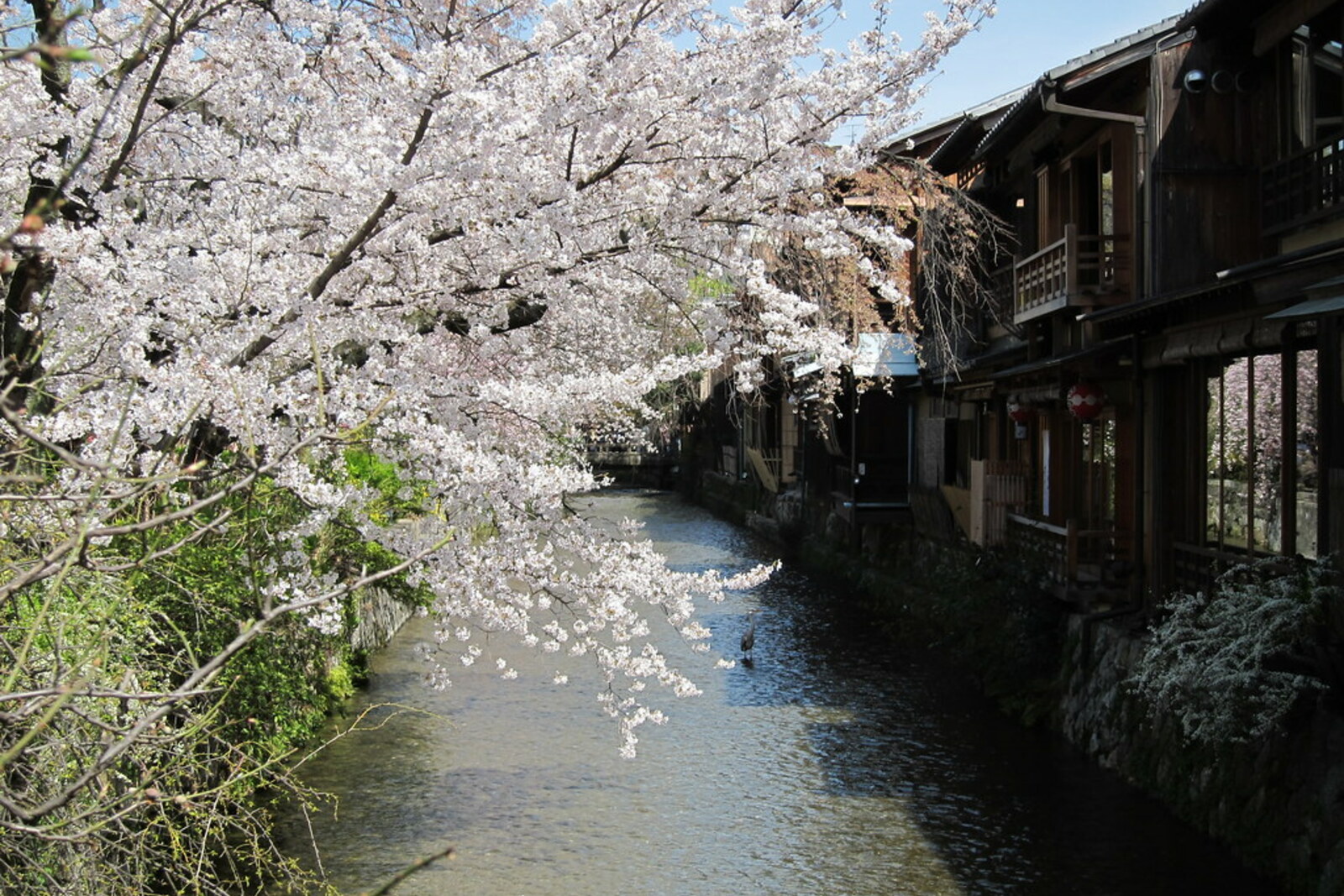
Look around first
What to notice
- Shirakawa River
- Kanikakuni Stone
- Path along the water
The story of the place
Gion Shirakawa is part of Gion Kobu, a Kyoto district where experienced geiko and novice maiko perform at private evenings. Closed receptions took place in ochaya, houses with separate rooms: proprietresses gathered guests they knew, arranged dinner, and invited performers. The Shirakawa River flows beside the narrow path, and every autumn geiko and maiko bring chrysanthemums here.
The current path along the Shirakawa River was laid on the site of vanished rooms. Where the Kanikakuni Stone stands, until March nineteen forty-five there was an ochaya, an establishment for closed banquets, called Daitomo.
Gion Shirakawa is part of Gion Kobu, a district where geiko and their maiko apprentices work. An ochaya provided rooms for closed banquets: its proprietress knew the regular guests, ordered food, and invited performers for dancing, music, and conversation. The proprietress of Daitomo, the former geiko Taka Isoda, earned her living by arranging such evenings and gathered writers and artists at her establishment. Thanks to her, the house became a literary salon.
In May nineteen ten, the twenty-three-year-old poet and playwright Isamu Yoshii came here. He was trying to live by literature, and he brought to Kyoto the first ten yen he had been paid for a play he had written. For a person receiving money for writing for the first time, a visit to Gion was an expense paid from his own earnings, not from family wealth.
At the back of Daitomo, Taka had a room measuring three tatami. It projected over the Shirakawa River, so the water ran directly beneath the floor. Gion tradition links Yoshii's line specifically to this room: “One way or another, Gion is dear to me; even when I sleep, water flows beneath my pillow.” The words “kani-kakuni” mean “one way or another.”
In summer, Yoshii published the poem, and in autumn he included it in his first collection. The line about water beneath the pillow became his most recognizable text about Gion. The first money he earned through literature came back to him in the form of a reputation as the “poet of Gion”; many years later, he wrote texts for Miyako Odori.
In March nineteen forty-five, the authorities ordered the houses along the Shirakawa River dismantled to create a firebreak in case of an air raid. Taka Isoda lost both her home and the establishment she had run for decades. She moved into temple quarters and died two months later. Along with Daitomo, the room above the water disappeared; the current road was made on the cleared strip.
Ten years later, the writer Junichiro Tanizaki and Yoshii's other friends placed a stone for his seventieth birthday. The location was chosen exactly: the monument occupied the site of Daitomo, and Yoshii received it during his lifetime. Every November eighth, the geiko and maiko of Gion Kobu bring chrysanthemums here. The Shirakawa River now flows beside the stone; the room where it ran beneath the pillow no longer exists.
Useful on site
The public walking area along the Shirakawa River reads as an ordinary city street; respect signs for private driveways, and do not mistake the neighboring narrow alleys for a tourist attraction.
Checked: June 16, 2026. Check the official source before visiting.Stay on the public path, do not occupy the bridge for staged photography, and do not enter the areas by the houses. At the shrine, make room for those who have come to pray.