 Guide On Map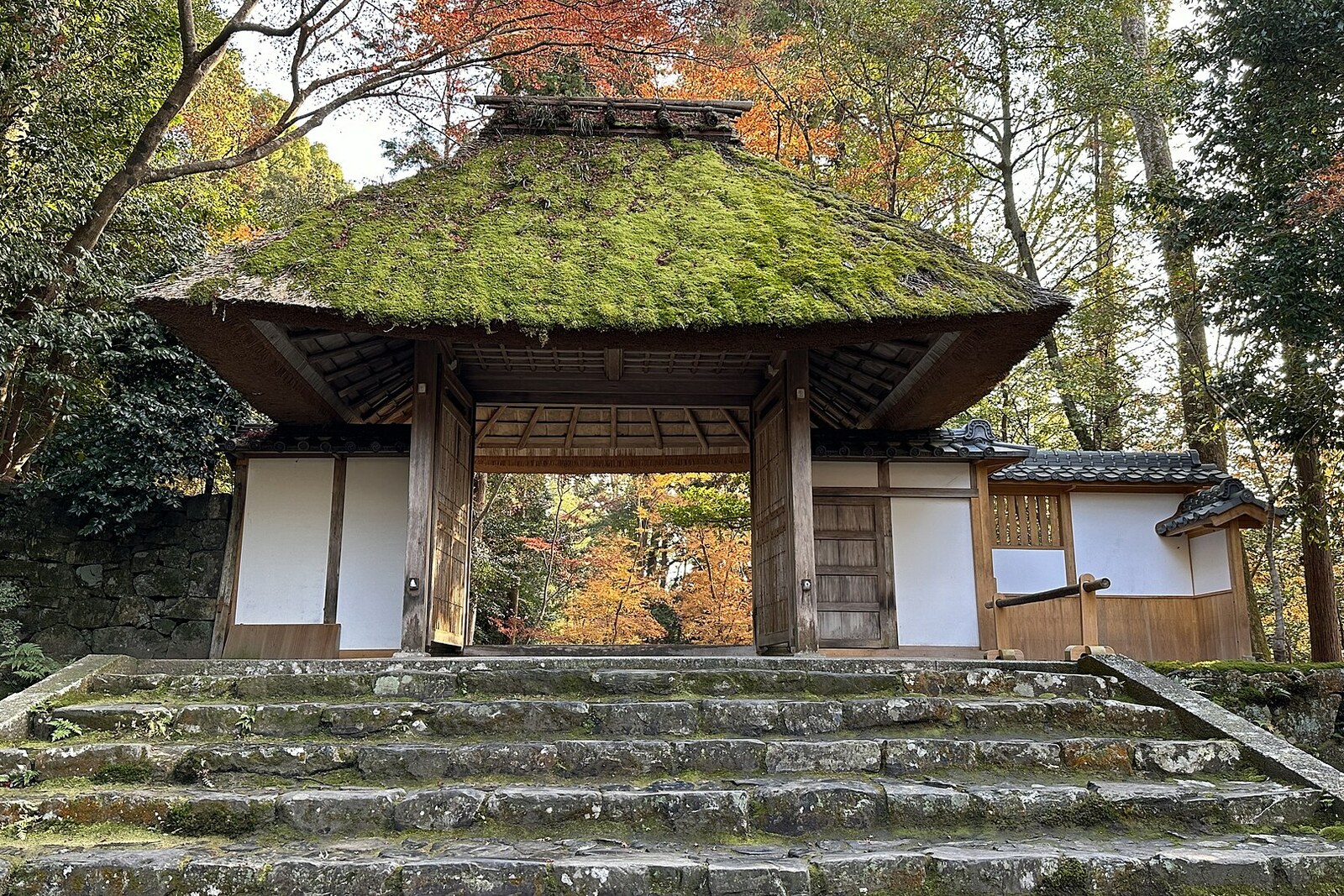
Look around first
What to notice
- Thatched gate
- Main hall
- Monastic buildings
The story of the place
The present-day Honen-in appeared in sixteen eighty at the behest of Banbu, the thirty-eighth abbot of Chion-in, a major Kyoto monastery. The shogunate granted him this plot in exchange for land ceded to Gion Shrine for a new road. Banbu wanted to establish an austere retreat for nembutsu—the repeated recitation of the name of Amida Buddha. The site was chosen because of a legend linking this slope to Honen.
Honen was a preacher whose community gave rise to the Japanese Pure Land school. He sought to ensure that hope of salvation did not depend on years of monastic education and complex rituals. A person could call upon Amida Buddha with the words “Namu Amida Butsu” and hope to be reborn in the Pure Land. This teaching drew laypeople to Honen who had previously remained outside learned Buddhism.
According to tradition, in twelve oh six Honen and his disciples Juren and Anraku performed a sixfold praise rite in Shishigatani: the day was divided into six parts, and in each they prayed to Amida Buddha. Two court women who served the former Emperor Go-Toba attended these services. They were later called Matsumushi and Suzumushi, but the chronicle of that period gives no names—the names appeared in stories several centuries later.
During Go-Toba’s absence, the women received tonsure from Juren and Anraku. Sources disagree even on where the pivotal meeting took place: at a service in Shishigatani, or at the palace to which the monks had been invited. What followed is known for certain. The women left court service, and Go-Toba regarded their tonsure without his permission as a personal insult. Opponents of Honen’s community had already demanded that its preaching be banned; the palace scandal provided a pretext for punishing the entire group.
In twelve oh seven, Juren and Anraku were beheaded. Honen was stripped of his monastic status, given the lay name Fujii Motohiko, and sent into exile on Shikoku. He was allowed to return to Kyoto only at the end of twelve eleven; two months later, he died. Reliable information about the women’s subsequent fate is scarce. Later legend placed them in a nunnery on Ikuchijima, where they supposedly spent the rest of their lives in prayer.
By Banbu’s time, the old place of worship had long fallen into disrepair. He entrusted its restoration to his disciple Nincho. By May sixteen eighty-one, a hall and a monastic service building were complete. Banbu gave Nincho seventeen rules for the new retreat and died the following month. Nincho became the second abbot, raised donations, completed the monastery, and introduced the continuous recitation of nembutsu that continues to this day.
The hut from Honen’s time has disappeared. Behind the thatched gate stand buildings created by Banbu and Nincho in the seventeenth century; the main hall contains images of Amida Buddha and Honen. His name remains in that of the monastery, built to restore to this slope that very prayer practice.
Useful on site
The grounds are open daily 6:00–16:00; the main hall is open only 1–17 April and 18–24 November (admission fee)
Checked: June 22, 2026. Check the official source before visiting.Keep quiet near the temple buildings and in the cemetery. View graves and memorial stones from a distance, without crossing the barriers.