 Guide On Map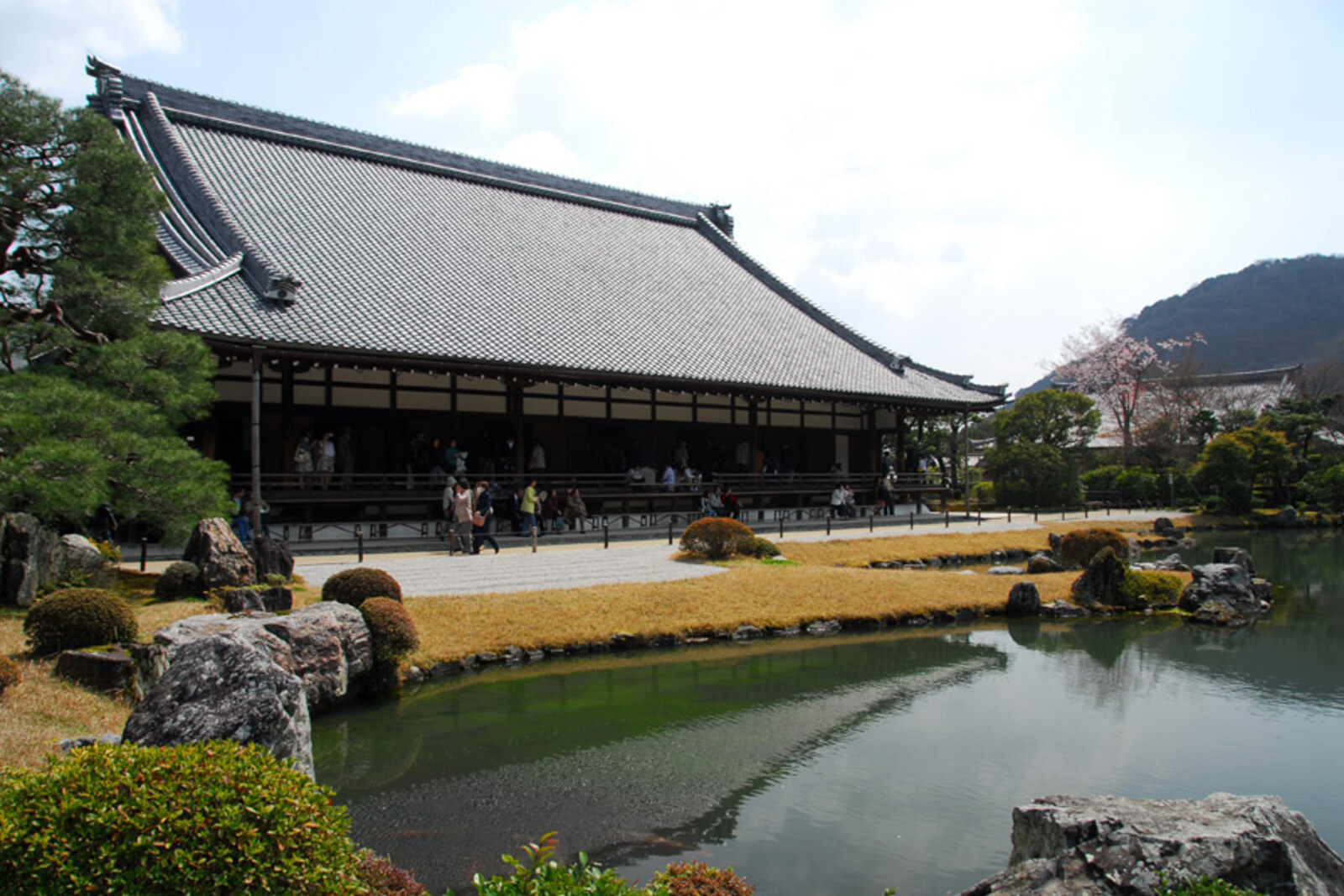
Look around first
What to notice
- Sogenchi Pond
- Stone edging of the shore
- Stone waterfall
- Carp stone
The story of the place
Tenryu-ji is an active Zen monastery and the main temple of one branch of the Rinzai school. It was founded by the shogun Ashikaga Takauji, Japan's military ruler, in memory of Emperor Go-Daigo, whom Takauji himself forced to leave Kyoto.
In thirteen thirty-three, they were allies. Emperor Go-Daigo sought direct imperial rule over the country, and the commander Takauji helped him overthrow the Kamakura shogunate. After the victory, the alliance fell apart. The samurai clans whose forces supported Takauji expected land and a new military order. The emperor was gathering government around his court. Takauji raised troops against him, occupied Kyoto, and placed another emperor on the throne. Emperor Go-Daigo fled to Yoshino, where he established a rival court. The war between two imperial lines began.
Emperor Go-Daigo died in Yoshino in thirteen thirty-nine without renouncing his claims. The Zen master Muso Soseki, respected by both opponents, proposed that Takauji establish a memorial temple for the dead emperor. The site was directly connected to Emperor Go-Daigo: an imperial country residence where he had lived had once stood here. A later chronicle explained Takauji's decision as fear of the angry spirit of his defeated opponent. This is a traditional explanation, not evidence of the shogun's personal remorse. One thing is known for certain: the war with Emperor Go-Daigo's heirs continued, while the monks here were to pray for his posthumous peace.
The donated estates were not enough to fund the construction. Muso Soseki and Ashikaga Tadayoshi, the shogun's younger brother, who needed to bring the plan to completion, then sent two merchant ships to China of the Yuan dynasty. The proceeds from the trade went to the temple. In thirteen forty-five, Tenryu-ji was consecrated—the memorial to the dead emperor was paid for with goods carried across the sea.
Tadayoshi is also associated with the name. According to legend, he saw in a dream a golden dragon rising from the river south of the temple. “Tenryu-ji” means “Temple of the Heavenly Dragon.” Muso placed another dragon in the garden he designed: the stones on the far shore depict Dragon Gate Waterfall. According to a Chinese legend, a carp that climbs this waterfall turns into a dragon. Usually, the carp stone lies at its foot, but here Muso placed it beside the stone stream—the transformation has already begun.
The pond's name also appeared during his work. According to temple tradition, while deepening the pond, Muso found a stone slab bearing the inscription “Sogen itteki”—“one drop from the Sogen source,” a Zen image of teaching passed from master to disciple. After the discovery, the pond was named Sogenchi Pond.
Eight major fires destroyed the old temple buildings; the present main buildings were erected chiefly at the turn of the nineteenth and twentieth centuries. The garden has retained the pond's basic shape, its stone edging, and the composition of the far shore. What remains of the first Tenryu-ji is the work of the man who reconciled the dead emperor with his victor: the water of Sogenchi Pond and a carp that has not yet become a dragon.
Useful on site
Tenryu-ji Garden: 8:30–17:00, last admission 16:50; garden ¥500, buildings +¥300. The buildings are sometimes closed without notice because of ceremonies. Hatto with the Cloud Dragon is charged separately: ¥500, usually weekends, holidays, and special periods. Checked 2026-06-30.
Checked: June 30, 2026. Check the official source before visiting.Do not limit yourself to the buildings: the main story is around the pond. Walk slowly through the accessible part of the garden and change your viewpoint several times to notice how the far slope becomes part of the composition.