 Guide On Map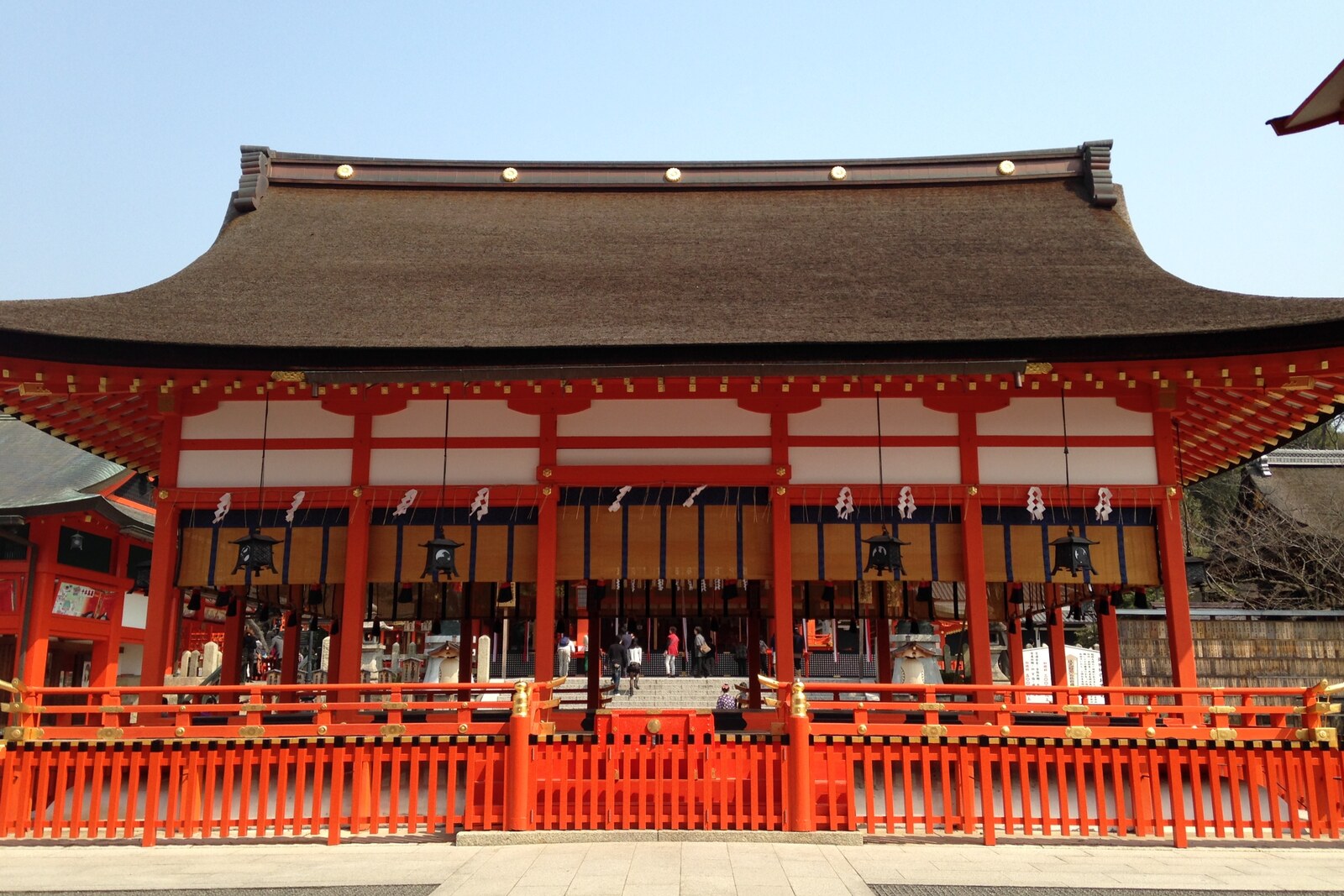
Look around first
What to notice
- The closed doors of the Honden
- The facade of the Main Hall
- The roof of the Main Hall
The story of the place
The wide eaves of the Honden roof overhang its facade, and behind the closed doors begins the part of the shrine that prayers from the plaza do not enter. The Main Hall stands at the foot of Inariyama, on the site where three independent shrines once stood: the upper, middle, and lower shrines. They were later united under one roof, and this hall became the center of the entire complex.
Behind the closed doors of the Honden are five sacred thrones. Inari Okami is the collective name for the deities venerated here. Those who come to pray remain in front of the building, while rites are performed inside. Why five deities came to be under one roof is explained by a war in which a military commander decided to turn the shrine into a fortified camp.
In the spring of fourteen sixty-eight, Kyoto was divided between two coalitions of military houses. They disputed succession to influential clans and the shogunate, while the armies were supplied along the roads around the capital. Honekawa Dōken, a retainer of the military commander Taga Takatada and commander of infantrymen on the side of the Hosokawa clan, intended to cut off food deliveries to his opponents in the Yamana coalition. Military service was his position and livelihood; he was answerable for choosing an advantageous position with his own life.
The shrine attendant Hagura agreed to let his men in. On March fifteenth, Dōken occupied Inariyama: from there, he could see the roads through Fushimi and the southern approaches to Kyoto. The sacred grounds suited him as a height from which he could attack supply convoys.
Six days later, his opponents sent Hatakeyama Yoshinari's army here to destroy the detachment and open the road for provisions. Dōken's men could not hold the mountain. He tried to leave eastward, toward Yamashina, but an ordinary warrior from the pursuing detachment killed him. Hagura had to go into hiding. The detachment ceased to threaten the convoys, and during the battle the main hall, the other shrines, towers, and attendants' houses burned down—every building on the mountain and at its foot.
People from Tō-ji, a monastery connected with the shrine, managed to carry portable sacred objects, images of the deities, and ritual swords out of the fire. By December, the attendants had set up a temporary hall. Restoring a permanent Honden proved much harder: after the war, there was not enough money even for ordinary festivals.
Only a quarter of a century later did the monk En'ami begin collecting donations in different provinces. A surviving record of the restoration directly complains of a lack of funds. The former upper, middle, and lower shrines had stood separately; during the restoration, their deities were united in one building at the foot of the mountain, and two more thrones were added. On November twenty-third, fourteen ninety-nine, the new Honden was consecrated here.
The present building is that very main hall, built after thirty-one years of temporary arrangements and collections. The five thrones behind its doors stand side by side because, after Dōken's death and the fire, the attendants were able to raise money for one shared Honden.
Useful on site
The shrine grounds and mountain trail are accessible without a ticket; shops, teahouses, and amulet counters keep their own daytime hours. Checked 2026-06-29.
Checked: June 29, 2026. Check the official source before visiting.Listen to the story in front of the hall, without entering staff-only or fenced-off areas or disturbing those who have come to pray.