 Guide On Map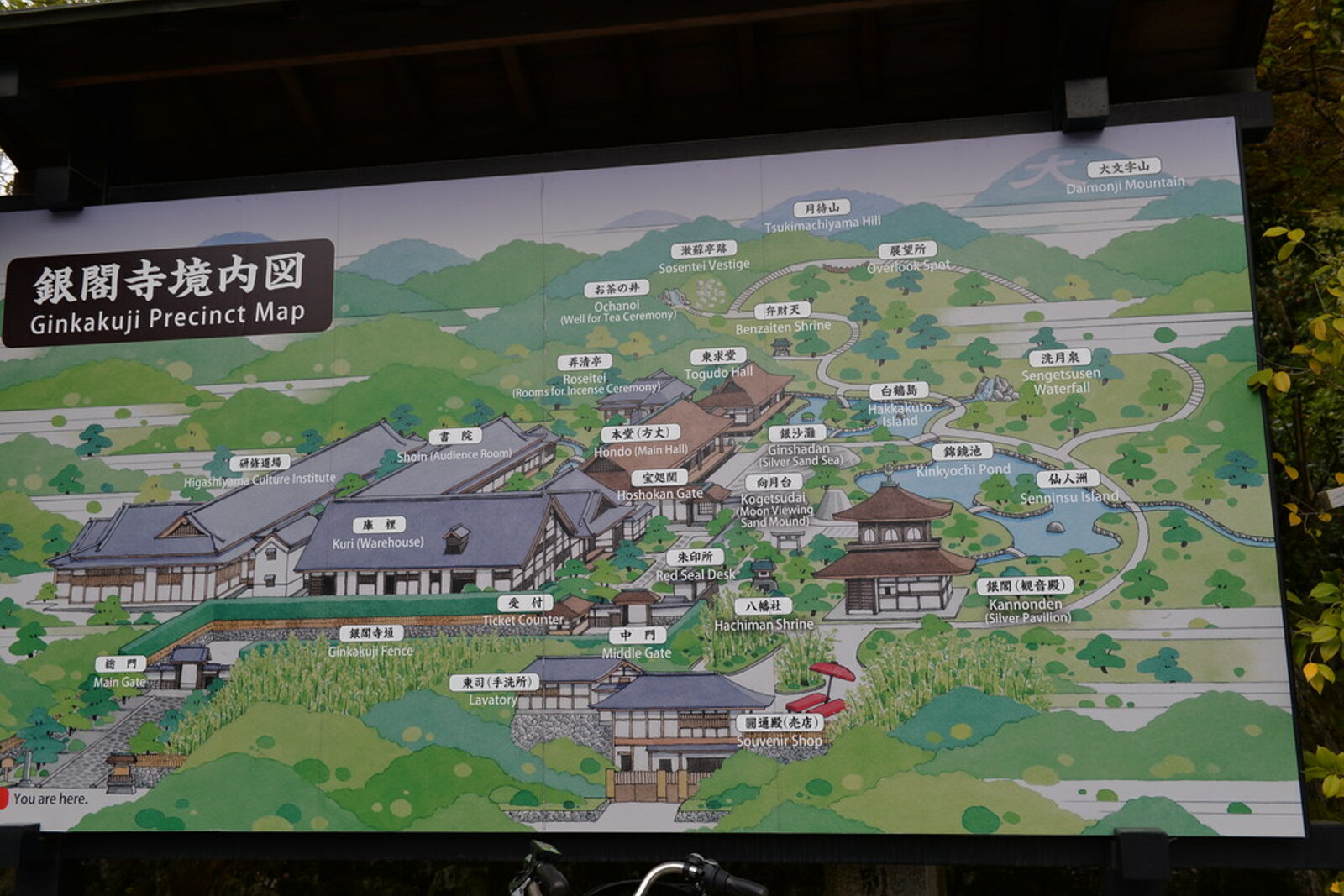
Look around first
What to notice
- The shopping street on the climb
- The slope of Daimonji Mountain
- The gates of Ginkaku-ji
The story of the place
This short street climbs from the canal to the gates of Ginkaku-ji across the land of the former Jodoji Village. Cafes and souvenir shops now stand on both sides. In mid-August, another kind of burden appears at the foot of the climb: pine logs and wooden tablets bearing the names of the dead. They will be carried farther up Daimonji Mountain behind the temple, to send off the souls of ancestors after Obon.
This duty came to the residents of Jodoji unexpectedly. After the Meiji Restoration, Buddhist temples had their lands expropriated. Ginkaku-ji was subordinate to Shokoku-ji, which owned houses, fields, and forest here. When the authorities decided to transfer another twelve hectares of mountainside to the residents, the village headman and elders submitted a petition to the governor of Kyoto asking to refuse it. The petition was rejected.
Forty-eight residents registered the forest as communal property. Along with the land, they acquired a rite: a huge character, dai, meaning “large,” was already lit on the slope. Most families lived by farming and forest work. Red pine was cut on the communal mountain, while wheat for the binding straw was grown below. In winter, trees were felled and dried; in spring, they were split into logs and moved under cover before the rainy season. Participation in this work was passed down within households to the eldest child.
After World War II, residents began leaving for city jobs, houses and parking lots took over the fields, and the pine forest began to thin. The families joined together in the Daimonji Preservation Society and took up planting, clearing the trail, and preparing the fire pits. The mountain was transferred to neither the temple nor the city: it remained the communal property of local households.
On August sixteenth, logs are received at Hachi-jinja Shrine behind the northern side of Ginkaku-ji, then carried up the main trail to the fire pits. At eight p.m., dai lights up on the slope—on a mountain the residents once tried not to accept and that forty-eight residents of Jodoji nevertheless registered in their own names.
Useful on site
The street is open around the clock; shops usually operate from 10:00 until late evening
Checked: June 22, 2026. Check the official source before visiting.Signs and memorial stones are easy to miss among the shop signs and passersby; look at them without blocking shop entrances or movement along the street.