 Guide On Map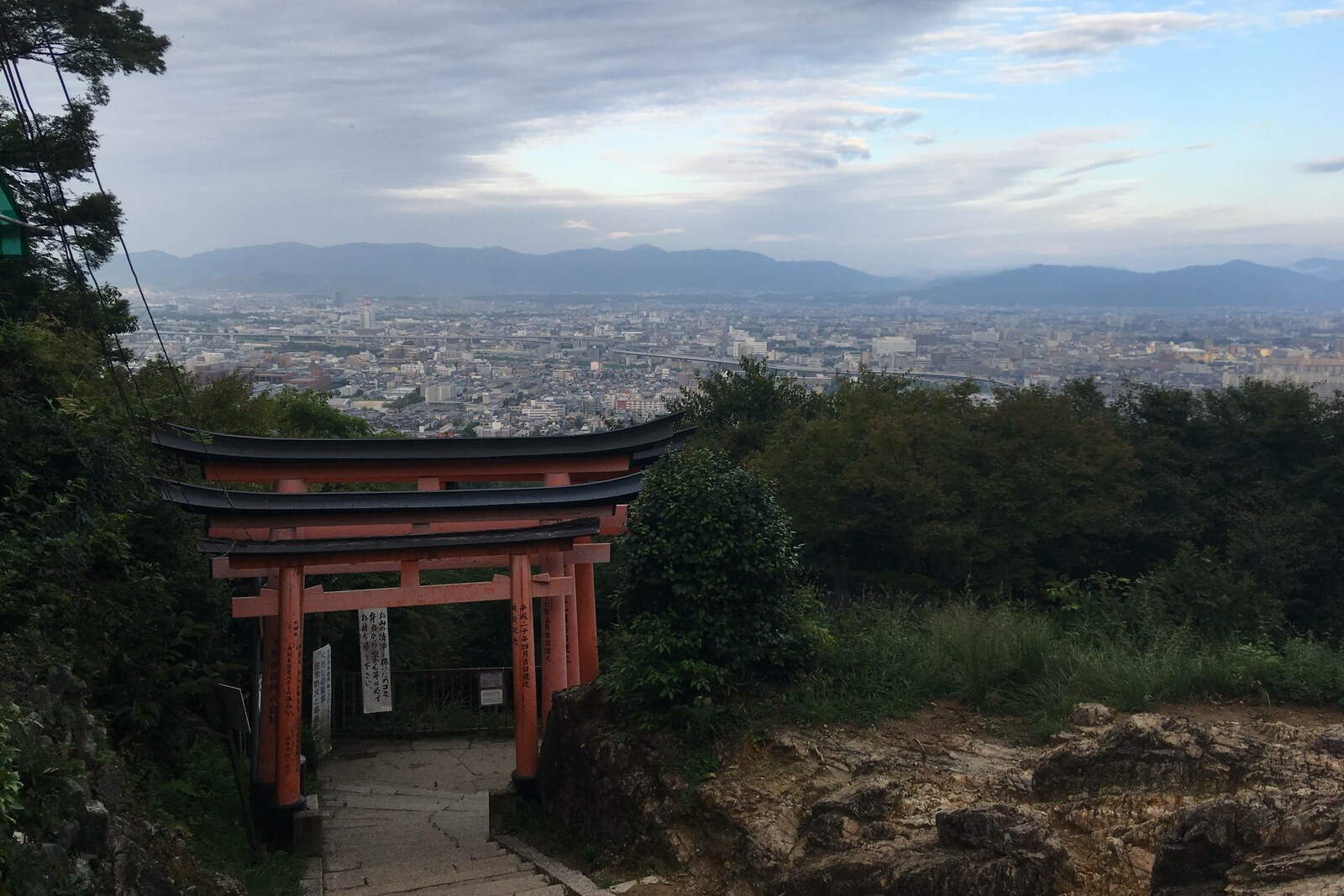
Look around first
What to notice
- Four diverging roads
- Nishimura-tei teahouse
- Upper residential floor
The story of the place
The upper floor of this house is still residential, and its inhabitants earned their living for many years from people walking on the mountain. Nine relatives from one family lived here. A car could not reach the house, so groceries, drinks, and gas cylinders were carried up by hand along the stone steps.
Yotsutsuji is the name of the junction itself: in Japanese, it means “four roads.” One descends to the main shrine, another leads to Kojingamine, and two more circle the Inari peaks. That is why you meet both people who are still climbing and those who are already returning. At the meeting point of the roads stands Nishimura-tei, a teahouse serving noodles, sweets, and inari sushi.
The upper floor of this house remained the owners’ family home for a long time. Kazuhiko Nishimura grew up here—the owners’ younger son and a future actor, who after school wanted to leave Kyoto and choose his own occupation. His parents, brother, sister, two aunts, grandfather, and grandmother lived above the teahouse with him—nine people in all. The family made its living by serving pilgrims, but a car could not reach the house. Beer, lemonade, groceries, and gas cylinders had to be carried up from below along the stone steps.
For Kazuhiko, the road through the torii gates was an everyday route. He walked down to school and back up home, then made the trip again to play, and after returning he could be sent out for shopping once more—making no fewer than three descents and climbs a day. As the sons grew older, they were assigned to haul supplies, mend holes in the roof and walls, and heat the old bath with used chopsticks from the teahouse. His father and grandfather had previously done the heaviest work themselves, but then passed it on to the brothers: in this house, a child began to be considered a worker in the family business early on.
His mother expected Kazuhiko to stay and help his older brother after school. He chose a university in Tokyo specifically: near Kyoto, he would inevitably be called back to the teahouse every weekend. His plan was strict—to enroll in a film-related department, or, if he failed, become a cook. Kazuhiko was accepted; he left at eighteen and made his television debut in nineteen eighty-eight.
The family business passed to the older brother. Nishimura-tei still occupies the same house at Yotsutsuji: downstairs, they serve people stopping between the four roads, while upstairs is the home from which the owners’ younger son once left for Tokyo so that he would not have to return here to work every Saturday and Sunday.
Useful on site
The shrine grounds and mountain trail are accessible without a ticket; shops, teahouses, and amulet counters keep their own daytime hours. Checked 2026-06-29.
Checked: June 29, 2026. Check the official source before visiting.Take a pause and assess your energy, time, and lighting: from here, you can begin descending without regret or set out on the full circuit.