 Guide On Map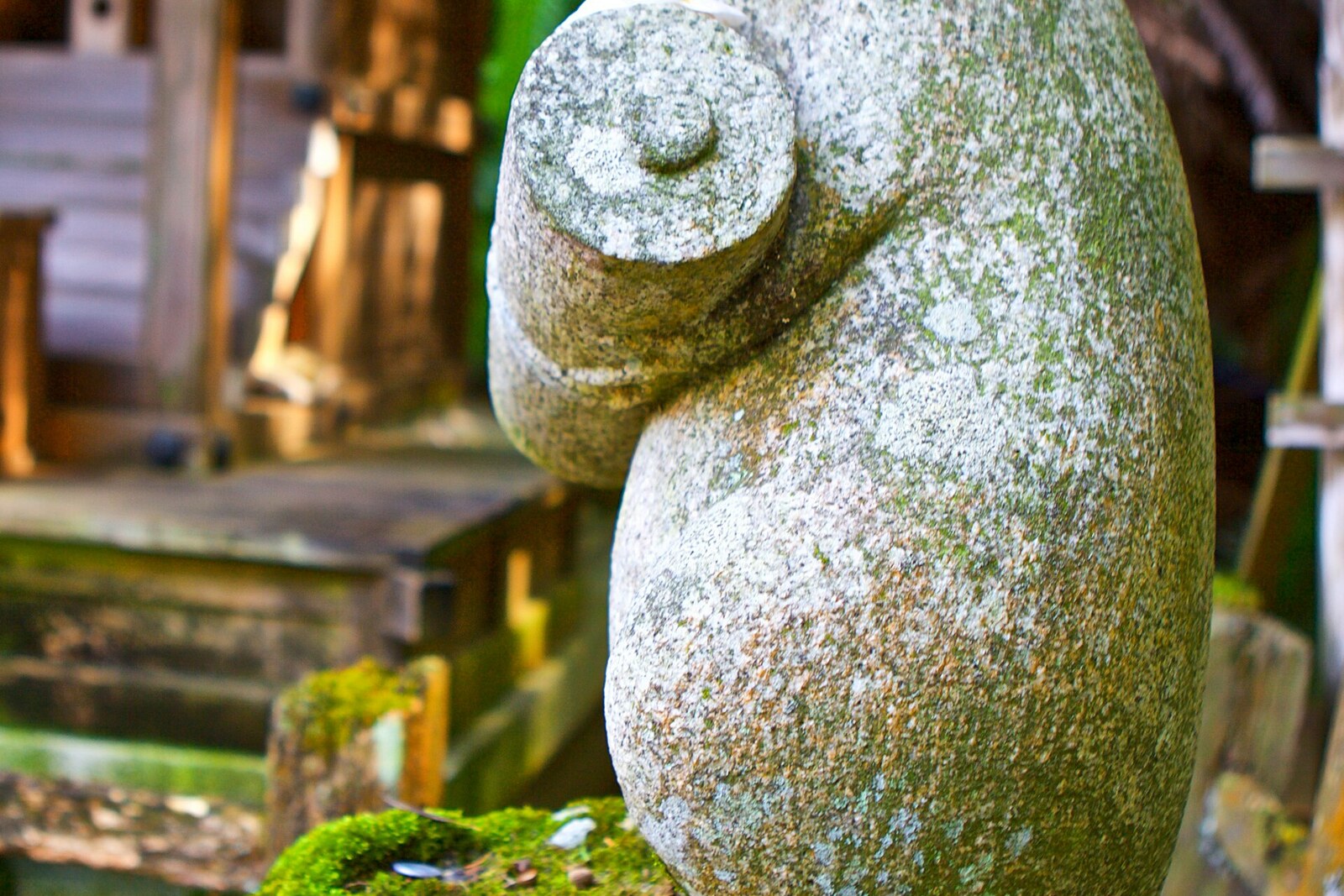
Look around first
What to notice
- Stone mice
- The scroll in the right-hand mouse's paws
- The ball in the left-hand mouse's paws
- Stone plinths with the date
The story of the place
On May fifth, nineteen sixty-nine, Otoyo parishioners placed two stone mice in front of a small subsidiary shrine. Their donation marked the renewal of the shrine roof, and the unusual pair was devised by the head priest, Kobayashi Tsuneyoshi. He came from a family of shrine attendants: his father had previously headed Otoyo Shrine, and caring for this shrine was Tsuneyoshi's profession.
The subsidiary shrine is dedicated to Okuninushi. According to a myth recorded in the Kojiki, Okuninushi sought the hand of Suseri-hime, the daughter of the god Susanoo. Her father did not want to accept the suitor without trials. One day, he shot an arrow into a field, told Okuninushi to bring it back, and then set the grass alight from all sides. A mouse showed the suitor a hollow beneath the ground. Okuninushi dropped into the shelter, waited out the fire, and the mice brought him the arrow. The trials did not end there, but Okuninushi survived, left with Suseri-hime, and became ruler of the earthly realm. This is a mythological tale, not a historical event; it was from this tale that Kobayashi took the mice for Okuninushi's shrine.
He preserved the arrangement of an ordinary pair of shrine guardians: one mouse opens its mouth, while the other keeps it closed. The right-hand mouse clutches a scroll, a sign of knowledge. The left-hand one embraces a ball of water, which here is associated with life, fertility, and healing. This is why people ask this pair for a successful marriage, children, health, prosperity, and success in their studies.
The mice themselves do not stand by Otoyo Shrine's main sanctuary. The main hall venerates Sukunahikona, a deity of healing. According to shrine tradition, in eight eighty-seven Fujiwara no Yoshiko, a senior court lady and the adoptive mother of Emperor Uda, carried out an imperial order and established a prayer shrine for his recovery. It originally stood higher up, on the slope of Tsubakigamine behind the present buildings. The shrine was moved to this site only at the beginning of the eleventh century. The main hall's present role comes from that request for health.
Kobayashi's decision brought the subsidiary shrine more fame than the main hall received. In the Year of the Rat, the mice are filmed for newspapers and television, and pilgrims come for the animal of their birth year. In two thousand eight, the wait reached as much as two hours, and the line extended from the cramped courtyard to Otoyo Bridge. The official name, alongside the name of the ancient shrine, now includes the words “guardian-mice shrine.”
The year nineteen sixty-nine is carved into the stone plinths of both figures. The parishioners wanted to leave a reminder of the renewed roof; they left behind a pair by which people now recognize Otoyo Shrine.
Useful on site
Free access, the amulet office is open 9:00–17:00
Checked: June 22, 2026. Check the official source before visiting.Do not rearrange offerings or touch the figures for a photograph. The space is small, so make room for those who are praying.