 Guide On Map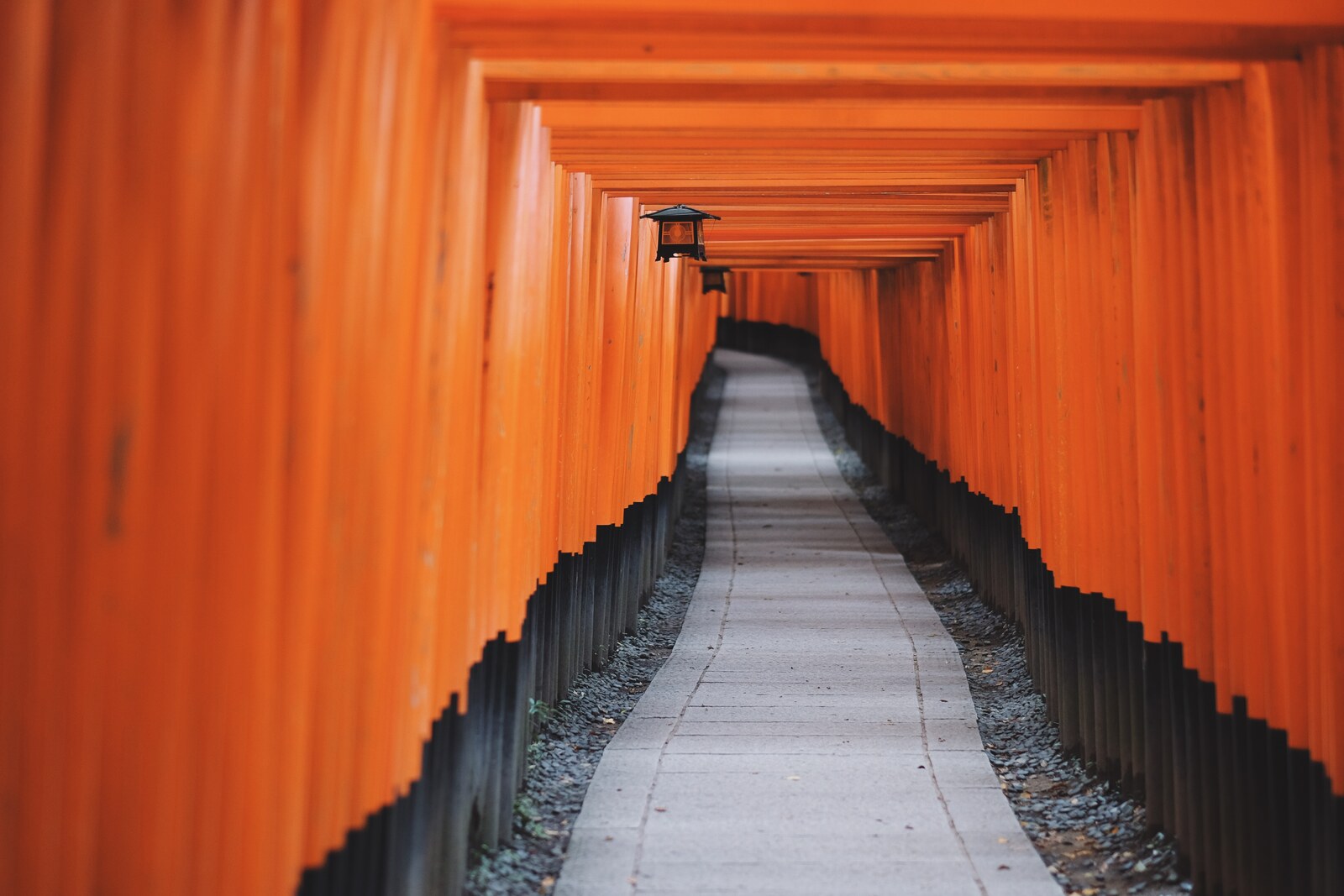
Look around first
What to notice
- Two parallel rows of torii
- Names and dates on the backs of the gates
- Cypress posts
The story of the place
Senbon Torii means “a thousand gates,” although the two parallel rows contain about eight hundred. They were not installed all at once: each donor paid for an individual torii. The donor’s name and the date of the donation were written on the back of the gate.
Torii mark the entrance to sacred space. The ascent of Mount Inari begins here, so since the Edo period, worshippers have placed gates along the path—when asking for help or giving thanks for a request that was granted. The word “torii” sounds like the Japanese verb “to pass through”: people hoped that their request would “pass through” as well. Inari was first revered as a deity of the harvest and, with the development of trade, also as a patron of business success. Merchants, craftspeople, and then entire companies appeared among the donors.
One such offering belongs to Ichikawa Masakazu, the founder of the construction company Sumus. He opened it in late two thousand six and wanted above all to keep the new business afloat. There were no entrepreneurs among his acquaintances. Ichikawa had only heard that his wife’s relative, who ran a company in Kobe, traveled to Fushimi Inari Taisha on the first day of every month.
Beginning January first, two thousand seven, Ichikawa began doing the same: he came to give thanks for the past month and ask for success in the next one. At that time, he also decided that if the company lasted ten years, he would donate his own torii. To keep to this routine, he sometimes arrived the night before and waited for midnight when he was due to travel on the first.
The company lasted ten years, and Ichikawa submitted an application. Places in Senbon Torii become available gradually. The posts are made of cypress; when the base rots, the previous donor is offered the chance to pay for a replacement. If the donor refuses or can no longer be found, the place passes to the next person in line.
Ichikawa waited four years. On December first, two thousand twenty, attendants installed the Sumus gate, and held a donation ceremony in the Honden. The company continued building wooden houses, and the monthly trips did not stop. In January two thousand twenty-six, Ichikawa brought his employees here as well.
The Sumus gate stands on the southern path at number three hundred ninety-two, about twenty torii before the end of the row. Its back still bears the name of the company for which Ichikawa began coming here on the first day of every month.
Useful on site
The shrine grounds and mountain trail are accessible without a ticket; shops, teahouses, and amulet counters keep their own daytime hours. Checked 2026-06-29.
Checked: June 29, 2026. Check the official source before visiting.Do not block the narrow passage by stopping or filming; it is easier to read the inscriptions if you turn around in the direction of travel.