 Guide On Map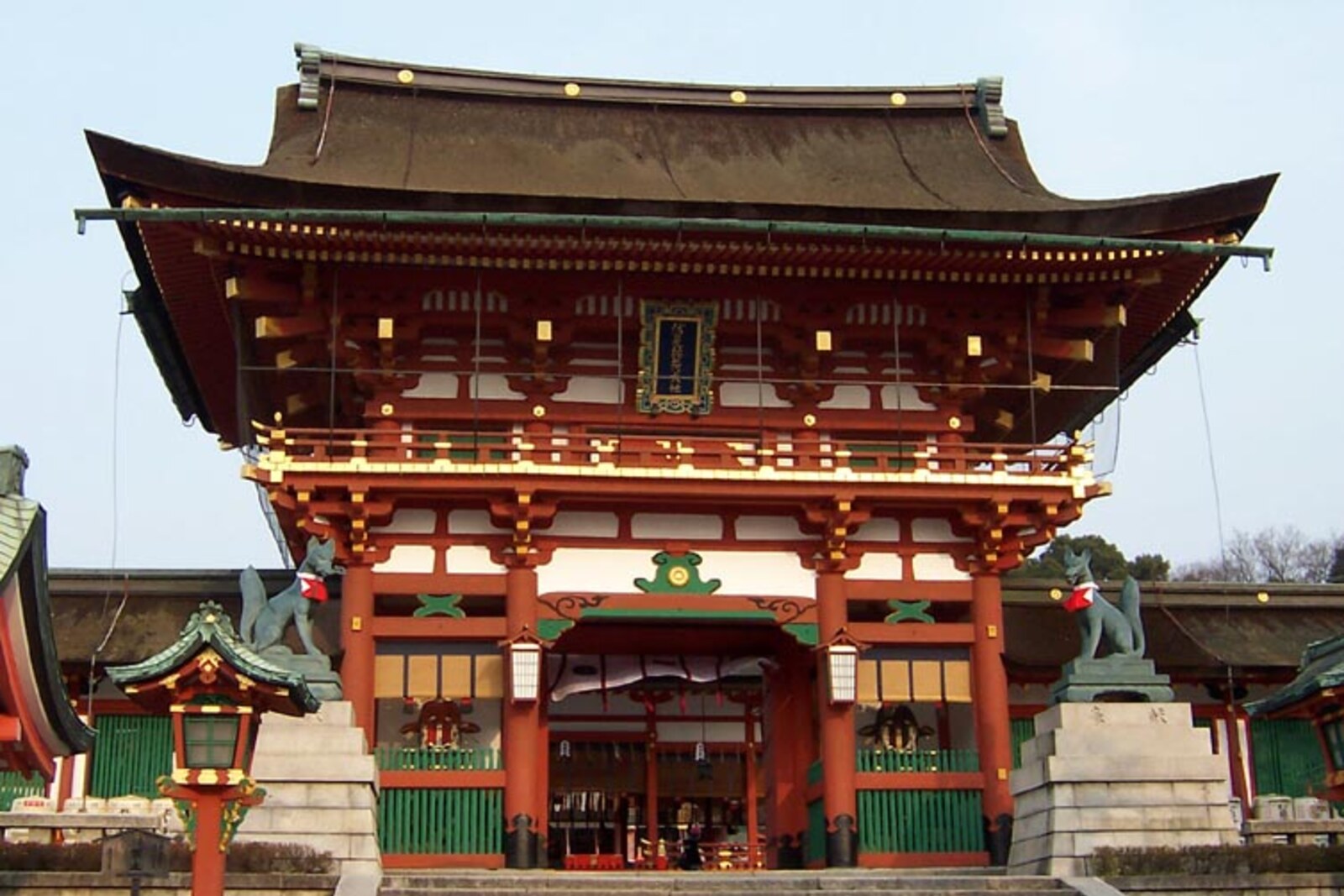
Look around first
What to notice
- The lower passage
- The upper tier
- The roof above the passage
The story of the place
The main entrance to the shrine passes through the lower opening of these gates. Above it rises a second tier, lifting the roof over the passage; this arrangement is called Romon. These gates were built in fifteen eighty-nine.
In fifteen eighty-eight, Toyotomi Hideyoshi, the regent and de facto ruler of Japan, was trying to save his seriously ill mother. At court, she was called Omandokoro—“the regent’s mother.” Hideyoshi gave Fushimi Inari Taisha a written vow: if his mother recovered, he would donate ten thousand koku. Koku measured rice and income from land; the promised amount was equivalent to an annual supply for ten thousand people.
Hideyoshi turned to Inari deliberately. A year earlier, he had already established a shrine to this deity in his Jurakudai Palace. Now the clergy of Fushimi Inari Taisha conducted a major prayer service for his mother’s recovery. Omandokoro recovered. Hideyoshi kept his promise: he paid for extensive work in the complex, and in fifteen eighty-nine these gates were built with his donation.
“Romon” means a two-story gate. The lower opening serves as the main entrance to the shrine, while the upper tier raises the roof above the passage. For Hideyoshi, it was a gift of thanks for a request that had already been granted.
Later, historians doubted this connection: some details of the building conflicted with old records. In nineteen seventy-three, restorers dismantled the gates and discovered an ink inscription dated “the year fifteen eighty-nine.” It confirmed the account of the construction. Hideyoshi’s written vow is kept at the shrine, and its fulfillment has remained at the main entrance.
Useful on site
The shrine grounds and mountain trail are accessible without a ticket; shops, teahouses, and amulet counters keep their own daytime hours. Checked 2026-06-29.
Checked: June 29, 2026. Check the official source before visiting.View the gates from outside: the inscription confirming their date is hidden inside the structure and cannot be seen from the passage.