 Guide On Map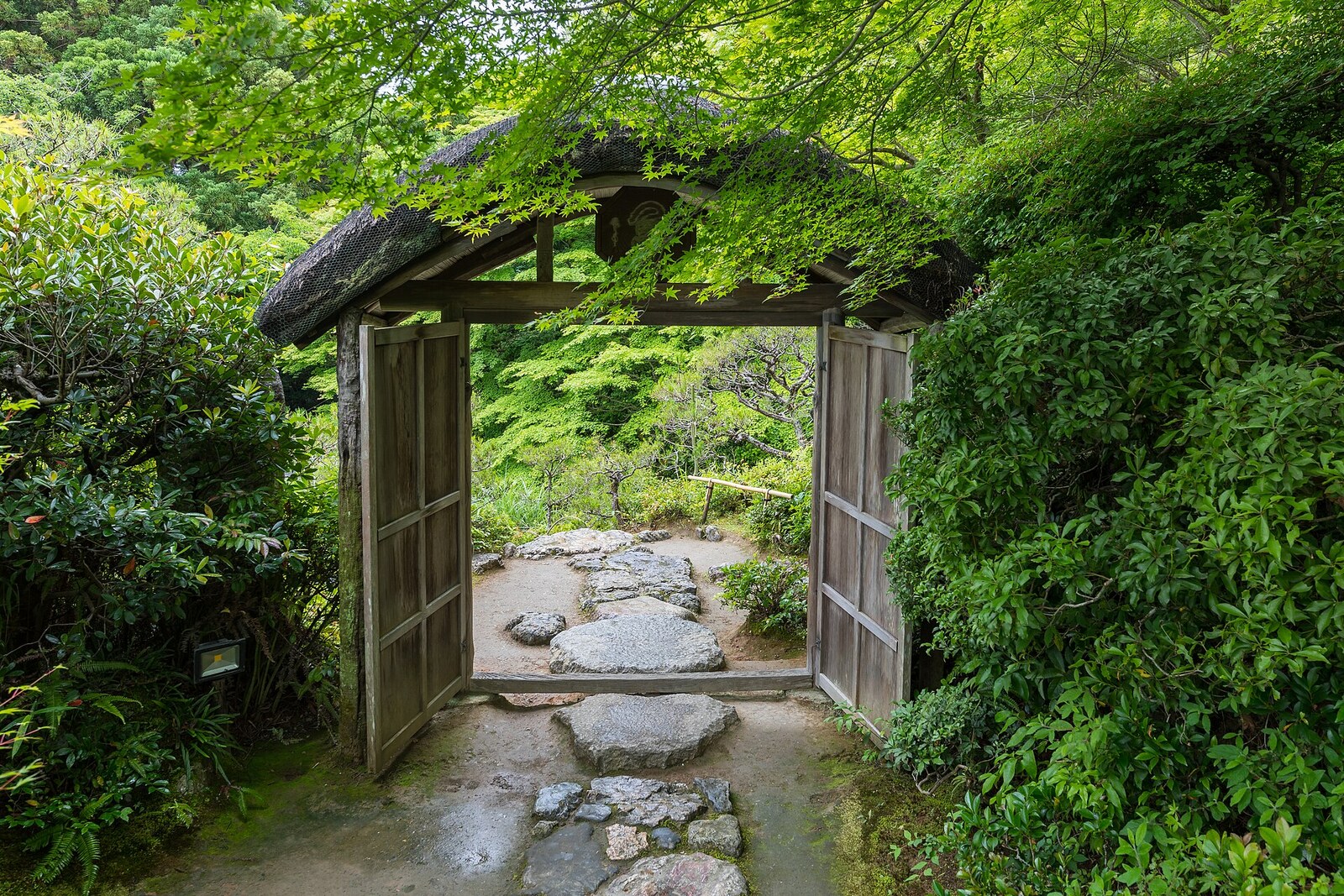
Look around first
What to notice
- Daijokaku residence
- Jibutsudo prayer hall
- Stone paths
- Portrait of Tange Sazen
The story of the place
The name of this villa includes its owner’s stage surname. Denjiro Okochi was an actor whom silent-film audiences knew for playing Tange Sazen, a one-eyed, one-armed wandering samurai. This character brought him fame and large fees. Denjiro spent a substantial part of them here, on the slope of Mount Ogura.
In nineteen thirty-one, the actor was thirty-four. He began gradually buying up land above Hozu Gorge: from here, Arashiyama, the distant mountains, and Kyoto could all be seen at once. Denjiro wanted a secluded home and a garden in which the views would change as one climbed. He chose the materials himself and planned the placement of the buildings, while he and the gardener Hirose Rihei planted trees and set stones.
Filming provided money to continue the work. Denjiro spent days free from filming at the estate. One of the first buildings was Jibutsudo, a small private prayer hall where the actor read Buddhist texts, recited prayers, and meditated. Daijokaku, the main residence, came later. Its rooms combined elements of palace, samurai, tea-house, and farmhouse architecture; from nineteen forty-one, Denjiro lived there until old age.
The work continued for about thirty years. In his final years, the actor gave the garden almost all his time away from the film set and most of his fortune. He died in nineteen sixty-two, still changing the plantings and paths. Four buildings created during his lifetime are now protected as architectural monuments, and the former private estate is open as a garden for strolling.
On the current route, visitors go from Daijokaku to the prayer hall, the tea house, and the platforms for which Denjiro once chose sightlines. A full-length image of Tange Sazen hangs in the memorial pavilion. The fees for playing that one-eyed samurai were invested in the paths, trees, and houses around his portrait.
Useful on site
Usually 9:00–17:00, last admission 16:30; open every day. Adults, university students, and high school students ¥1,000; elementary and middle school students ¥500. The ticket includes matcha and a sweet. Checked 2026-06-30.
Checked: June 30, 2026. Check the official source before visiting.The villa requires a separate visit and cannot be understood from a single view at the entrance. Allow time for the full garden circuit and be prepared for slopes: the transitions between enclosed and open spaces are what matter.