 Guide On Map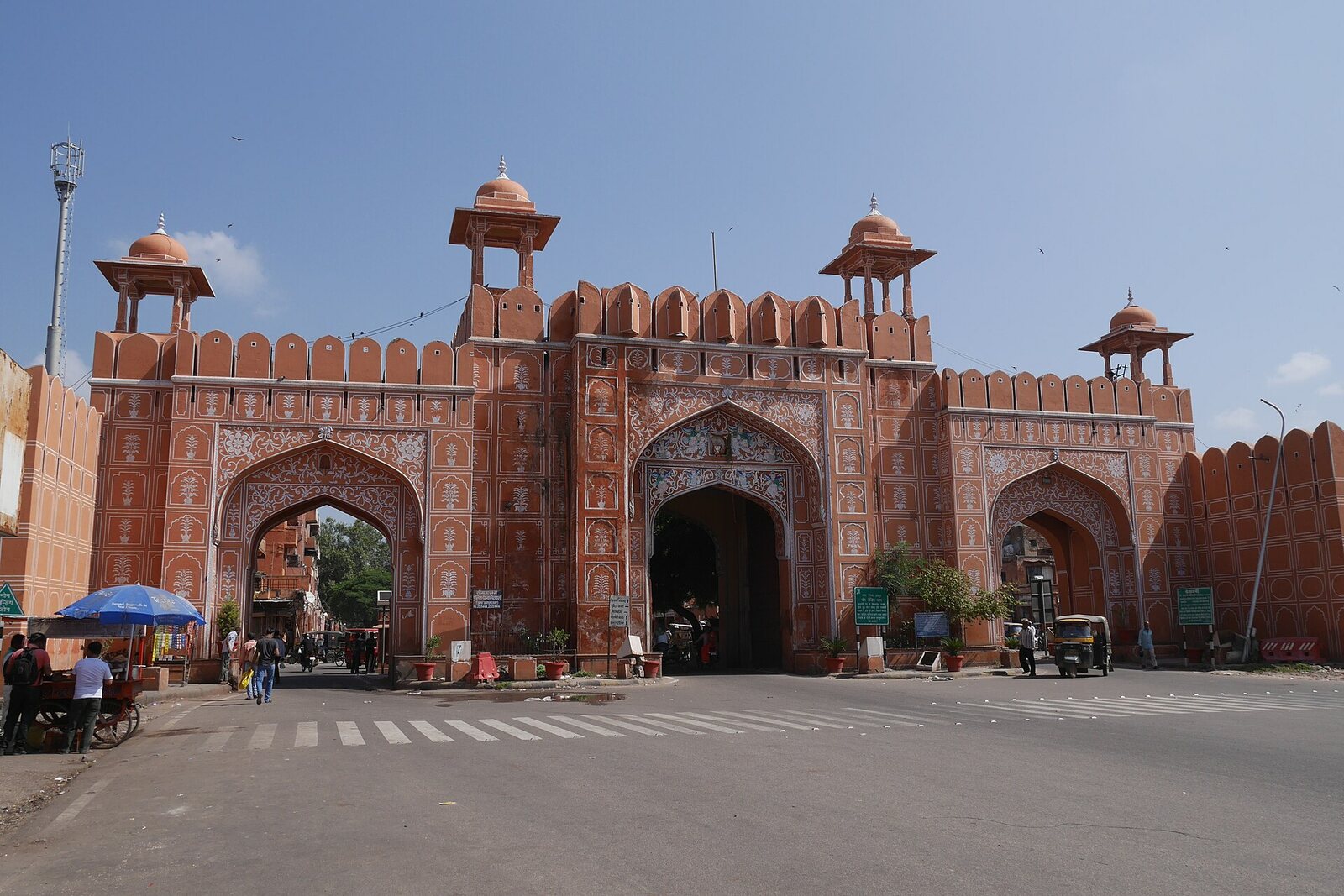

This place does not have an audited photo yet.
Selected place
Ajmeri Gate
Local name: अजमेरी गेट
Here you will see why the old gates ceased to be the city boundary.
Start with 29 highlights or open the complete catalog of 158 curated places.
Highlights include Ajmeri Gate, Anokhi Museum of Hand Printing, Badi Chaupar, Bapu Bazaar, Chhoti Chaupar, Chhoti Chaupar.
We have connected important places into ready-made walks with a clear order, stories and practical details.
Start with 29 highlights, or reveal all 158 curated places.
Local name: अजमेरी गेट
Here you will see why the old gates ceased to be the city boundary.
Here you will see why the old gates ceased to be the city boundary.
The finale will show how the restoration of one house brought work back to artisans and connected an archive with contemporary production.
The square links Jaipur’s commercial layout with the water that townspeople once drew beneath it.
This stop explains how people who had lost their former homes and shops created a new commercial network.
The final stop will show how a merchant's house made room for the first generation of Jaipur schoolgirls.
Here, an old reservoir and a metro tunnel meet beneath a single intersection.
Here, the closed private quarters will turn out to be the place where the question of the next ruler was decided.
The finale brings together two monastic ways of life around a fire that requires care every day.
Here you will see where the city line gave way to the pilgrims’ road.
Here, the tradition of the Ganges survives not in a monument but in the continuing act of bathing.
Here, a religious dispute becomes the story of how the entire gorge changed hands.
Here the public part of the palace ends, and the invisible spectators of the receptions take their place.
The legend of the temple opens the way into the inner world of brokers, gem cutters, and wholesale offices.
The finale will connect the palace zenana with the route's busiest intersection.
The active temple preserves the personal consequence of the heir's appointment that never came to pass.
This stop will show how a courtyard for military inspection, decades later, once again hosted an old ceremony.
Here you will see what astronomers calculated among the stone instruments and what happened in practice.
Here, the jewelry trade unfolds as a chain of raw-material procurement, cutting, credit, and overseas transactions.
This stop will show how a ruler's demand changed the monastic office and the family life of its abbots.
This stop will show how a home, workshop, and counter tied a profession to an entire street.
Here you will understand the labor that lay behind the gardens, fountains, and hammam of the palace on the hill.
The kund will shift the conversation from palace water supply to the everyday household work of Amer’s residents.
Here you will see why the new capital began with personal invitations to merchants and artisans.
The Mirror Hall will show how the setting of a private audience determined a guest's position even before the conversation began.
The gate links Amer’s ceremonial layout with the decision to move the capital to the plain.
This stop links a small, lost shrine to a major city ceremony.
Here, an ordinary commercial street becomes a road designed for palace outings and festive processions.
This stop explains why the invited craftspeople were given a lane beside the palace exit.
From here, the scale of the new capital becomes visible beside the cramped valley the route leads into.
Nearest audio-route stop: Ganesh Pol — 20 m in a straight line, route Amer: Fort and Old Town
Nearest audio-route stop: Ganesh Pol — 30 m in a straight line, route Amer: Fort and Old Town
Nearest audio-route stop: Tripolia Bazaar and Tripolia Gate — 120 m in a straight line, route Old Jaipur: Urban Grid and Royal Quarter
Nearest audio-route stop: City Palace — 30 m in a straight line, route Old Jaipur: Urban Grid and Royal Quarter
Nearest audio-route stop: Main Temple of Galtaji — 20 m in a straight line, route Galtaji: Across the Ridge into the Sacred Valley
Nearest audio-route stop: Badi Chaupar — 60 m in a straight line, route The Trading Streets of Old Jaipur
Nearest audio-route stop: Jagat Shiromani Temple — 10 m in a straight line, route Amer: Fort and Old Town
Nearest audio-route stop: Chhoti Chaupar — 70 m in a straight line, route The Trading Streets of Old Jaipur
Nearest audio-route stop: Panna Meena ka Kund — 100 m in a straight line, route Amer: Fort and Old Town
Nearest audio-route stop: Main Temple of Galtaji — 80 m in a straight line, route Galtaji: Across the Ridge into the Sacred Valley
Nearest audio-route stop: Panna Meena ka Kund — 40 m in a straight line, route Amer: Fort and Old Town
Nearest audio-route stop: Ajmeri Gate — 110 m in a straight line, route Old Jaipur: Urban Grid and Royal Quarter
Nearest audio-route stop: Chhoti Chaupar — 110 m in a straight line, route The Trading Streets of Old Jaipur
Nearest audio-route stop: Jaleb Chowk — 60 m in a straight line, route Amer: Fort and Old Town
Nearest audio-route stop: Surya Temple — 10 m in a straight line, route Galtaji: Across the Ridge into the Sacred Valley
Nearest audio-route stop: Tripolia Bazaar and Tripolia Gate — 110 m in a straight line, route Old Jaipur: Urban Grid and Royal Quarter
Nearest audio-route stop: Galta Kund — 40 m in a straight line, route Galtaji: Across the Ridge into the Sacred Valley
Nearest audio-route stop: Main Temple of Galtaji — 70 m in a straight line, route Galtaji: Across the Ridge into the Sacred Valley
Nearest audio-route stop: Galwar Bagh (Ramgopalji Temple) — 100 m in a straight line, route Galtaji: Across the Ridge into the Sacred Valley
Nearest audio-route stop: Tripolia Bazaar and Tripolia Gate — 80 m in a straight line, route Old Jaipur: Urban Grid and Royal Quarter
Nearest audio-route stop: Hawa Mahal and Badi Chaupar — 70 m in a straight line, route Old Jaipur: Urban Grid and Royal Quarter
Nearest audio-route stop: Tripolia Bazaar and Tripolia Gate — 120 m in a straight line, route Old Jaipur: Urban Grid and Royal Quarter
Nearest audio-route stop: Jantar Mantar — 130 m in a straight line, route Old Jaipur: Urban Grid and Royal Quarter
Nearest audio-route stop: Jantar Mantar — 130 m in a straight line, route Old Jaipur: Urban Grid and Royal Quarter
Nearest audio-route stop: Panna Meena ka Kund — 50 m in a straight line, route Amer: Fort and Old Town
Nearest audio-route stop: Gopalji Ka Rasta — 80 m in a straight line, route The Trading Streets of Old Jaipur