 Guide On Map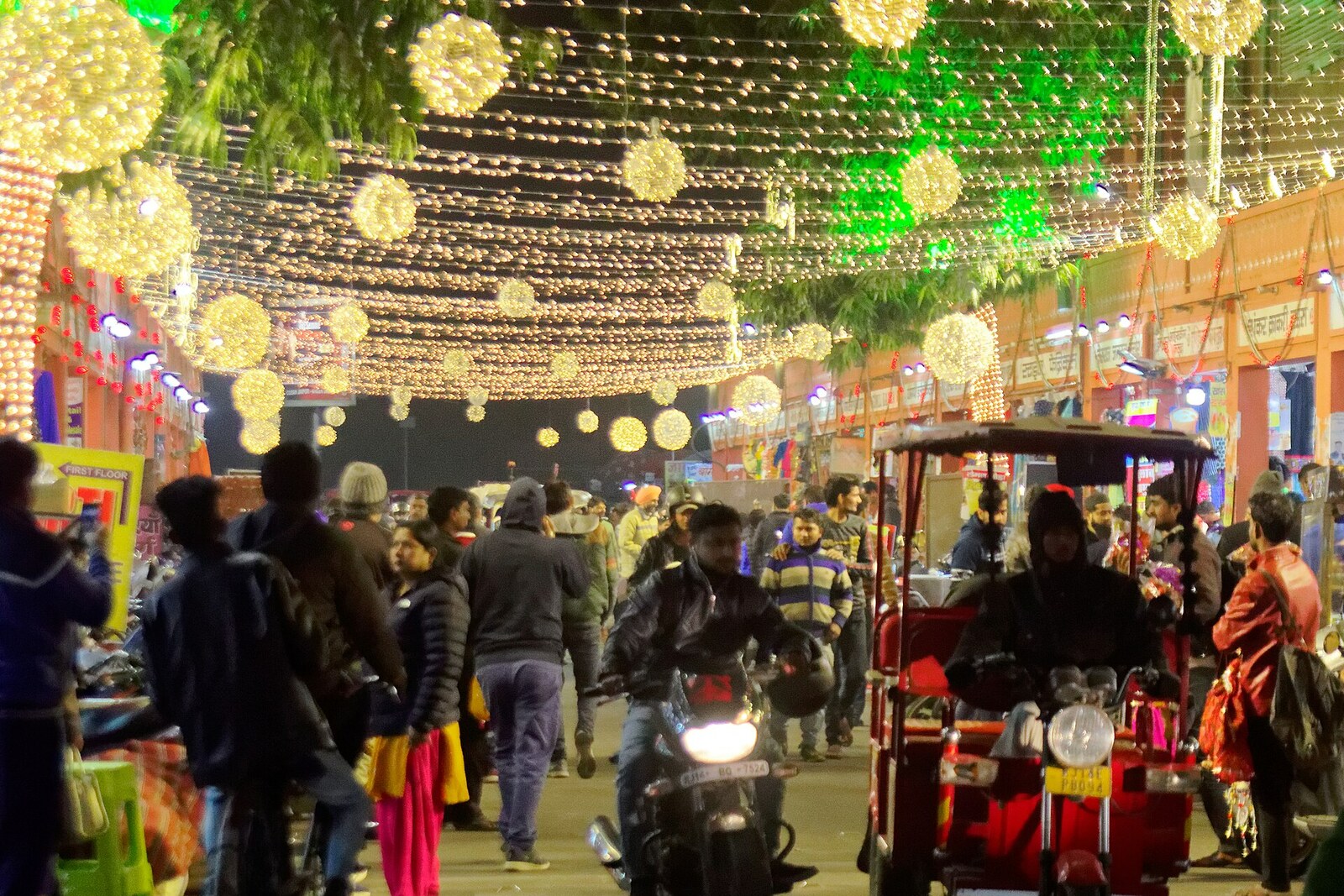
Look around first
What to notice
- Even rows of pink shops
- Fabrics and clothing on the counters
- An unbroken line of stores
The story of the place
The commercial strip runs along the southern section of the city wall, with fabrics and clothing laid out one after another on the counters. Ganda Nala, a ditch that carried city wastewater toward a large channel beyond the wall, once ran beneath this street. After the channel was filled in, the cleared strip was allocated to Bapu Bazaar and Nehru Bazaar. Printed fabrics come here from factories around Jaipur, finished products are brought from Surat and Ahmedabad, and the shops select the goods, arrange them on shelves, and sell them.
The even rows of pink shops from Sanganeri Gate to New Gate appeared much later than Jaipur's first markets. In the early nineteen fifties, they were built for people who had lost their former lives one and a half thousand kilometers from here.
After the Partition of India in nineteen forty-seven, Hindus from Sindh, a region ceded to Pakistan, arrived in Jaipur. Many had previously made their living through trade, transport, and small-scale manufacturing. A land allotment alone could not save them: without a shop, a workshop, or a machine, a person had no income. At first, the refugees were housed in camps in Amber and Durgapura. As early as January nineteen forty-eight, their representatives demanded premises for a factory or workshop and plots for housing from the government.
A site was found by the southern wall of the old city. Ganda Nala, an open drainage channel through which city wastewater flowed toward a large channel beyond the wall, ran along it. The channel was filled in, and on the cleared strip the authorities laid out new commercial streets. Two of them, Bapu Bazaar and Nehru Bazaar, were allocated primarily to Sindhi families.
The new owners did not try to restore the lost Sindhi market in Jaipur item by item. They chose what buyers were already looking for here: cotton fabrics, bedspreads, clothing, footwear, and artisans' wares. The shops gradually became large stores aimed at visitors and city families with money. Many owners still come from that refugee community today.
The goods on the counter are not necessarily made next door. Printed fabrics come from factories around Jaipur, and some finished products are brought from Surat and Ahmedabad. In the shops themselves, the goods are selected, arranged, priced, and sold. Thus the artisanal character of Rajasthan became the merchandise of a large commercial network created by people who had once been left without shops of their own.
The market's name refers to Mohandas Gandhi. “Bapu” means “father”; that was what he was called in India. In the first years after independence, the new markets were given the names of Gandhi and Jawaharlal Nehru, the country's first head of government. Ganda Nala disappeared from the surface; its strip was taken over by a commercial street, while the name Bapu remained above the shops built for refugees from Sindh.
Useful on site
Shops are open daily approximately from 10:30 to 19:30; free entry; some close for lunch.
Checked: June 17, 2026. Check the official source before visiting.Compare the patterns with your eyes and ask permission before unfolding fabric or photographing a counter. Do not block the narrow passage.