 Guide On Map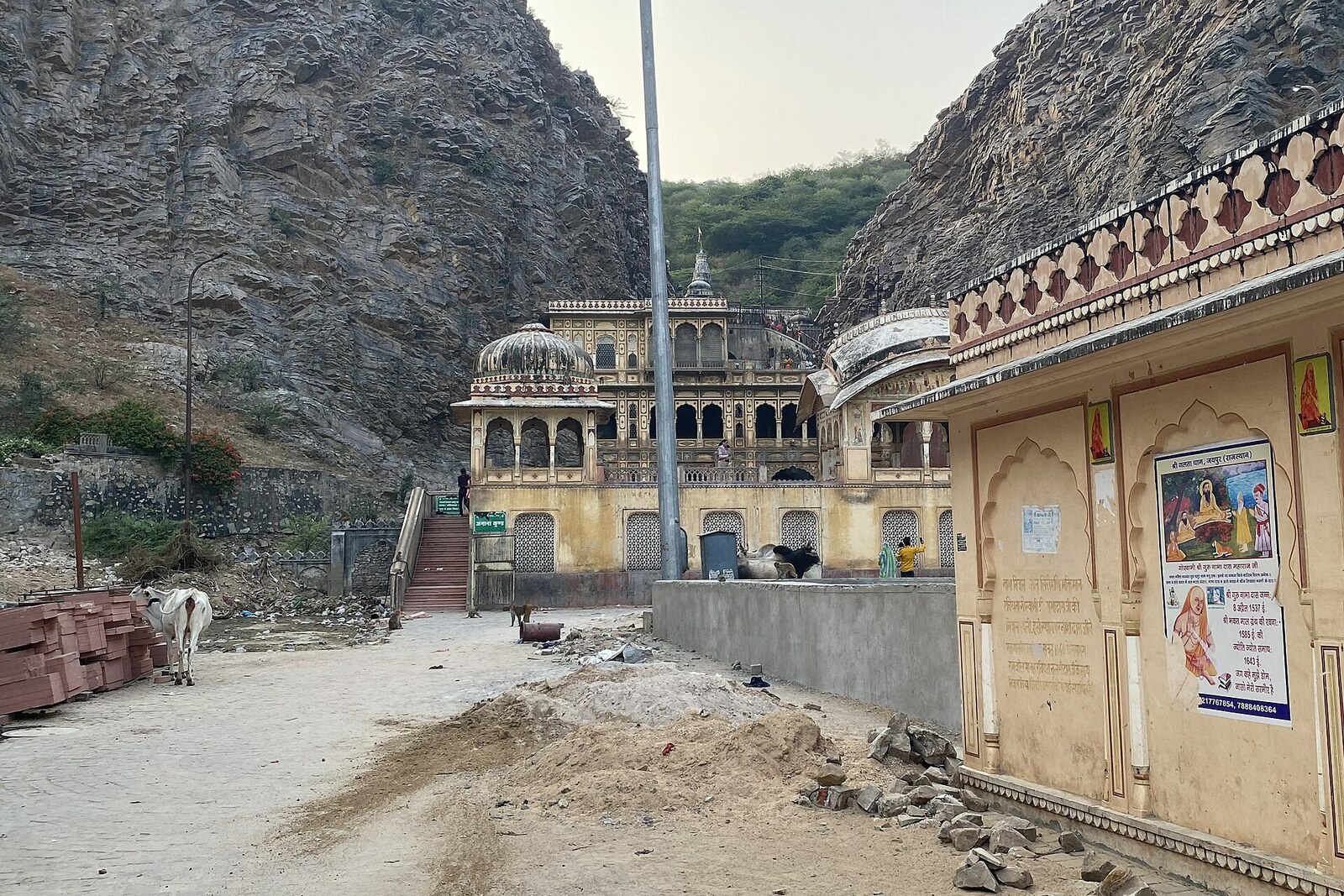
Look around first
What to notice
- Hanuman figure
- Unextinguished lamp
- Temple shrine
- Second Hanuman Temple
The story of the place
Within monastic Galta, this is one of two early shrines built beside each other; farther inside, a figure of the deity remains, and people come to pray before it. It was built for the permanent monastery of the Ramanandis who had settled in the gorge, not for chance travelers on the road through the hills. The community included monks attached to the monastery, who turned to Rama and Sita, and those who wandered, begged for alms, and hardened themselves through practice. Some sought here an image of devoted service, others the strength of a hermit, so one shrine brought together people following different paths.
At the shrine, they maintain an Akhand Jyoti—a lamp that the attendants do not allow to go out. It is impossible to prove that the same flame has burned here for five centuries. Yet the custom truly goes back to the first Ramanandis of Galta and explains why their oldest temple was dedicated specifically to Hanuman.
In the second half of the sixteenth century, the community was led by Kilhadev, the successor to Krishnadas Payahari. The monks who had recently settled in the gorge needed resources for a permanent monastery. A document from sixteen forty confirms that Akbar, the emperor, had already assigned the Ramanandis income from lands near Ranthambore. Researchers consider it possible that these revenues helped Kilhadev pay for the construction.
Community tradition credits him with Galta's first temple. Kilhadev dedicated it to Hanuman and installed an unextinguished fire inside. This choice suited the structure of the community itself. Among the Ramanandis were Tyagis—wandering hermits who lived on alms, practiced yoga, and sought mastery over their own bodies. Others remained at the monasteries, worshipped Sita and Rama, and imagined themselves in scenes from their earthly lives.
Hanuman suited both paths. In the Ramayana, he is a warrior with the form of a monkey who searches for the kidnapped Sita and serves Rama without asking anything for himself. Monastic worshippers saw in him the devoted servant of the divine couple. For wandering ascetics, he was an immortal yogi who had attained strength through severe tapasya. People with different pursuits entered one temple and bowed before one figure, each recognizing in it their own image of religious life.
The Ramanandis preserved both ways of life within one community, and a Second Hanuman Temple appeared beside it. An Akhand Jyoti was installed there as well. The present lamp still has to be refilled and protected by human hands: the fire Kilhadev chose for the First Hanuman Temple remains the attendants' daily responsibility here.
Useful on site
A local shrine within a living complex; access depends on the attendants and worship. Do not promise a separate, stable schedule without checking on site.
Checked: July 1, 2026. Check the official source before visiting.In the cramped shrine, do not block people at prayer or test the tradition of the unextinguished fire by touching it or using a flash.