 Guide On Map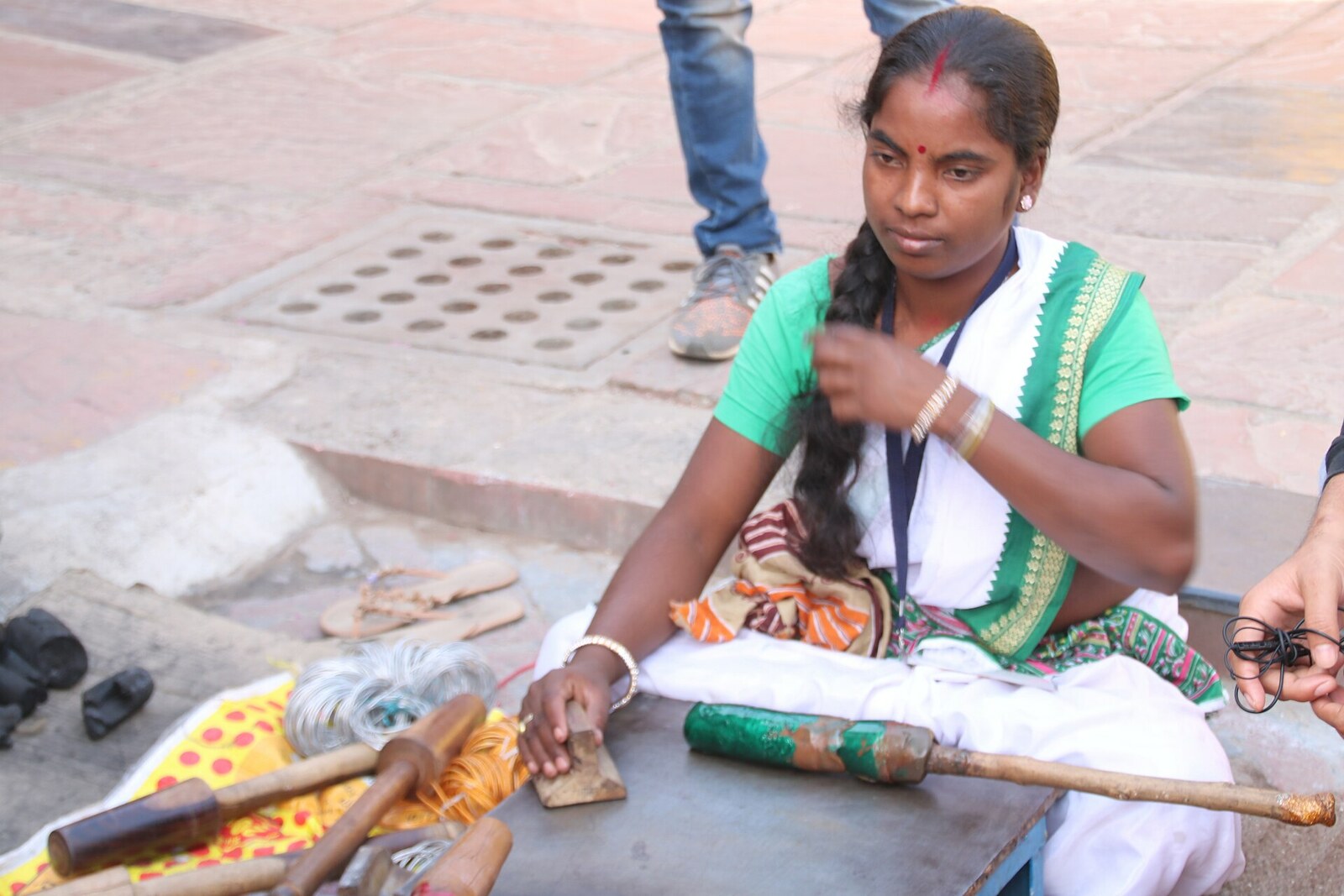
Look around first
What to notice
- Small braziers
- Wooden molds
- Colored lacquer cords
- Sets of bangles
The story of the place
The name Maniharon Ka Rasta preserves the name of the Manihars, Muslim families who earned their living from lacquer bangles. When the new capital was created, craftspeople were settled in different quarters, and this community received a street near Tripolia Bazaar. Sets of multicolored rings recall that red and green bangles were part of a Hindu bride's wedding gift. Lac softened in the heat, so an ornament could be adjusted to the hand, repaired after a crack, and decorated again.
A craftsperson heats purified lac—a natural resin that insects leave on branches—applies a colored layer, pulls the soft mass into a cord, and closes it around a wooden mold. Men traditionally work at small braziers, while women select sets for female customers, sell the pieces, and run the shops. Some signs here include the word “maniharin,” the name for a woman from a craftsperson's family.
The Manihars are a predominantly Muslim community of bangle makers. Maniharon Ka Rasta means “the street of the Manihars” and names the people for whom it was set aside. According to the family tradition of Avaz Mohammed, his ancestors were shepherds and horse traders: they earned their living from herds and trade. After settling in Bagru near Jaipur, they learned to work with lac from Hindu Lakher craftspeople. This is a family story, not a documented reconstruction of every generation's biography.
When Sawai Jai Singh II founded the new capital and assigned craftspeople to separate quarters, he allotted this street near Tripolia Bazaar to the Manihars. Here, a family could place its home, brazier, workshop, and counter side by side. Customers, too, no longer had to search the city for a craftsperson: for lacquer bangles, they went to the Manihars, and their profession became an address.
The red and green bangles made by Muslim craftspeople were part of a Hindu bride's wedding gift and signified her marriage. Their size had to be adjusted to a particular hand, so the connection between the workshop and the female customer did not end with the sale of a finished ornament. Heated lac could be widened, tightened, joined after breaking, and decorated again with stones or glass. Families lived on such orders all year round.
Before Holi, the same craftspeople changed their method. They heated lac and blew it through a metal tube into a thin hollow ball—a Gulal Gota. They poured colored powder inside and sealed the opening. The ball was meant to break when thrown and release the color. According to the Manihars' own tradition, Jaipur's rulers rode through the city on elephants and threw such balls to festival participants; later, families continued to send orders to the palace. This seasonal palace amusement became this street's second product, although bangles still provided the regular income.
Avaz Mohammed inherited his family's craft and received a national award for working with lac in two thousand thirteen. In Rajasthan's register of craftspeople, the address of his workshop is listed without a company or market-row name: Maniharon Ka Rasta, house fifty-four.
Useful on site
Most workshops operate from 10:00 to 20:00; many close on Friday afternoons and Sundays; free entry.
Checked: June 17, 2026. Check the official source before visiting.Do not approach the braziers closely or distract a craftsperson while the material is being heated. Photographing the work is allowed only with permission.