 Guide On Map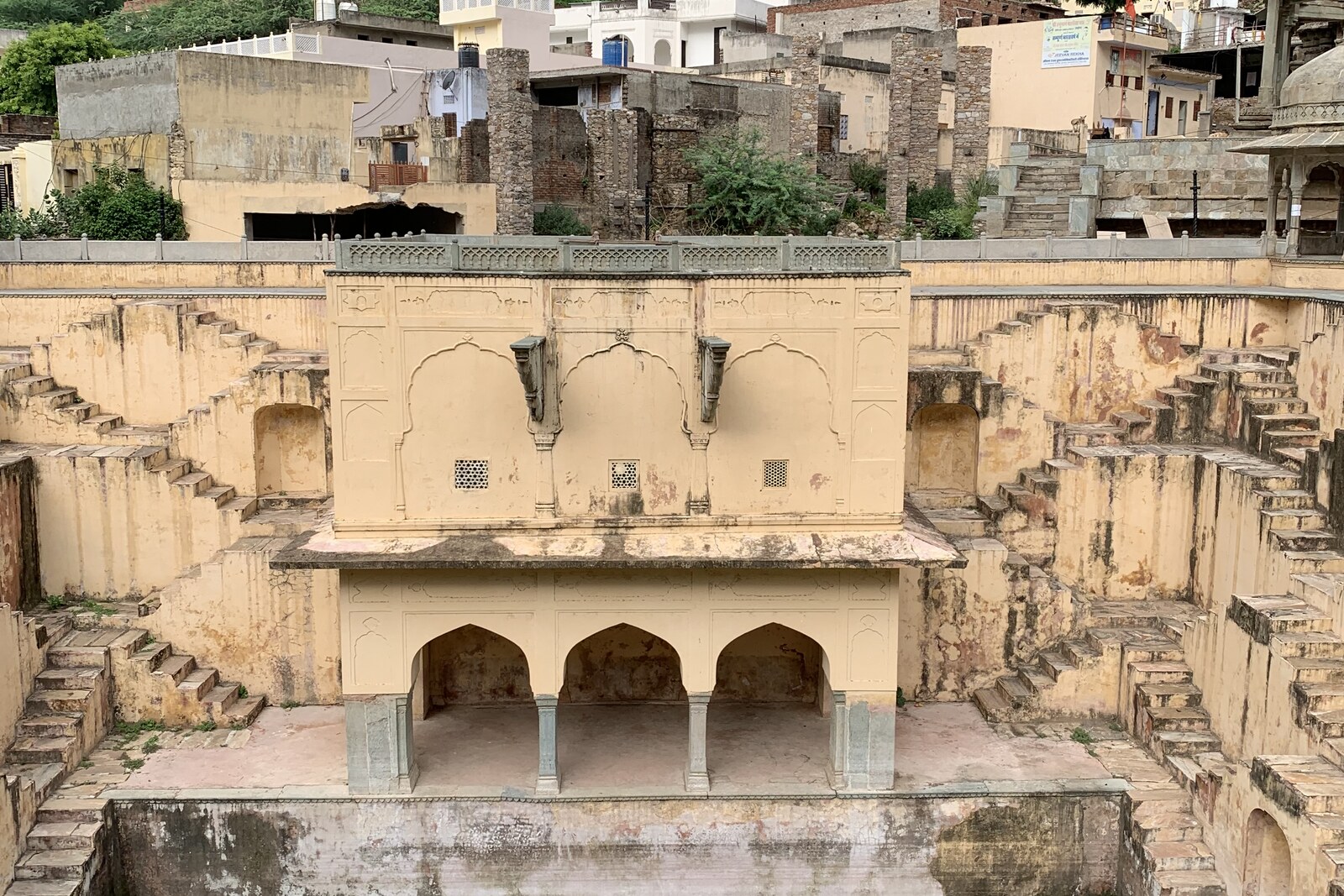
Look around first
What to notice
- Crisscrossing stairways
- Corner pavilions
- Tiered gallery
- Water at the bottom
The story of the place
On three sides of the square reservoir, stairways form a crisscrossing pattern; the fourth is occupied by a gallery with pavilions at the corners. The descents begin from different edges and connect through landings, so several routes led to the water. The structure is usually dated to the sixteenth century, though neither inscriptions nor chronicles name its builder. The name, too, has preserved two local versions of its origin, and the documents provide no basis for preferring one over the other.
Women from old Amer came to this square reservoir for water above all. The vessels they carried determined what people would use to cook, wash clothes, and bathe at home. After the monsoons, the water stood high. In the dry months, people used it, some of it evaporated, and each next portion required a deeper descent.
That is why the kund has crisscrossing stairways on three sides. They are many approaches to one shifting boundary: today the water might be at the upper steps; several months later, far below. The women reached the necessary level, filled clay or metal vessels, and carried them back up. On the landings, they could set down the heavy load, rest, wash clothes, or talk with neighboring women. The tiered gallery on the fourth side and the corner pavilions served the same daily route to the water.
The reservoir is usually dated to the sixteenth century, but documents have not preserved the builder’s name. The name translates as “Panna Meena’s kund,” yet even official lists give another version: “Panna Mian ka Kund.” According to local tradition, Panna Mian was a court eunuch under Maharaja Jai Singh and took part in creating the reservoir for the residents of Amer. Another tradition connects the name with the Meena, the people who ruled here before the Kachhwaha, and calls Panna a Meena warrior. Neither inscriptions nor chronicles allow a choice between these versions: both remain traditions.
The kund has been restored, water still occupies its bottom, and the stairways reach its different levels. But household water is no longer carried from here. The entire route remains—from the upper edge to the reservoir—but the duty for which the women of Amer walked it with filled vessels has disappeared.
Useful on site
The official tourism page states that access is available from dawn to dusk. Access down to the water, particular stairways, or photography may be restricted by guards on site.
Checked: June 29, 2026. Check the official source before visiting.Stay on levels open to visitors, do not climb over barriers, and do not descend to the water without permission.