 Guide On Map
The Trading Streets of Old Jaipur
From Sanganeri Gate through Johari Bazaar to Chhoti Chaupar
Guide On Map on your phone
Open the walk like a regular app
It takes about 10 seconds to install. No app store needed.
The whole path
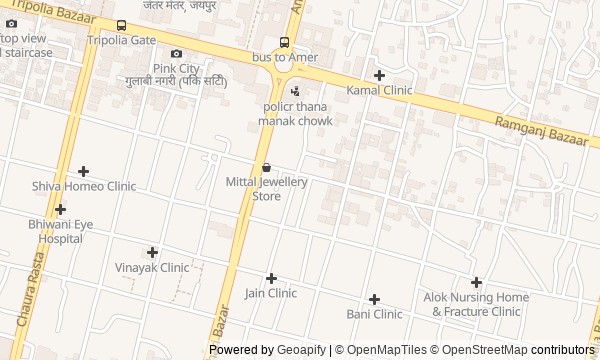
Route map
About the walk
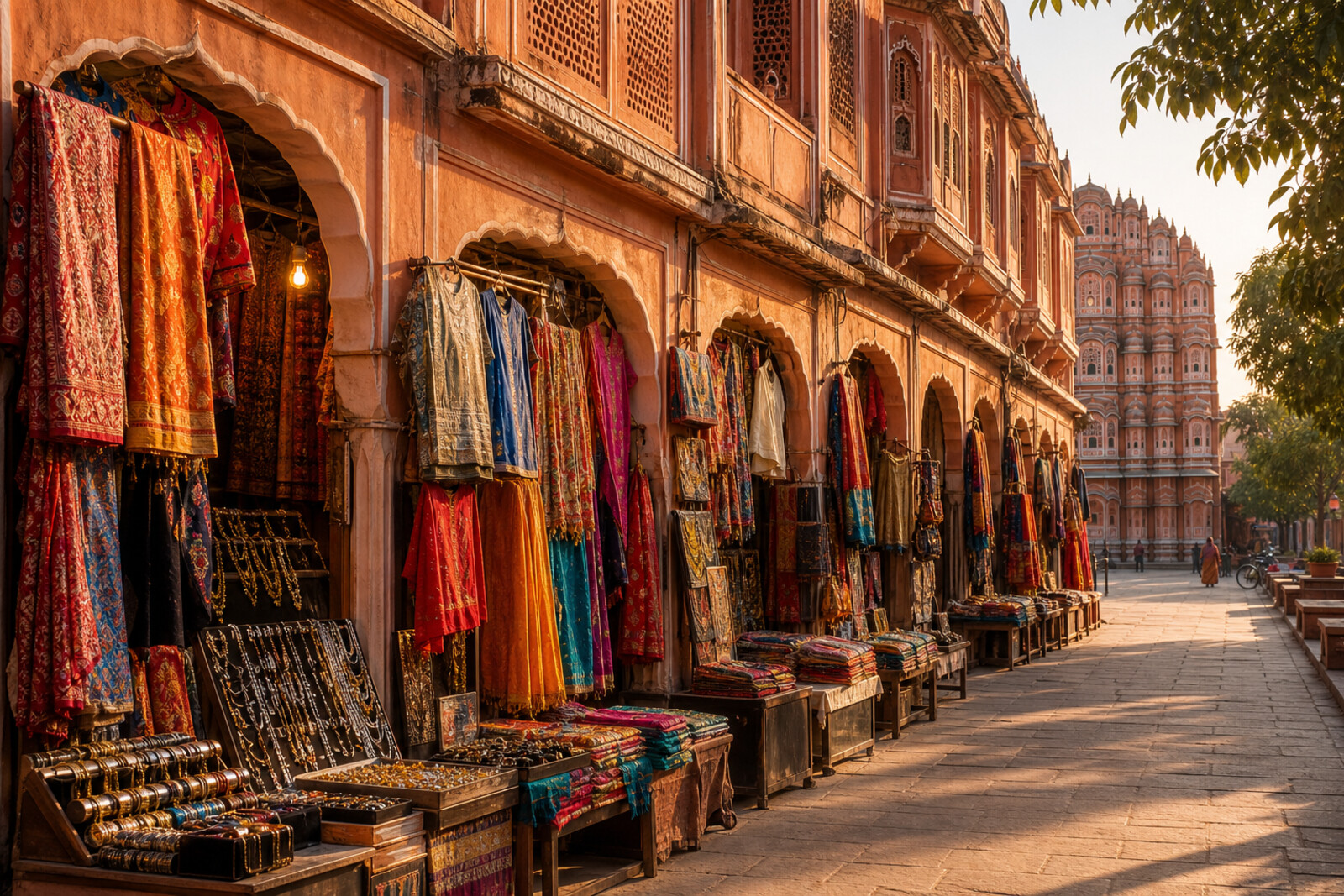
You will cross trading Jaipur from its southern gate to the 2 main squares of the old city. First you will turn into a market that appeared much later than the pink quarters, then return to the jewellers' main street before slipping off into narrow craft rastas. There, broad facades give way to braziers, wooden molds, small offices, and courtyards where a stone is assessed before it ever reaches a display case.
The story moves from small human decisions to the workings of an entire city. Why was a merchant offered a house and a shop at once? How was a trading street built on the site of a drainage channel? Why did a road need to be 6 elephants wide? You will find the answers at the stops along the way.
At the end, you will reach a haveli and hear how residential courtyards gave way to a school. By then, you will be able to read Jaipur's street names as an old list of crafts, deals, and promises the city made.
Why this order
Sanganeri Gate first shows how merchants were invited into a new capital; nearby Bapu Bazaar lets you compare that founding moment with another wave of migration, 2 centuries later. Returning to the gate brings you to Johari Bazaar: after the trade in finished fabrics, you will see how the old quarter connected workshops, offices, and the international stone trade.
From the broad jewellers' street, the route turns into Maniharon Ka Rasta, where a craft occupied its own family address. The next street, Gopalji Ka Rasta, reveals a neighboring, less visible layer of the same quarter—brokers, laboratories, and wholesale deals. From the tight trading lanes, you will emerge onto Badi Chaupar to understand what sustained this entire district.
From the square, the road continues along Tripolia Bazaar: the public crossroads give way to a street of palace processions. It leads on to Chhoti Chaupar, where a merchant's house brings the route to a close not with trade, but with a city school.
Those who want to understand the workings of old Jaipur through its markets Those interested in craft families and trading communities Those who enjoy stories hidden in street names
Those looking for a quiet walk away from trading streets Those expecting a route through palace interiors Those more interested in shopping than in the history of the goods
Before you go
Choose closed, comfortable shoes, and bring water and sun protection. Bazaars leave little personal space: keep your belongings in front of you, give way to carts and motorcycles early, and do not stop in the middle of a passage for a photo. This route is about how a craft city works, not shop recommendations. Do not photograph craftspeople or customers without permission, and do not touch goods or tools unless invited. Hawa Mahal and the palace gates are considered here mainly from the street; plan any separate visit to the interiors yourself.
When to go
It is best to walk in daylight, when the patterns of the fabrics, enamel, facade screens, and work in open shops are easy to see. For quieter observation, choose the first half of the day; during the hottest hours, take breaks in the shade of the arcades.
Backup plan
If a side rasta is overcrowded, blocked, or the work inside the workshops is not visible, do not try to squeeze through: continue along the main trading axis and listen to the relevant story where it is safe to stop. Gopalji Ka Rasta and Maniharon Ka Rasta explore one shared theme—the hidden workings of craft—and missing one of them will not break the route. In severe heat or if you are tired, end the walk at the nearest chaupar; it is easy to return to individual sections as separate short walks.
Route conditions
Facilities. Toilets — 7
Elevation. Ascent — 7 m; descent — 17 m
OpenStreetMap extract of June 18, 2026: database data, not a check on the ground. Data © OpenStreetMap contributors, ODbL licence
Walk plan
Open in maps ↗- 1
Sanganeri Gate
Here you will see why the new capital began with personal invitations to merchants and artisans. - 2
Bapu Bazaar
This stop explains how people who had lost their former homes and shops created a new commercial network. - 3
Johari Bazaar
Here, the jewelry trade unfolds as a chain of raw-material procurement, cutting, credit, and overseas transactions. - 4
Maniharon Ka Rasta
This stop will show how a home, workshop, and counter tied a profession to an entire street. - 5
Gopalji Ka Rasta
The legend of the temple opens the way into the inner world of brokers, gem cutters, and wholesale offices. - 6
Badi Chaupar
The square links Jaipur’s commercial layout with the water that townspeople once drew beneath it. - 7
Tripolia Bazaar
Here, an ordinary commercial street becomes a road designed for palace outings and festive processions. - 8
Chhoti Chaupar
The final stop will show how a merchant's house made room for the first generation of Jaipur schoolgirls.
Route features
Everything you need stays in the browser
Progress, saves and your trip plan are stored on this device.
Add Guide On Map to your home screen so the walk opens outside the browser.
How we handle sources, maps and corrections: our editorial standards