 Guide On Map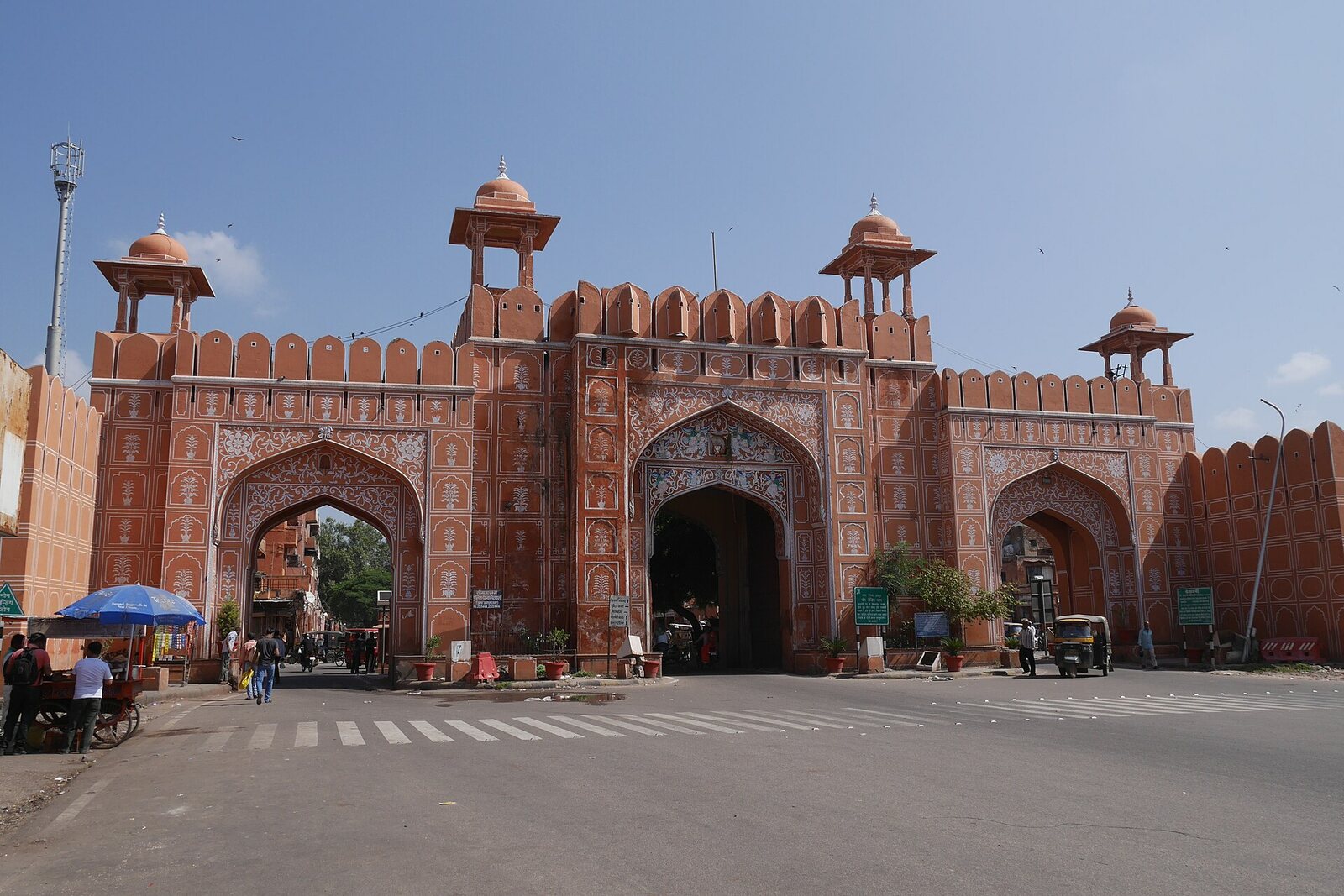
Look around first
What to notice
- Large central arch
- Two side arches
- Mirza Ismail Road
- View along Kishanpole Bazaar
The story of the place
Ajmeri Gate appeared in seventeen twenty-seven, when Maharaja Sawai Jai Singh II was moving the capital from the cramped slopes of Amer to the plain. Together with the planner Vidyadhar Bhattacharya, he was building a city for trade: inviting merchants and artisans, setting aside quarters for them, and turning broad streets into bazaars. A passage to the road to Ajmer was left in the southern wall—hence the gate's name. It was also called Kishan Pol: “pol” means gate, and Kishanpole Bazaar begins beyond the arch.
Guards locked the city gates every evening and opened them at dawn. A shot from a small cannon warned of the imminent closing. For merchants who made their living selling goods in Kishanpole Bazaar, this arch was a daily boundary: anyone late for the signal remained outside until morning. Only in nineteen twenty-three did the city council allow one western gate, Chandpole Gate, to be kept open around the clock. Ajmeri Gate continued to close.
Mirza Ismail changed its position—the chief minister of the princely state, invited by Maharaja Sawai Man Singh II in nineteen forty-two to expand Jaipur beyond the wall. He was promised freedom of action. Ismail moved government institutions out of the old palace quarter, established a vegetable market outside Ajmeri Gate, and routed a new arterial road past the gate from Ajmer Road to Moti Dungri. Land in the new quarters was sold, and the proceeds were spent on their further development.
In that same year, nineteen forty-two, city officials abolished the nighttime closing of all the gates. The arch through which people had previously been let out toward Ajmer and admitted back according to the guards' schedule found itself between the old bazaar and the new districts. Mirza Ismail remained in office longer than his original term, and the arterial road laid under him was named after him.
The road to Ajmer still heads west from here. Mirza Ismail Road runs nearby, and the large central passage and two smaller side arches are no longer locked at night.
Useful on site
Street location; the gate and its approaches can be viewed at any time, but mornings or the time closer to sunset are best.
Checked: June 15, 2026. Check the official source before visiting.View the ensemble from a safe spot and do not stand in the gateway: traffic moves through it constantly.