 Guide On Map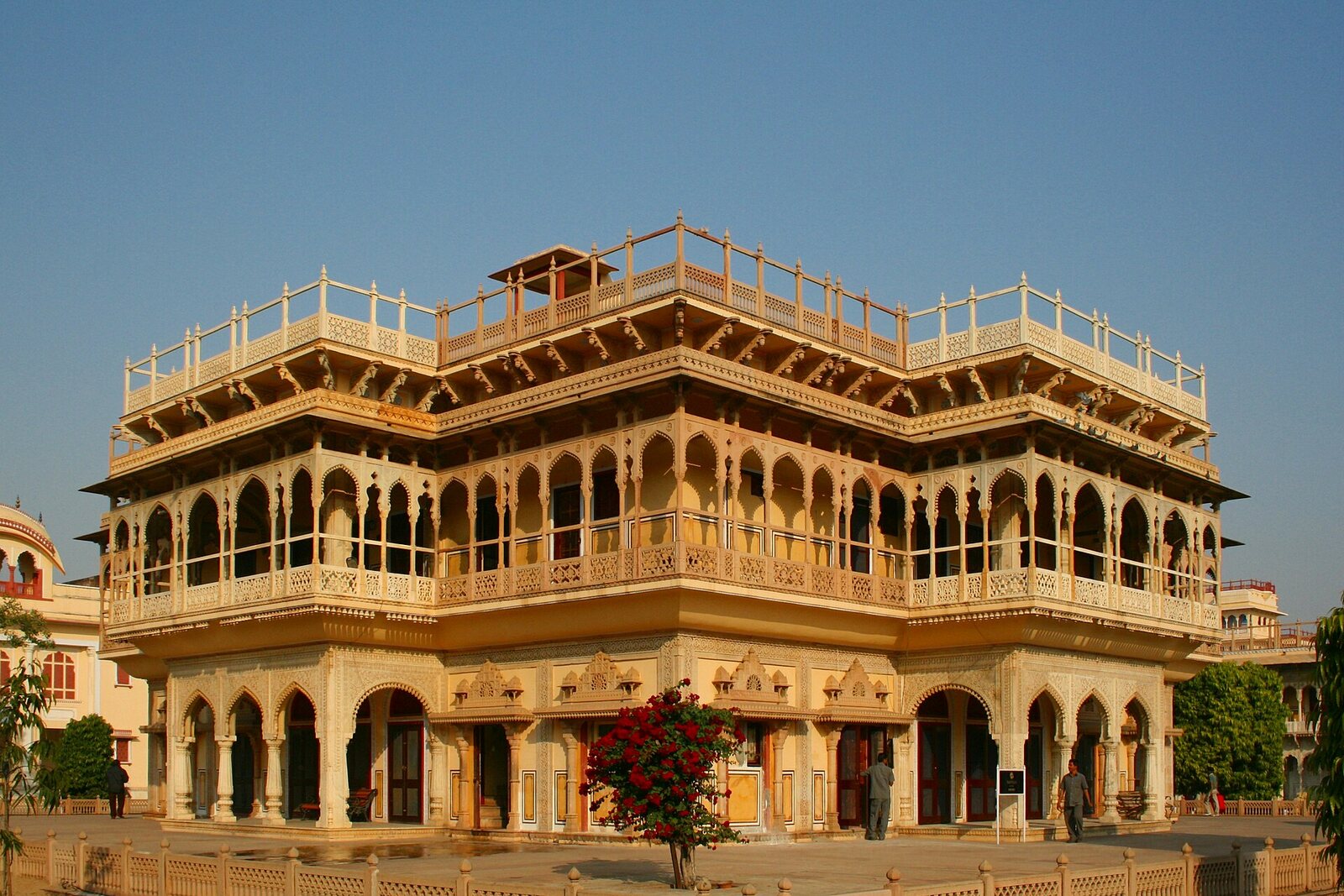
Look around first
What to notice
- Chandra Mahal
- Museum courtyards
- Reception halls
- Gates to the residential section
The story of the place
The City Palace has two sections, divided by the gates of the residential wing. On one side are open museum courtyards and reception halls, where people of the court served and state affairs were decided. On the other begins Chandra Mahal: the ruling family lived there, and this half of the palace remains residential today.
At noon on December thirteenth, seventeen fifty, ministers came to the private quarters of Maharaja Ishwari Singh and sent a servant to find out why the ruler was not issuing orders. Maratha cavalry had already appeared at the walls of Jaipur. Only then did the valet report that the maharaja had died the previous night. His body and the bodies of four women remained in the locked palace rooms for eighteen hours, while outside their doors people continued to wait for instructions.
The dispute over the succession of Jaipur's founder, Sawai Jai Singh II, had led to that night. Under an agreement with the rulers of Mewar, he had promised the throne to the son of his Mewari wife. That son was Madho Singh. But after his father's death, the crown went to his older half-brother, Ishwari Singh, whom the Mughal emperor recognized. Madho Singh sought to enforce the earlier agreement and gathered allies to drive out his brother.
For seven years, both claimants hired Maratha detachments and promised them payments from the Jaipur treasury. After Ishwari Singh's defeat at Bagru, a war indemnity was added to the old debts. In the fall of seventeen fifty, the Maratha commander Malhar Rao Holkar marched toward Jaipur to collect the money. The maharaja's envoys offered two hundred thousand rupees; Holkar considered the sum insufficient and continued his march.
Ishwari Singh summoned two people he still trusted: a palace attendant who served food and an elephant driver. He told them to go to Holkar's camp, offer more money, and stop the advance. Both refused. Minister Keshavdas, through whom negotiations with the Marathas had previously been conducted, had recently been killed on the maharaja's orders, and the envoys expected revenge. They said that the ruler could execute them here, but they would not go to the camp.
In the evening, news arrived that Holkar was about twenty miles from the city. Ishwari Singh was twenty-nine years old. He ordered a live cobra and poison to be brought, drank the poison at midnight, and allowed the snake to bite him. His three wives and his beloved concubine also took poison. One valet knew what had happened.
After he revealed the secret to the ministers, Holkar ordered the funeral to be paid for. Then the courtiers and the Maratha commander himself summoned Madho Singh from Udaipur. Sixteen days later, Holkar led him into the palace, and the younger brother took the throne over which the dispute had begun.
The City Palace is still divided into open museum courtyards and the royal family's residential section. Ishwari Singh died in the private quarters of Chandra Mahal beyond this boundary: outside were reception halls and state officials, while inside one valet kept for eighteen hours the news that would determine who entered here next as maharaja.
Useful on site
The official palace website publishes daytime and nighttime visits; this route requires the daytime schedule, and the accessible areas depend on the type of ticket.
Checked: June 15, 2026. Check the official source before visiting.The boundaries of the palace quarter can be made out from the street, but the courtyards, museum spaces, and silver vessels are accessible only with a separate visit to the complex.