 Guide On Map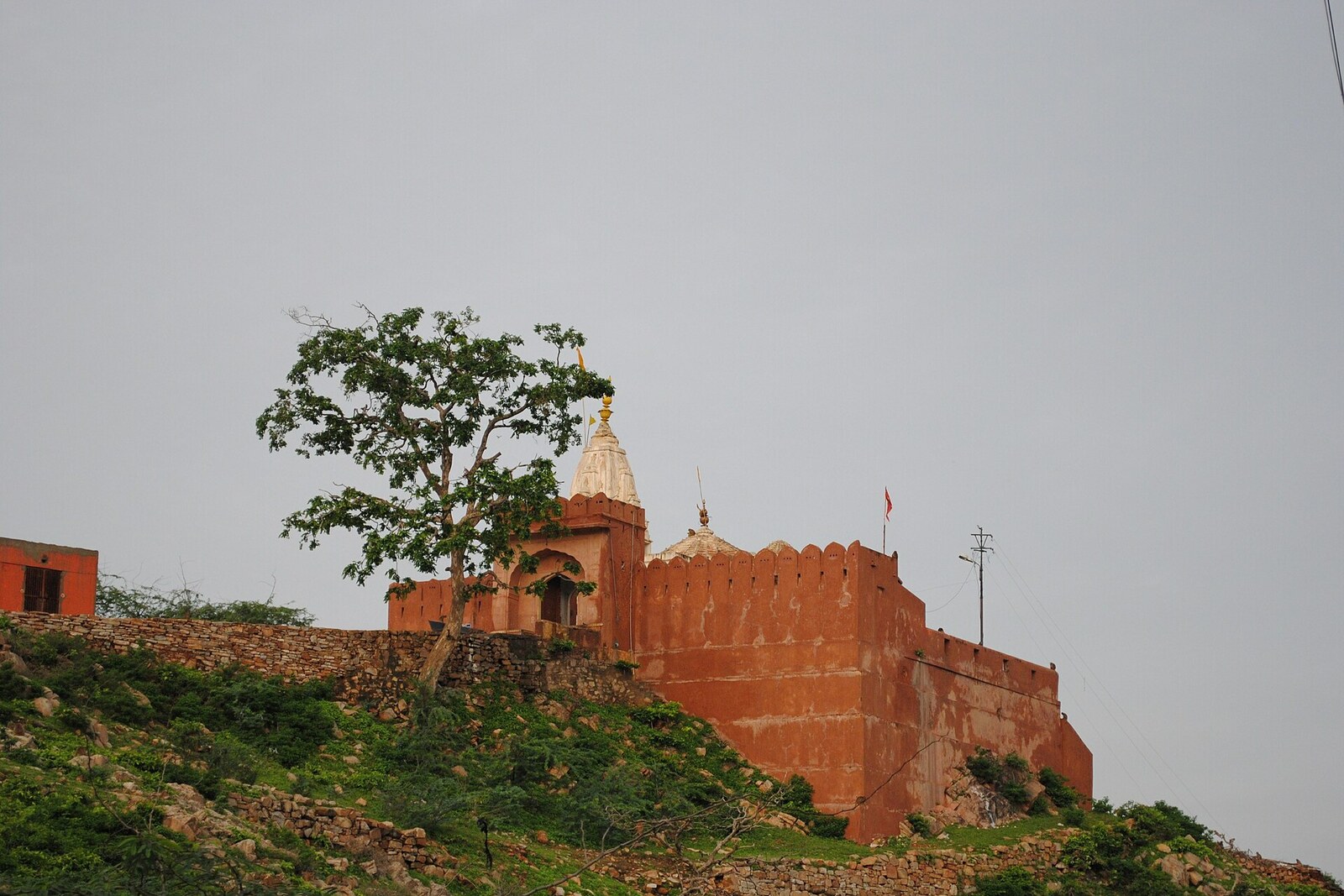
Look around first
What to notice
- The temple building
- The image of Surya
- Jaipur on the plain
- The road to Galta Gate
The story of the place
Surya Temple stands on a hill east of Jaipur: from the ridge, you can see the city plain and the road through the hills to the sacred Galta valley. It appeared soon after the new capital was founded, when this slope was clearly visible from the city and was the first to meet the morning sun. For the rulers of the Kachhwaha dynasty, Surya was an ancestor of their dynasty: they traced their lineage to Kusha, Rama’s son. The shrine on the hill therefore linked the new city with its rulers’ idea of their own origin.
In nineteen seventy-nine, thieves carried off an eight-inch-high figure of Surya from this shrine. It was cast from ashtadhatu, an alloy of eight metals. The figure was the temple’s main sacred image. After the theft, an image of Surya took its place in worship: the former metal statue is no longer here.
Two and a half centuries before the theft, Rao Kripa Ram placed this figure here. He practiced Jainism but venerated Surya. Kripa Ram served as divan—the chief minister of Sawai Jai Singh II—and represented his ruler’s interests at the Mughal court in Delhi. His position rested on Jai Singh’s trust, and in seventeen thirty-four the minister used his own funds for a temple to a god from another religious tradition.
He chose a site above the eastern approach to Jaipur. The city had been founded only seven years earlier, and the temple on the ridge was clearly visible from the new capital. For Jai Singh, this dedication had a dynastic meaning. The rulers of the Kachhwaha dynasty considered themselves descendants of Kusha, Rama’s son, and counted their lineage among the Solar Dynasty. The Jain minister placed their revered celestial ancestor on a hill from which the sun rises over the city in the morning.
The temple built by Kripa Ram soon became the starting point of a court ceremony. On Bhanu Saptami, the Sun’s birthday, attendants carried the image of Surya out of the shrine and placed it on a chariot drawn by white horses. The procession descended from Galta to Ramganj. There the maharaja met it and then rode with the chariot through the streets. The ruler publicly joined the god from whom his dynasty claimed descent.
The theft destroyed the old figure, but the attendants preserved its route. Now, on Ratha Saptami, they place another image of Surya on a decorated chariot, descend through Galta Gate, pass through Badi Chaupar and Small Chaupar, and return to the hill. For most of the year, the image remains in the shrine; once a year, people carry it out from here and lead it through the city for which Rao Kripa Ram chose this summit.
Useful on site
Local sources disagree: from “dawn to dusk” to 05:00–19:45. For integration, phrase this cautiously: visit during daylight hours and ask the attendants about darshan; entry is free.
Checked: July 1, 2026. Check the official source before visiting.This is an active shrine: remove your shoes where required, do not block the entrance, and ask permission before taking photographs inside.