 Guide On Map
Amer: Fort and Old Town
From Maota Lake through Amer Fort to the Anokhi Museum of Hand Printing
Guide On Map on your phone
Open the walk like a regular app
It takes about 10 seconds to install. No app store needed.
The whole path
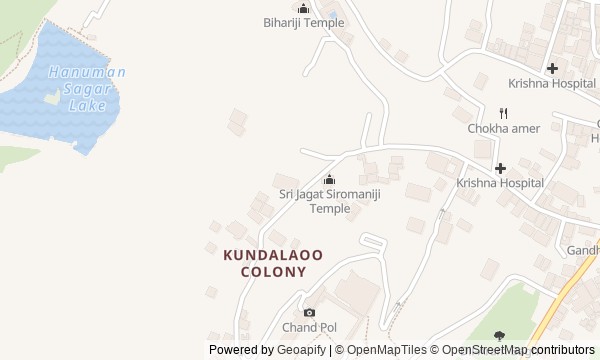
Route map
About the walk
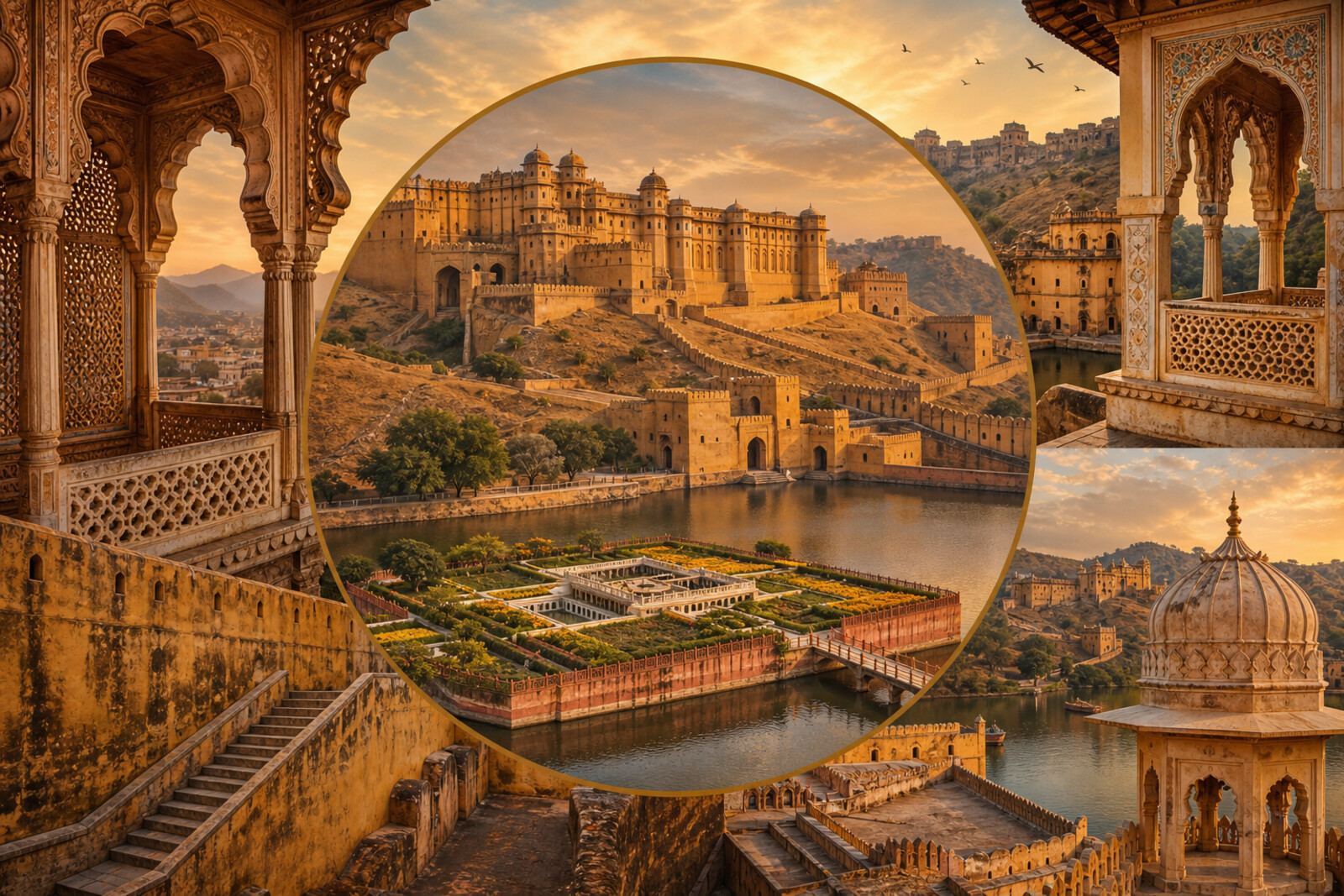
You will climb from Maota Lake to Amer Fort, pass through its ceremonial gates and courtyards, then descend into Old Amer—to a working temple, a stepped reservoir, and a restored haveli. Up above, everything was arranged around power: water made to move uphill; a courtyard where an interrupted military ceremony was once brought back; stone screens that let women watch an audience without being seen; mirrors in which a guest could never see their whole reflection. Down below, the scale changes. The route is held together by family memory, the daily walk for water, and 5 craftspeople whose work was transformed by a single restoration. The story will separate records from court and temple legends, then look for their consequences in what survives. By the end, you will read Amer as an old capital where the palace above depended on labor below, and where moving the court did not break the city's history.
Why this order
Maota Lake opens the route from below: without water from the lake, the palace on the slope could not have used its fountains and hammam. Following the water, the road climbs to Suraj Pol, the gate of a working capital. Just beyond it, Jaleb Chowk shows why such an entrance was needed for ceremony. From the open parade ground, stairs lead to Ganesh Pol, where court life was already watched from behind screens. Passing beneath the gate is essential before Sheesh Mahal: only then does the shift from a public courtyard to a private audience repeat itself. The route then descends from the fort into Old Amer. The temple preserves the princely family's memory beyond the residence, the neighboring kund replaces court history with the townspeople's daily labor, and the Anokhi Museum of Hand Printing ends the walk where an old haveli and craft skills were brought back into use together.
Those who want to see not only the fort but also Old Amer Lovers of the history of everyday labor and court ceremony Those interested in architecture, water, and hand printing
Those expecting to limit themselves to a short visit to the fort Those who find long climbs, descents, and stone stairs difficult Those looking for a walk only through central Jaipur
Before you go
Wear shoes with reliable grip: the route includes an ascent, stone courtyards, stairs, and stretches without easy footing. Bring water and sun protection, even if the walk begins in cool weather. At Jagat Shiromani Temple, be ready to remove your shoes; keep quiet inside and ask permission before photographing people or rituals. At Panna Meena ka Kund, take in the geometry from permitted viewing areas and do not go down beyond the barriers. Check access to the Anokhi Museum of Hand Printing and any craft demonstrations separately before you set out: entry to the fort alone does not guarantee either.
When to go
Start in the morning to cross the open stretches by Maota Lake and make the climb before the heat becomes intense, and to see the palace rooms before visitor numbers peak. Allow about three hours to cover all eight stops in sequence; add time if you want to linger at the temple, study the stepwell, or catch a craftsperson at work in the museum.
Backup plan
If the inner part of the fort is closed or the climb proves too demanding, view Amer from the shore of Maota Lake and move the main walk to the lower town. Jagat Shiromani Temple, Panna Meena ka Kund, and the Anokhi Museum of Hand Printing will preserve the route's main themes: memory, water, and handwork. If the museum is closed, end the walk at the stepwell and do not try to replace the visit with a random entry into private havelis. In extreme heat, it is wiser to shorten the palace section, pause in the shade, and continue only when descending on stone remains safe.
Route conditions
Surface. Paved — 248 m (data covers 10% of the route)
Stairs. Flights: 2, 232 m in total
Access. Wheelchair — no; stroller — limited (stairs)
Facilities. Toilets — 1
Elevation. Ascent — 62 m; descent — 63 m
OpenStreetMap extract of June 18, 2026: database data, not a check on the ground. Data © OpenStreetMap contributors, ODbL licence
Walk plan
Open in maps ↗- 1
Maota and Kesar Kyari Bagh
Here you will understand the labor that lay behind the gardens, fountains, and hammam of the palace on the hill. - 2
Suraj Pol
The gate links Amer’s ceremonial layout with the decision to move the capital to the plain. - 3
Jaleb Chowk
This stop will show how a courtyard for military inspection, decades later, once again hosted an old ceremony. - 4
Ganesh Pol
Here the public part of the palace ends, and the invisible spectators of the receptions take their place. - 5
Sheesh Mahal
The Mirror Hall will show how the setting of a private audience determined a guest's position even before the conversation began. - 6
Jagat Shiromani Temple
The active temple preserves the personal consequence of the heir's appointment that never came to pass. - 7
Panna Meena ka Kund
The kund will shift the conversation from palace water supply to the everyday household work of Amer’s residents. - 8
Anokhi Museum of Hand Printing
The finale will show how the restoration of one house brought work back to artisans and connected an archive with contemporary production.
Route features
Everything you need stays in the browser
Progress, saves and your trip plan are stored on this device.
Add Guide On Map to your home screen so the walk opens outside the browser.
How we handle sources, maps and corrections: our editorial standards