 Guide On Map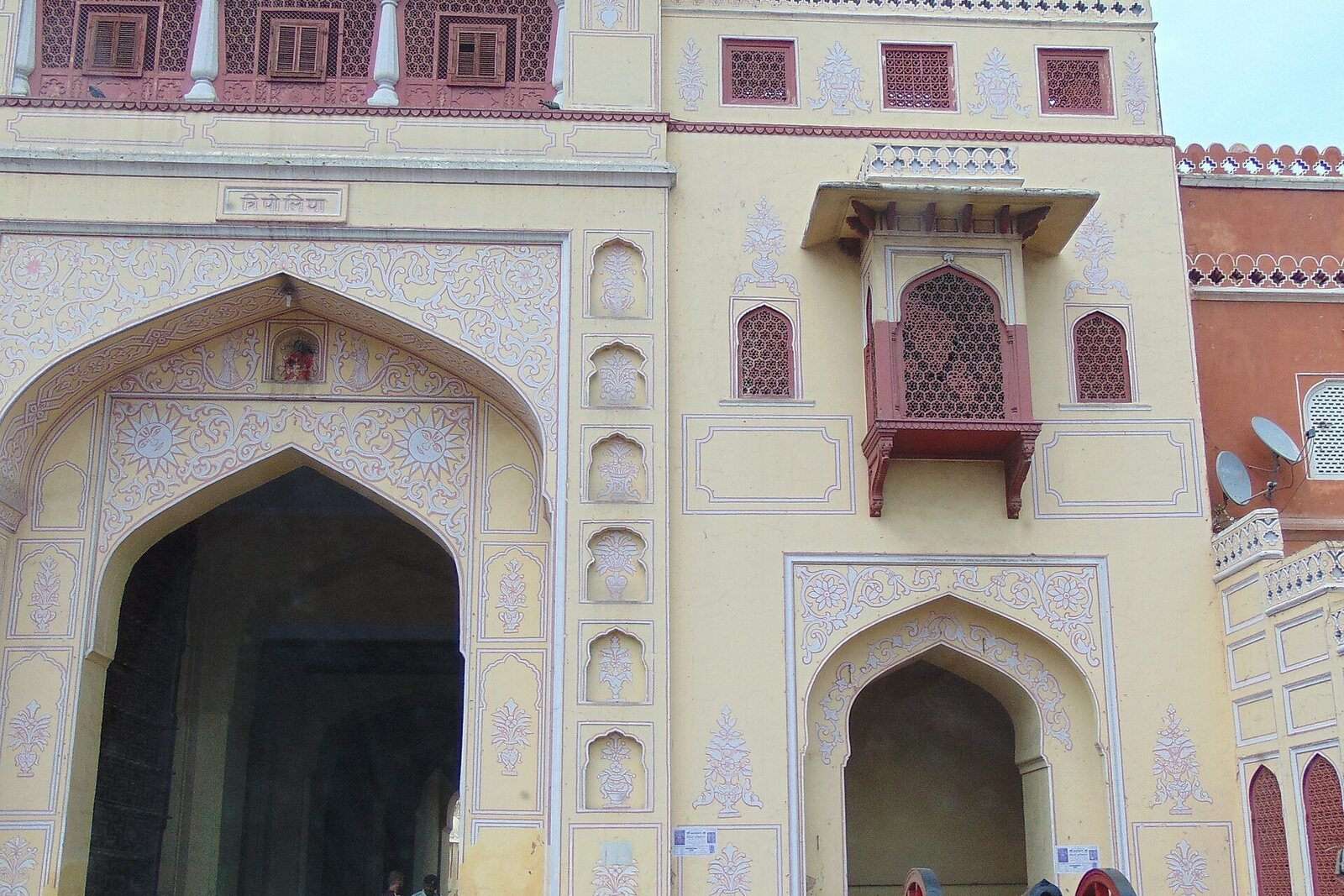
Look around first
What to notice
- Three arched openings
- Palace wall
- Rows of shops
- Maniharon Ka Rasta lane
The story of the place
Tripolia Bazaar runs along a broad city road between two squares, and the shops open directly onto it, leaving space behind them for craft lanes. In the middle of this row, the palace wall is cut through by three high arches; the bazaar got its name from them. The ordinary flow stops at tableware, fabrics, carpets, and hardware, while the closed residential part of the palace remains beyond the arches. Nearby, Maniharon Ka Rasta branches off, where small workshops still heat, roll out, and decorate lacquer for bangles.
When Sawai Jai Singh II, the ruler of Amer, moved the capital onto the plain, he needed people who could turn the laid-out quarters into a commercial city. In seventeen twenty-seven, there were not yet generations of shopkeepers ready to occupy the new streets. The treasury built rows of identical shops, and the maharaja sent out special invitations to merchants and craftspeople.
One such invitation went to the manihars, makers of lacquer bangles from Manoharpur in what is now Uttar Pradesh. They earned their living by turning natural lacquer, a resin collected from trees, into ornaments: the material was heated, rolled out on an iron plate, colored, and shaped around a core. The craftspeople were summoned to demonstrate their craft at the new court. The bangles found buyers, and the manihars moved their workshops here along with their families.
They were given a lane by Tripolia Bazaar. This is how Maniharon Ka Rasta appeared—the street of bracelet makers. The name identified the residents' occupation more precisely than any house numbering could. A single family household often stood behind a workshop: the men worked with hot lacquer, while the women decorated the finished bangles and sold them. The skill for which people had left Manoharpur became their permanent livelihood in Jaipur.
Sawai Jai Singh II laid out the bazaar along the broad road between Chhoti Chaupar and Badi Chaupar. Shops opened onto the main street, while lanes for individual crafts branched out behind them. In the middle of the commercial row, the ruler created a direct entrance into the palace complex. Its three arched openings gave Tripolia Gate its name—“triple gate”—and the name then passed to the whole bazaar.
The maharaja, his family, and palace processions used Tripolia Gate. Ordinary visitors were directed to other entrances. This division remains: the residential part of the palace lies beyond the arches, and tourists are not allowed in. But during the women's festivals of Gangaur and Teej, palace attendants carry an image of the goddess Parvati out through these gates in a palanquin. The procession passes along Tripolia Bazaar by the same route that the ruler reserved for ceremonial departures.
The main street now sells metal tableware, hardware, fabrics, and carpets. Lacquer bangles are still made in Maniharon Ka Rasta. A palanquin from the palace passes through the triple arch, past the lane where descendants of the invited craftspeople heat and roll out the same lacquer.
Useful on site
Street stop; it is best to take in the gate from outside during the day, when the transition from the commercial axis to the royal threshold is visible.
Checked: June 15, 2026. Check the official source before visiting.The gate belongs to the palace route, so do not treat it as an ordinary tourist entrance, and respect the barriers.