 Guide On Map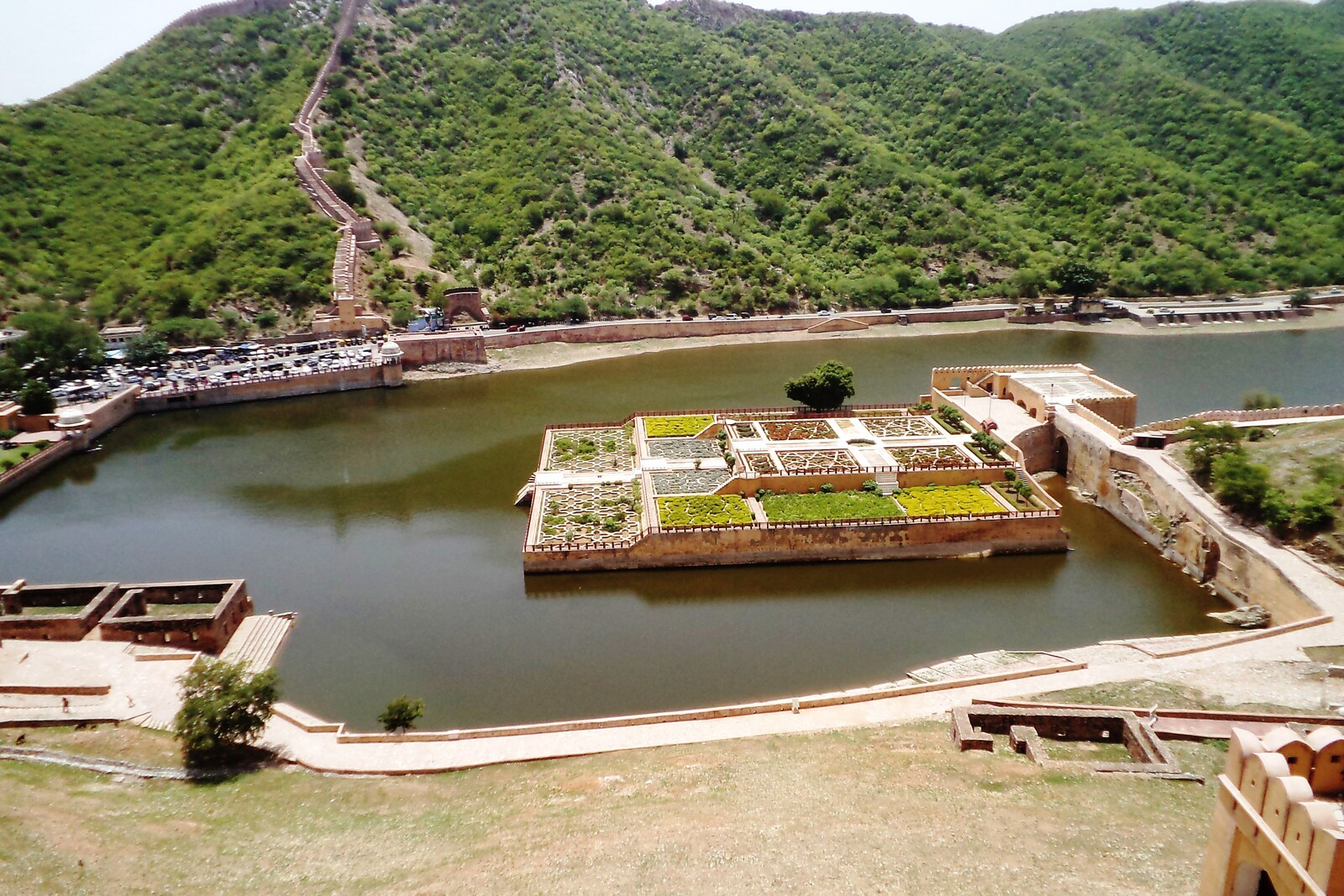
Look around first
What to notice
- Maota Lake
- Three terraces of the island garden
- Stone edges of the star-shaped beds
The story of the place
At the eastern edge of Kesar Kyari Bagh, people and animals were put to work at lifting wheels. The animals walked in circles, people watched the ropes, and leather bags lifted water from Maota Lake into reservoirs above the garden. From there, it passed through about one hundred twenty-five meters of clay pipes to the next lifting device. This operation was repeated at several levels until the water reached the upper tanks of the palace, forty-five meters higher.
Stopping such a chain meant leaving the courtyard above without its main source of water. Maota Lake collected rainwater runoff from the surrounding hills, but the water itself did not move uphill. Workers passed it from reservoir to reservoir; on the final stretch, a Persian wheel with a row of clay vessels turned. This gave the palace residents a constant supply, sent water to the fountains, and heated it for the hammam in the cool months. The lake was incorporated into the belt of fortifications: losing the body of water during a siege threatened everyone who remained above.
The garden at the center of this system is associated with Mirza Raja Jai Singh I, the ruler of Amer and a high-ranking military commander of the Mughal Empire. He sought for his residence the same courtly grandeur he saw at the imperial court. At his commission, craftsmen laid out a stepped charbagh on the island—a four-part garden with intersecting paths. The star-shaped beds were designed to be viewed from above, from the palace pavilions. Their geometry echoed the methods of the gardens of Kashmir, created by Mughal emperors beside mountain lakes. In Amer, the craftsmen had to add what such a scene could not hold together without: people, animals, bags, pipes, and a sequence of lifting stations.
The name “Kesar Kyari Bagh” is translated as “saffron beds.” According to legend, saffron was indeed once attempted in the star-shaped compartments. No documentary list of the original plantings has survived, so saffron here remains a legend associated with the name. The garden also had another name—Maunbari; it is already shown on an old map of Amer by seventeen eleven.
The lifting wheels stopped long ago. Maota Lake, the three terraces of the island garden, and the stone edges of the star-shaped beds have survived. At the eastern edge of Kesar Kyari Bagh, where the garden's pattern now ends, the lifting of water to the palace once began.
Useful on site
An external viewing point by the lake; no separate official hours for the shore were found. Kesar Kyari Bagh is best seen from above, from the palace area.
Checked: June 29, 2026. Check the official source before visiting.View Kesar Kyari Bagh from the shore: the island was intended for a distant view, not for walking through on your own.