 Guide On Map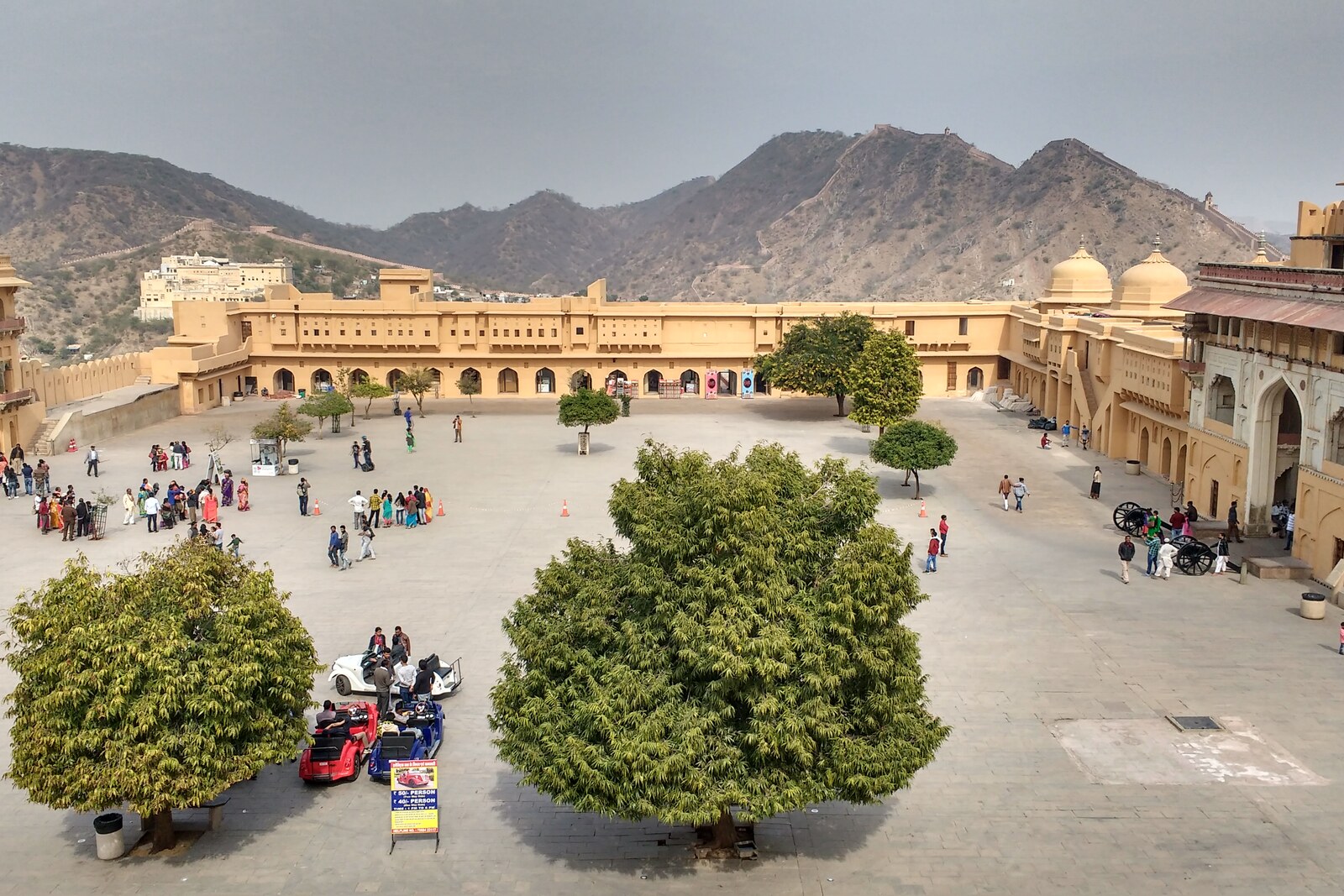
Look around first
What to notice
- Rectangular courtyard
- Stables
- Rooms above the stables
- Staircase to Shila Mata Temple
The story of the place
A detachment returning to Amer did not disperse through the fort at the gate. The warriors passed through Suraj Pol and formed up here, in Jaleb Chowk. The fauj-bakhshi—the head of the army and administrator of pay—drew up the maharaja's personal guard, and the ruler held an inspection. After campaigns, the soldiers showed the townspeople the booty they had brought back.
The name Jaleb Chowk is usually translated as “the soldiers' assembly courtyard.” That is why it was placed immediately behind the main gate. A detachment could fit within its broad rectangle; the stables stood nearby, with the guards' rooms above them. Warriors were not admitted to the inner palace courtyards until their commander had assembled them here.
For a noble horseman, an inspection concerned his livelihood. Kachhwaha commanders received jagirs—the right to collect income from granted land—in exchange for the obligation to bring horses and men into service. They maintained their detachment from that income. On campaign, a horseman risked his life, his horse, and his position; at Jaleb Chowk, the maharaja could see who had returned and in what strength. The booty laid out before the people showed how the campaign had ended before it was carried away from the courtyard.
Sawai Man Singh II, the last ruler of the princely state of Jaipur, once again linked a specific military unit with this courtyard. On September first, nineteen thirty-four, he recognized the Sawai Man Guards battalion, entrusted it with the state flag, and became its first commander. After the princely state's accession to India, the soldiers were incorporated into the regular army; the battalion became the 17th Battalion, The Rajputana Rifles.
In August two thousand twelve, serving military personnel and veterans of this unit returned to Jaleb Chowk. For the first time in seventy-eight years, they again held the Nishan Parade here—the parade of regimental colors. Guards in old uniforms carried two banners, and a priest from Shila Mata Temple blessed them. The interrupted ceremony was restored, and the colors were carried back to the unit. What remained here was their old route: a broad field for formation by Suraj Pol and the staircase to the temple rising directly from Jaleb Chowk.
Useful on site
The courtyard is open on the Amer Palace schedule; the temple area within the courtyard follows its own schedule of services and may restrict photography.
Checked: June 29, 2026. Check the official source before visiting.View the courtyard from the edge, especially when many groups are passing through: the center of the square is needed for people to move.