 Guide On Map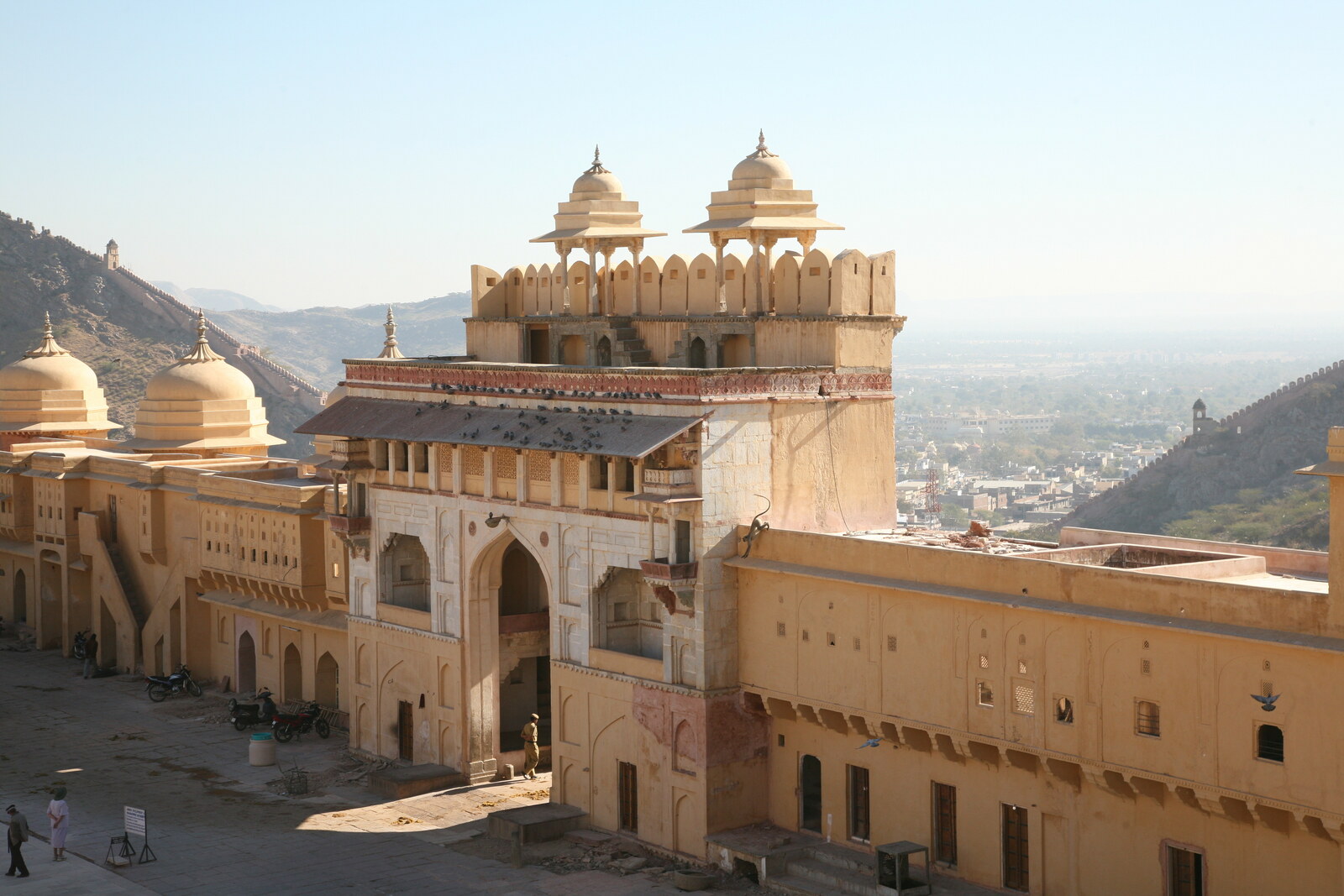
Look around first
What to notice
- Eastern arch
- Guard rooms
- Stone approach road
The story of the place
Suraj Pol was built under Sawai Jai Singh II—the ruler of Amer, who had to decide where to place the growing capital and how to supply it with water. During his reign, the palace gained the large front courtyard of Jaleb Chowk and gates on both sides of it. The eastern passage was intended for princely departures and honored guests. Guards were on duty in the rooms by the gate: a foreign ambassador or courtier first passed their inspection and only then came before the palace.
The name, too, represented the rulers. “Suraj” means sun, and “pol” means gate. The arch faces east, but it was not only a matter of direction. The Kachhwaha, Amer’s ruling clan, called themselves descendants of the Solar Dynasty and traced their lineage to Kusha, the son of Rama, the hero of the Indian epic. This is a clan tradition, not a proven line of generations. Every guest admitted here entered the residence under the sign of the ancestry invoked by the ruler’s family.
Military detachments also returned through Suraj Pol. Beyond the gate, they did not disperse to their homes: in Jaleb Chowk, a military commander formed them into ranks, and the spoils brought back from campaigns were displayed there as well. Thus, the guards at the arch separated the road outside from the ceremony within. Guard rooms remained beside the passage, while the next courtyard held people, horses, and everything the army brought to the capital.
However, Sawai Jai Singh II faced something that ceremonial gates could not solve. Amer’s population was growing, there was not enough space on the slopes, and water was becoming insufficient. In seventeen twenty-seven, he founded Jaipur on the plain and moved the capital there. Court receptions, administration, and princely departures moved to the new city palace. Suraj Pol retained the status of the main entrance, but the courtyard behind it was no longer the center of the functioning court.
Now the eastern approach road still ends beneath this arch, and visitors climbing to Amer Fort enter Jaleb Chowk through it. Cars usually arrive from the opposite side, through Chand Pol—the Moon Gate. Between them lies that very front courtyard for which Sawai Jai Singh II created two different entrances before moving the capital out of Amer.
Useful on site
Access depends on the operating schedule of Amer Fort. The official sources found do not provide a stable page with current daytime hours; check the ticket office and the last entry time on the day of your visit.
Checked: June 29, 2026. Check the official source before visiting.Stop before the arch without blocking the passage, and look back at the road the gate leaves outside.