 Guide On Map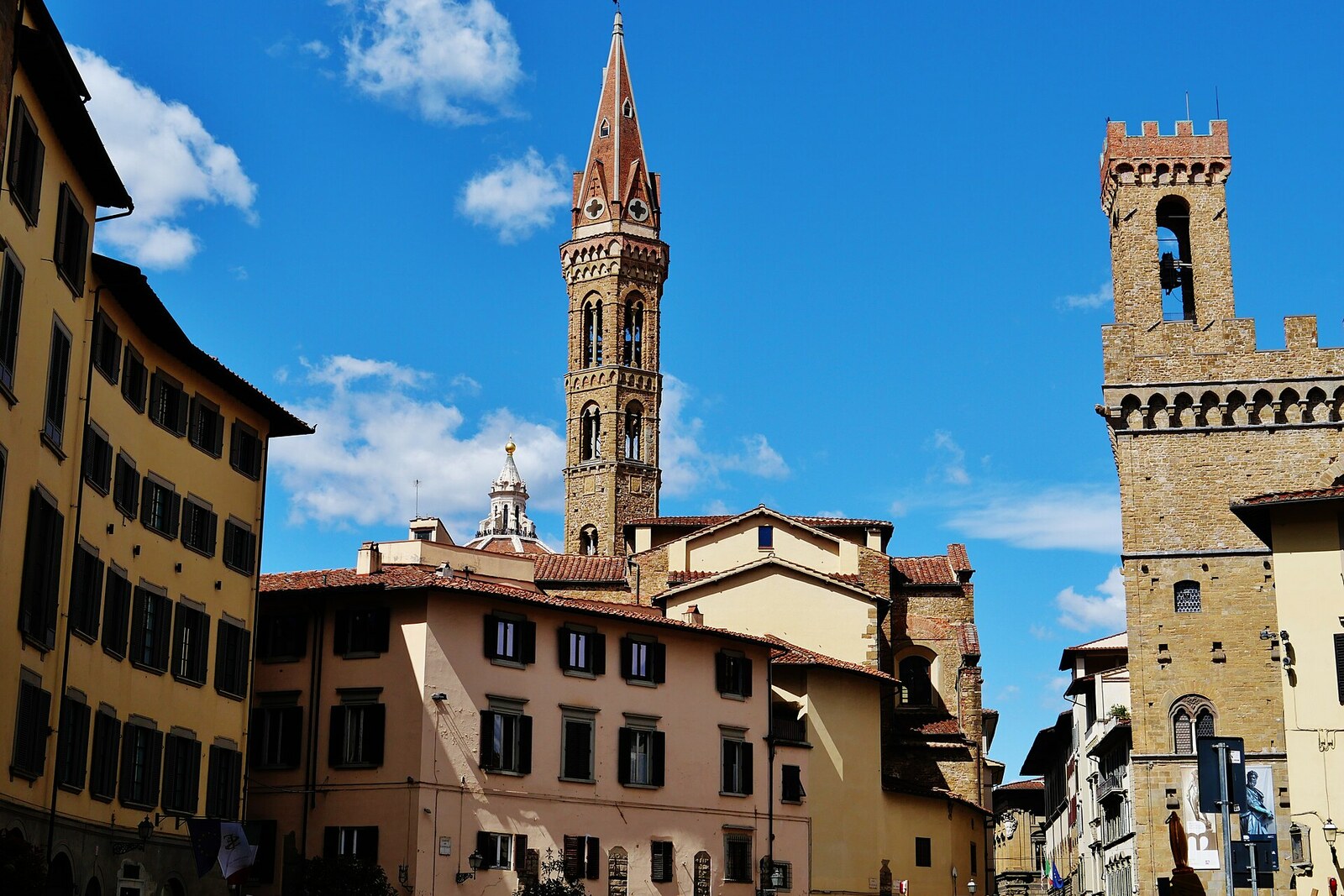

This place does not have an audited photo yet.
Selected place
Badia Fiorentina
Local name:
This stop will show how the reading of Dante changed from a private matter into a public practice funded by the city.
Start with 29 highlights or open the complete catalog of 153 curated places.
Highlights include Badia Fiorentina, Baptistery of St. John, Bargello, Basilica of San Lorenzo, Basilica of Santa Croce, Borgo San Jacopo.
We have connected important places into ready-made walks with a clear order, stories and practical details.
Start with 29 highlights, or reveal all 153 curated places.
Local name:
This stop will show how the reading of Dante changed from a private matter into a public practice funded by the city.
This stop will show how the reading of Dante changed from a private matter into a public practice funded by the city.
The baptismal church will connect an exile’s personal fate with the right to call oneself Florentine.
Here the route's central conflict emerges: the city will condemn the poet, then later return his image to the same palace.
The basilica will show how family memory was built into the regular routine of a working church.
Here, two attempts to return Florence’s great exiles will converge—one through a body, the other through a monument.
Surviving towers and new walls make it possible to see what was preserved and what was sacrificed in the reconstruction.
This stop will show why a public attack did not bring the conspirators power over the city.
The frescoes show what happened to a family commission after its patron was exiled.
Here you will see how the municipal government created a physical address for memory when the evidence was insufficient.
The arcade will show how a place for republican ceremonies became a backdrop for ducal power.
Here, a family commission will collide with an artist's political choice and remain unfinished.
This stop traces the path of the family manuscripts from confiscation to a public reading room.
The final stop will show how urban redevelopment changed the familiar routes of sellers and buyers.
This stop shifts the scale: from a civic sentence to helping a single family without public humiliation.
The former market shows how wills made after the plague changed the purpose of an entire building.
From the facade, you can reconstruct the courtly calculation that tied together two families and one house.
This is where the story begins of a power that needed an impressive but politically safe address.
Here it will become clear what price private owners could pay for the expansion of the shared urban center.
The square will help you see how the crowd's trust turned into political power and vanished in a single day.
This small square gives the neighborhood a memory that arose not from a title or monument, but from the way a woman of the city was addressed.
The square will add the action of a living city to the theme of memory: a public game during the siege.
The open space will explain why a medieval order needed the city’s largest site.
The central part of the facade shows where the first owner’s ambition ended and the Medici residence began.
The final stop explains why jewelry trading took hold above the old meat market.
This is where the story begins of how the Medici route changed ordinary city life.
A comparison of the facade and interior will show which parts of Brunelleschi’s project his successors preserved.
The finale shifts the theme of inheritance from memorials to a workshop where a craft is passed on within a working production facility.
Here it becomes clear why the duke needed to gather the institutions of a republican city near the palace.
The notaries’ house will link the power of the written word to a posthumous gallery of poets.
Nearest audio-route stop: Badia Fiorentina — 20 m in a straight line, route Dante Alighieri and the City's Memory: from Bargello to Santa Croce
Nearest audio-route stop: Via del Proconsolo — 20 m in a straight line, route Dante Alighieri and the City's Memory: from Bargello to Santa Croce
Nearest audio-route stop: Scuola del Cuoio — 40 m in a straight line, route Dante Alighieri and the City's Memory: from Bargello to Santa Croce
Nearest audio-route stop: Medici Chapels — 40 m in a straight line, route San Lorenzo: the Medici and How the City Works
Nearest audio-route stop: Basilica of Santa Croce — 30 m in a straight line, route Dante Alighieri and the City's Memory: from Bargello to Santa Croce
Nearest audio-route stop: Pitti Palace — 10 m in a straight line, route Oltrarno: bridge, palaces, and monastic squares
Nearest audio-route stop: Church of Santa Maria del Carmine — 50 m in a straight line, route Oltrarno: bridge, palaces, and monastic squares
Nearest audio-route stop: Basilica of Santa Croce — 150 m in a straight line, route Dante Alighieri and the City's Memory: from Bargello to Santa Croce
Nearest audio-route stop: Via del Proconsolo — 110 m in a straight line, route Dante Alighieri and the City's Memory: from Bargello to Santa Croce
Nearest audio-route stop: Piazza del Duomo — 20 m in a straight line, route Florence between Cathedral of Santa Maria del Fiore and Ponte Vecchio: Money and Power
Nearest audio-route stop: Cathedral of Santa Maria del Fiore — 60 m in a straight line, route Florence between Cathedral of Santa Maria del Fiore and Ponte Vecchio: Money and Power
Nearest audio-route stop: Cathedral of Santa Maria del Fiore — 10 m in a straight line, route Florence between Cathedral of Santa Maria del Fiore and Ponte Vecchio: Money and Power
Nearest audio-route stop: Piazza del Duomo — 40 m in a straight line, route Florence between Cathedral of Santa Maria del Fiore and Ponte Vecchio: Money and Power
Nearest audio-route stop: Orsanmichele — 70 m in a straight line, route Florence between Cathedral of Santa Maria del Fiore and Ponte Vecchio: Money and Power
Nearest audio-route stop: Palazzo Medici Riccardi — 20 m in a straight line, route San Lorenzo: the Medici and How the City Works
Nearest audio-route stop: Medici Chapels — 30 m in a straight line, route San Lorenzo: the Medici and How the City Works
Nearest audio-route stop: Mercato Centrale and the street market — 50 m in a straight line, route San Lorenzo: the Medici and How the City Works
Nearest audio-route stop: Baptistery of St. John — 30 m in a straight line, route Florence between Cathedral of Santa Maria del Fiore and Ponte Vecchio: Money and Power
Nearest audio-route stop: Uffizi Courtyard — 110 m in a straight line, route Florence between Cathedral of Santa Maria del Fiore and Ponte Vecchio: Money and Power
Nearest audio-route stop: Medici Chapels — 30 m in a straight line, route San Lorenzo: the Medici and How the City Works
Nearest audio-route stop: Orsanmichele — 110 m in a straight line, route Florence between Cathedral of Santa Maria del Fiore and Ponte Vecchio: Money and Power
Nearest audio-route stop: Palazzo di Bianca Cappello — 50 m in a straight line, route Oltrarno: bridge, palaces, and monastic squares
Nearest audio-route stop: Palazzo Medici Riccardi — 50 m in a straight line, route San Lorenzo: the Medici and How the City Works
Nearest audio-route stop: Orsanmichele — 120 m in a straight line, route Florence between Cathedral of Santa Maria del Fiore and Ponte Vecchio: Money and Power
Nearest audio-route stop: Palazzo Medici Riccardi — 80 m in a straight line, route San Lorenzo: the Medici and How the City Works
Nearest audio-route stop: Bargello — 90 m in a straight line, route Dante Alighieri and the City's Memory: from Bargello to Santa Croce
Nearest audio-route stop: Santo Spirito—architecture hidden inside — 120 m in a straight line, route Oltrarno: bridge, palaces, and monastic squares
Nearest audio-route stop: Via del Proconsolo — 130 m in a straight line, route Dante Alighieri and the City's Memory: from Bargello to Santa Croce
Nearest audio-route stop: Piazza Madonna degli Aldobrandini — 60 m in a straight line, route San Lorenzo: the Medici and How the City Works
Nearest audio-route stop: Via del Proconsolo — 80 m in a straight line, route Dante Alighieri and the City's Memory: from Bargello to Santa Croce
Nearest audio-route stop: Pitti Palace — 10 m in a straight line, route Oltrarno: bridge, palaces, and monastic squares
Nearest audio-route stop: Bargello — 70 m in a straight line, route Dante Alighieri and the City's Memory: from Bargello to Santa Croce
Nearest audio-route stop: Medici Laurentian Library — 30 m in a straight line, route San Lorenzo: the Medici and How the City Works
Nearest audio-route stop: Scuola del Cuoio — 130 m in a straight line, route Dante Alighieri and the City's Memory: from Bargello to Santa Croce
Nearest audio-route stop: Cathedral of Santa Maria del Fiore — 40 m in a straight line, route Florence between Cathedral of Santa Maria del Fiore and Ponte Vecchio: Money and Power
Nearest audio-route stop: Piazza del Duomo — 50 m in a straight line, route Florence between Cathedral of Santa Maria del Fiore and Ponte Vecchio: Money and Power
Nearest audio-route stop: Basilica of San Lorenzo — 20 m in a straight line, route San Lorenzo: the Medici and How the City Works
Nearest audio-route stop: Piazza Santa Croce — 60 m in a straight line, route Dante Alighieri and the City's Memory: from Bargello to Santa Croce
Nearest audio-route stop: Santo Spirito—architecture hidden inside — 80 m in a straight line, route Oltrarno: bridge, palaces, and monastic squares
Nearest audio-route stop: Uffizi Courtyard — 30 m in a straight line, route Florence between Cathedral of Santa Maria del Fiore and Ponte Vecchio: Money and Power
Nearest audio-route stop: Medici Chapels — 50 m in a straight line, route San Lorenzo: the Medici and How the City Works
Nearest audio-route stop: Borgo San Jacopo — 90 m in a straight line, route Oltrarno: bridge, palaces, and monastic squares
Nearest audio-route stop: Piazza del Duomo — 100 m in a straight line, route Florence between Cathedral of Santa Maria del Fiore and Ponte Vecchio: Money and Power
Nearest audio-route stop: Borgo San Jacopo — 120 m in a straight line, route Oltrarno: bridge, palaces, and monastic squares
Nearest audio-route stop: Dante's House Museum — 50 m in a straight line, route Dante Alighieri and the City's Memory: from Bargello to Santa Croce
Nearest audio-route stop: Church of Santa Maria del Carmine — 30 m in a straight line, route Oltrarno: bridge, palaces, and monastic squares
Nearest audio-route stop: Cathedral of Santa Maria del Fiore — 50 m in a straight line, route Florence between Cathedral of Santa Maria del Fiore and Ponte Vecchio: Money and Power
Nearest audio-route stop: Piazza Santo Spirito — 20 m in a straight line, route Oltrarno: bridge, palaces, and monastic squares
Nearest audio-route stop: Ponte Vecchio — 80 m in a straight line, route Oltrarno: bridge, palaces, and monastic squares
Nearest audio-route stop: Uffizi Courtyard — 70 m in a straight line, route Florence between Cathedral of Santa Maria del Fiore and Ponte Vecchio: Money and Power
Nearest audio-route stop: Uffizi Courtyard — 60 m in a straight line, route Florence between Cathedral of Santa Maria del Fiore and Ponte Vecchio: Money and Power
Nearest audio-route stop: Uffizi Courtyard — 50 m in a straight line, route Florence between Cathedral of Santa Maria del Fiore and Ponte Vecchio: Money and Power
Nearest audio-route stop: Palazzo Medici Riccardi — 110 m in a straight line, route San Lorenzo: the Medici and How the City Works
Nearest audio-route stop: Piazza del Duomo — 110 m in a straight line, route Florence between Cathedral of Santa Maria del Fiore and Ponte Vecchio: Money and Power
Access and construction years come from OpenStreetMap and Wikidata, snapshot of August 25, 2026: database data, not a check on the ground.